Navigating the world of online marketing can be daunting for small and medium businesses (SMBs), especially when competing with larger enterprises. Here are five key challenges SMBs often face and tips to overcome them:
Resource Shortage: Without a large budget or marketing expertise, SMBs often struggle to produce quality content and optimize their platforms. However, even small steps toward consistent marketing can yield significant results.
Generating Quality Leads: Effective market research helps define your brand persona and improve landing page content, ultimately boosting conversions.
Gauging your Return on Investment (ROI): Tracking income sources and ad performance can be tough. Using site analytics and campaign optimization tools simplifies the process.
Competition: Fierce competition drives up ad costs. Stay proactive by analyzing competitors, gathering reviews, and refining your customer engagement strategy.
Being on Trend: Big brands invest heavily in visibility. SMBs must stay active on social media, respond to feedback, and engage with their audience to remain competitive. With consistency, research, and the right tools, SMBs can overcome these challenges and achieve marketing success.
As women entrepreneurs, there are unique challenges that may arise, but with the right mindset and strategies, success is always within reach. Here are some key points to consider:
Access to Resources: Finding funding, mentorship, and other valuable resources can be tough. Seek out networks, organizations, and initiatives that are designed to support women in business, as they offer guidance, opportunities, and resources tailored to help you grow.
Work-Life Balance: Balancing personal and professional life can be demanding, especially for women with additional responsibilities. Prioritize self-care, set boundaries, and delegate tasks when necessary to ensure long-term success
Building a Strong Support Network: Networking is critical for any entrepreneur. Connect with other women in business, attend industry events, and engage in online communities to gain support and build lasting relationships with those who share your experiences
Believing in Your Abilities: Confidence is key. Believe in your capabilities, surround yourself with positive influences, and celebrate every milestone on your journey.
Remember, the power to create your own success is in your hands!
As a business owner, hard skills like education and industry experience are important, but it’s the soft skills that often propel success. Here are three key interpersonal skills to master:
1. Empathy
Empathy is the ability to understand and share the feelings of others. In business, it fosters trust and engagement, making employees feel valued. Practicing empathy involves truly listening and being aware of others’ experiences. Business leader Dr. Christina Rahm emphasizes how empathy shaped her ventures by allowing her to see beyond her own perspective. When applied in the workplace, it can improve employee satisfaction and create a positive work environment. Remember, empathy must be practiced daily — it starts with making those around you feel heard.
2. Compassion
While empathy is about understanding, compassion takes it a step further by prompting action to help others. Dr. Rahm encourages flexibility in the workplace, such as allowing employees to bring their children or pets to work when necessary. Compassion can also be shown through small acts, like giving a sick employee time off or offering flexible work arrangements. By promoting compassion, business owners can build inclusive company cultures that foster loyalty and improve work ethics.
3. Adaptability
Adaptability is crucial for navigating change and challenges. Whether it’s refining a product or adjusting business processes, openness to change ensures long-term success. It’s important to remain patient, calm, and focused on solutions when things don’t go according to plan. Practicing mindfulness can help maintain a positive mindset, and embracing the idea that challenges are opportunities for growth will keep you resilient in the face of adversity.
These soft skills—empathy, compassion, and adaptability—are not just beneficial, they are essential for creating a thriving, resilient business culture. Start practicing them today!
As an SME, it’s easy to get caught up in the allure of accounts with millions of followers. But remember, a large following doesn’t always equate to true influence. Influence is about encouraging your audience to take action, not just gathering likes or comments.
When assessing more popular accounts, focus on these key criteria:
Industry Standard: Are they consistently delivering content that aligns with industry expectations?
2. Reputability: Do their followers view them as credible and trustworthy? Reputability is more valuable than follower count.
3. Audience Insights: Do they truly understand their audience? Knowing your demographic — age, location, interests — is crucial for building meaningful connections.
4. Cross-referencing: Can their claims be verified? Be critical and ask whether their success aligns with reality.
5. Proprietary Review: Are their posts genuine or just too good to be true? Authenticity should be at the core of your strategy.
As a small business owner, always analyze why people follow you—whether for sales, promotions, or knowledge—and remember that true engagement matters more than numbers. Stay true to your values, and your authentic audience will stick with you.
Ever wondered why you say “Kleenex” instead of tissue or “Coke” instead of cola? These brands have achieved the ultimate level of brand awareness, known as proprietary eponyms. Here are four sneaky ways to help your brand get there:
Find Your Brand Voice Define a clear brand voice that reflects your mission and values. This will guide all your communication, from your website to social media and ads. Collaborate with your marketing, sales, and product teams to ensure your messaging resonates with your target audience.
2. Create and Improve Your Website Your website is the face of your business. Ensure its mobile-friendly, includes analytics for tracking visitor behaviour, and has email submission forms to build a mailing list. These forms help you gather emails for future marketing and personalized customer outreach.
3. Launch Email Campaigns Use the emails collected from your website to start campaigns. Start with transactional emails like welcome notes and purchase confirmations. Gradually, move to promotional campaigns to increase engagement and drive sales.
4. Introduce a Referral Program Encourage your customers to refer others by offering them rewards. Dropbox’s referral program, which offered users extra storage space, is a prime example of how this strategy can significantly boost sign-ups and drive growth.
Profitability is a measure of a company’s ability to generate maximum revenue while incurring minimal costs. In the most basic sense, profit goes up as sales increase and/or costs decrease. In reality, though, achieving profitability is anything but simple. Because sales and costs are not necessarily incremental, focusing too much on increasing sales could leave you at risk if there is a sudden, unforeseen decrease in demand.
Cost of goods sold Adjust pricing/Cost of Goods Sold (COGS) (COGS) are the direct costs associated with making a product or delivering a service—mainly raw materials and labor. It’s critical that COGS is calculated accurately and kept as consistent as possible so that products or services may be priced correctly. To achieve this, companies must define, track and price the time and material resources needed to complete each build. By standardizing the manufacturing process, you should be able to accurately anticipate true costs and avoid large discrepancies from one build to the next—thus standardizing COGS.
Review Your Product Portfolio and Pricing
Related to both of the above items, it’s important to understand the true unit margins for each product in your portfolio and update that data frequently. A good rule of thumb: Before adding a new offering, review your current portfolio. Are products underperforming? Do you have difficult-to-produce items that are eating away at your margins, time and money?
Increase Customer Lifetime Value
Never underestimate the power of happy clients. Understanding your customers and delivering consistently excellent experiences is perhaps the most cost-effective way to increase loyalty and acquire new customers via referrals. You can show appreciation for your existing customers, increase their lifetime value, deliver new leads and boost your profits. How? Consider: Incentives, Encourage referrals, Recommendations and reviews, Customer retention.
Refine Demand Forecasts
If you have more componentry or raw material inventory than demand, you’ll end up spending to store it, or worse, have it expire and need to be replaced. But if you don’t have enough, you’ll pay for rush orders and expedited shipping—both of which increase COGS.
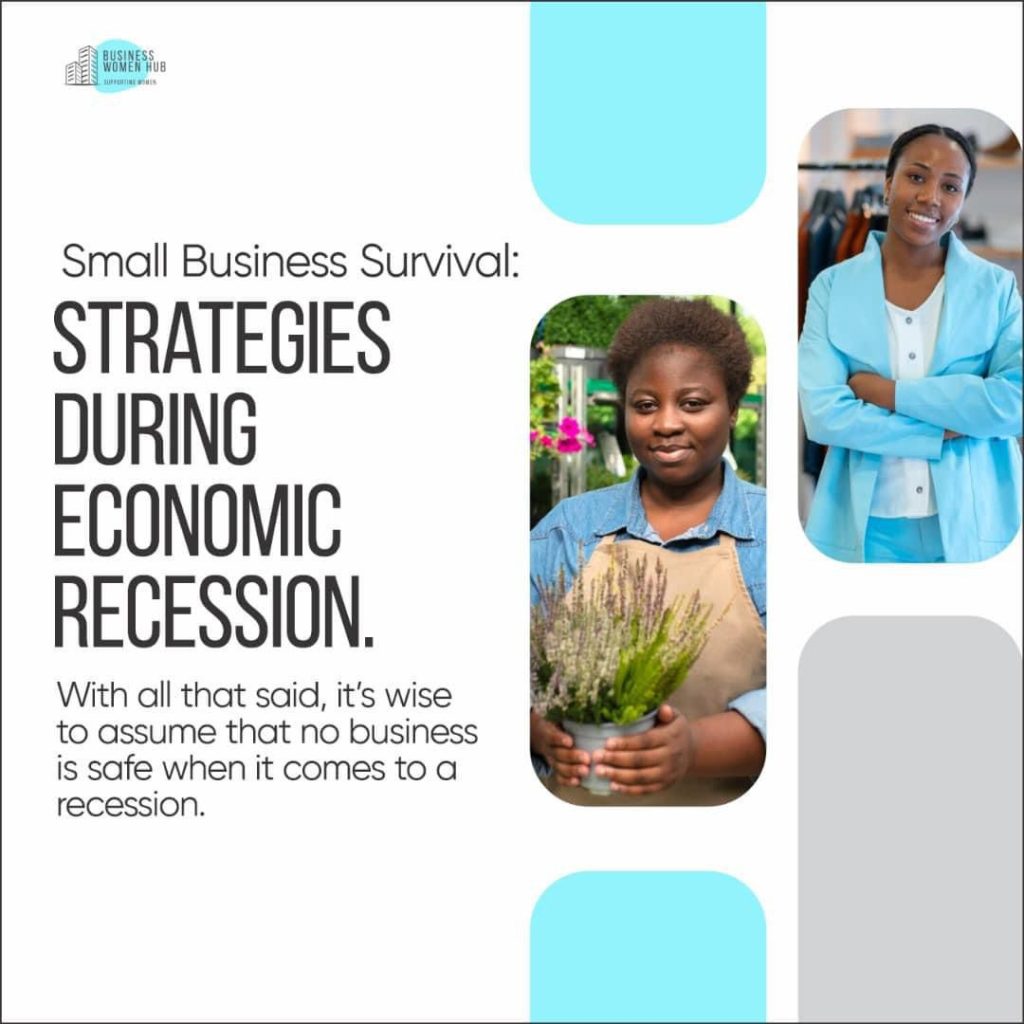
With all that said, it’s wise to assume that no business is safe when it comes to a recession. So here are some strategies for business survival during a recession you can employ to give your business the best chance.
Cut or reduce unnecessary costs
This is an obvious one but it’s by no means a silver bullet solution, nor is it sustainable. However, when times turn tough you might want to consider the following: 1.Negotiating down your monthly rent and any other supplier costs
2. Find cheaper vendors for utilities and cut any non-essential technology costs
3. Delay payables and collect receivables sooner
4. Consider whether poorly performing employees are worth retaining
5. Look at flexible staffing options
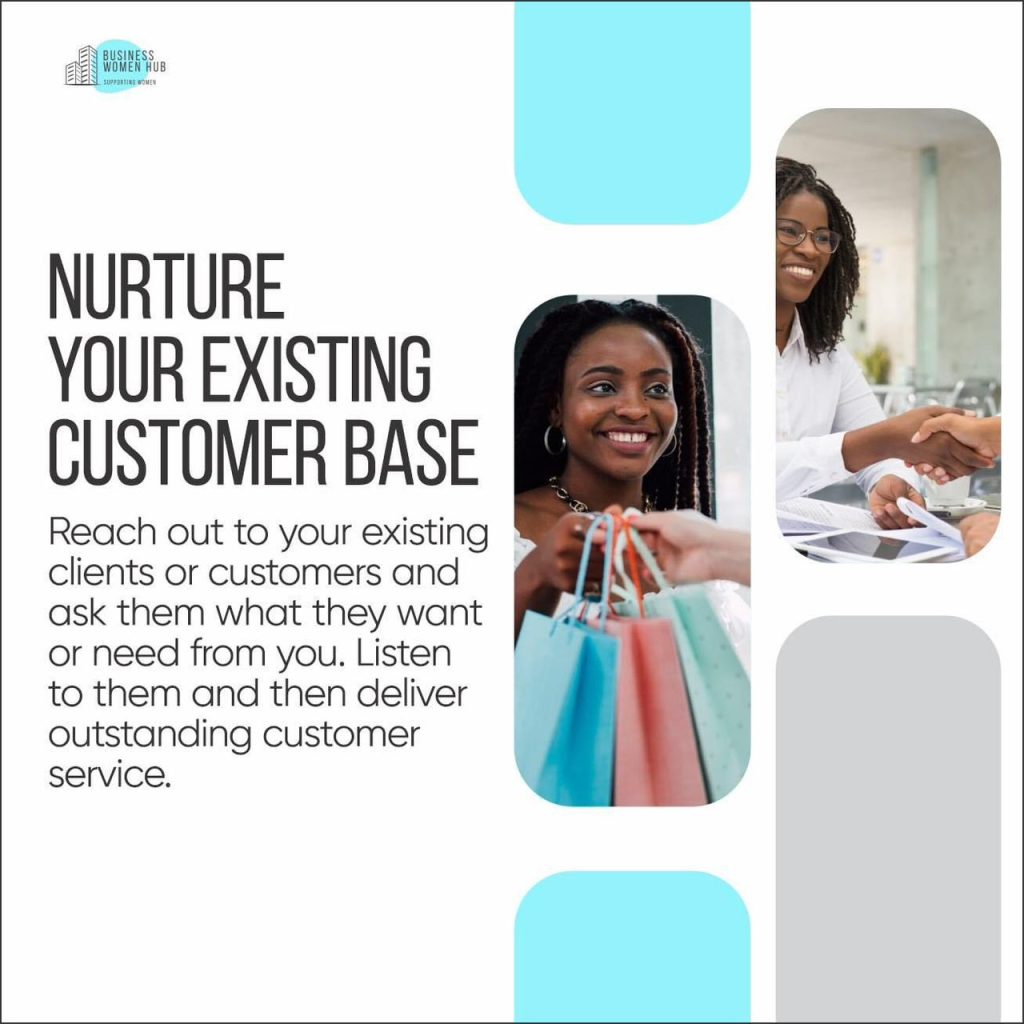
Nurture your existing customer base
Reach out to your existing clients or customers and ask them what they want or need from you. Listen to them and then deliver outstanding customer service. If your existing customer base is nurtured throughout a difficult time, they are more likely to be loyal and recommend you to their networks. You might even consider cutting the bottom 20% of your worst-performing customer base to ensure you’re devoting precious resources to those that are worth it.
Support the employees you’re retaining
A recession naturally provokes anxiety and fear, especially if costs are being cut and employees are being furloughed or even laid off. Letting your poorest-performing employees go may be a step you need to take. If so, build morale and motivation in the employees you’re retaining by clearly communicating with your staff what is happening within the business. Try to involve them in the decision-making process, so they can feel included and part of the solution. Motivate them to work hard because you’re all in it together.
Build relationships
Always keep the lines of communication open. Get out there, network and build relationships. Keep your ears open, your eyes peeled and your thinking outside the box because you’re going to need your wits about you to spot those much-needed opportunities.
Startup founders often aspire to rapid and lasting success. However, attaining substantial revenue growth proves to be a hurdle for numerous entrepreneurs. The key lies in a continuous readiness to adjust, innovate, and perfect operational methods.
Finding the right mentors for the problem
The first step is connecting with mentors who had faced similar challenges. This investment was invaluable. Insights from experienced mentors can provide breakthrough solutions. Seeking guidance from experts in specific areas, like sales, can significantly impact business growth.
A simple 20-minute conversation with a mentor could provide the breakthrough needed to solve an issue you’ve been struggling with for months or even years. Finding mentors excelling in your specific issue, not just your business model, is crucial.
Setting yourself up to scale
Setting up for growth by systemizing the offerings and operations. Starting with custom services can cause issues in onboarding clients and managing accounts, making it hard to delegate tasks. Always questioning scalability and future relevance will save one from unnecessary expenses and time wasted on non-essential changes.
It’s always difficult onboarding new clients and finding emoloueedy who could manage accounts, preventing them from stepping back from the daily client fulfillment tasks. During this stage, it is advisable to ask these questions, “Is this solution scaleable?” and “Does this solution solve for right now, or does it solve for a future problem?”
Asking these questions would save you from spending countless hours and money on implementing change that wasn’t needed.
Understanding your teams’ true bandwidth capabilities
By using time-tracking software, you should be able to see how much work the team could actually do. It can help you see which clients were taking up too much time and which tasks were taking too long. Adjusting some clients’ payments based on their needs can help manage more accounts without overwhelming the team.
Additionally, you can streamline many procedures and tasks to boost efficiency, enabling the team to focus more on executing KPIs rather than on tedious administrative tasks that weren’t truly needed at the end of the day.
Over time, the data showed the true client-to-account executive ratio in ensuring you can keep growing as fast as you want to.
Diversify services to offer
A smart strategy for boosting revenue is to find complimentary items and services that complement your best-selling products and services.
It is possible to increase average customer lifetime value by identifying and addressing customers’ unmet wants and then delivering products that fill in the gaps and help sell the company’s primary income generators.
Attract More Online Traffic and Customers to your Small Retail Business with these 4 Innovative Techniques
As a small retail business owner, you might not have funds or technical know-how to run expensive, complicated paid ads. That’s why it is essential to optimize your budget and implement tried-and-trusted strategies to get the best return on your ad spend.
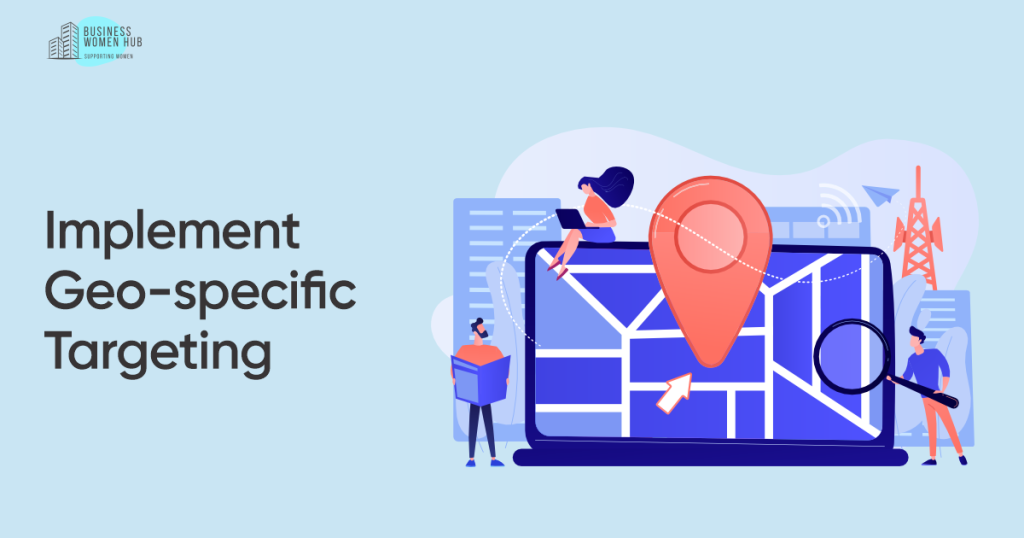
Implement geo-specific targeting
Implementing geo-specific targeting allows you to focus your advertising efforts on people who are most likely to convert into real customers.
First, determine the locations you wish to target.
Log into your ads account and select the campaign you want to target geographically.
Use the targeted locations as keywords in your ad copy.
Monitor your ad analytics to assess the number of clicks, calls, or conversions generated by your targeted ads, then refine your strategy accordingly.
Increase Relevance with Clustering and Ad groups
To identify negative keywords, review past campaigns to see if any irrelevant keywords triggered your ads. Further, brainstorm any common terms that don’t align with your products or business.
Log in to your Google Ads account.
Choose the campaign or ad group where you want to add negative keywords.
In the left-hand menu, click “Keywords,” and then select “Negative Keywords.”
Click the “+” button to add new negative keywords. You can enter individual keywords or upload a list.
Once you’ve added the desired negative keywords, click “Save” to apply them to your campaign.
Reduce Ad Spend by Adding Negative Keywords
Ad groups can then be used to house clusters of related keywords and the ads that target them. Using the same example as above, you might create separate ad groups for RTW, Bespoke, respectively. For each ad group, you’ll write tailored ad copy that specifically addresses the keywords in that group. Clustering ensures that your ads are matched with the most relevant search queries and the right types of customers, based on their interests. Grouping increases ad relevance, which can reduce your cost-per-click (CPC) and increase your ROl.
Increase Online Sales with Google Shopping ads
You can increase traffic online for your small business through google ads. Google or search engine ads are unique ads that are created using the product data directly from your Google Merchant Center account.
Create a Google Merchant Center account.
Set up your product feed.
Upload your product feed to Google Merchant Center.
Link your Google Merchant Center and Google Ads accounts.
In the Google Merchant Center, navigate to the “Account Linking” section.
Sign in to your Google Ads account and create a new campaign. Click on the “+ New Campaign” button, select
“Sales” or “Leads” as your campaign goal, and then choose
Increasing productivity is a crucial aspect of achieving success in both personal and professional spheres. Here are some effective ways to boost productivity, explained in detail:
Prioritize Tasks Using the Eisenhower Matrix
The Eisenhower Matrix is a decision-making tool that helps you prioritize tasks based on their urgency and importance. Divide your tasks into four quadrants:
Urgent and Important (Do First):
Important but Not Urgent (Schedule):
Urgent but Not Important (Delegate):
Not Urgent or Important (Eliminate):
Break Down Large Tasks into Smaller Ones (Task Segmentation)
Large tasks can be overwhelming and may lead to procrastination. Breaking them down into smaller, manageable tasks can make them more achievable and increase productivity. This technique is called task segmentation.
Identify a large task that needs to be completed
Break it down into smaller tasks that can be completed individually
Create a checklist or schedule for each smaller task
Focus on completing one smaller task at a time
Stay Organized and Use Productivity Tools
Staying organized and using productivity tools can help you manage your tasks and time more efficiently.
Use a task management system like Trello, Asana, or Todoist to organize your tasks
Implement a filing system for your documents and emails
Use tools like calendars, planners, or apps to stay organized and on track
Continuously Evaluate and Adjust Your Productivity System
Productivity systems are not one-size-fits-all. Continuously evaluating and adjusting your system can help you stay productive and achieve your goals.
Regularly review your productivity system and identify areas for improvement
Adjust your system based on your changing needs and priorities
Experiment with new tools and techniques to stay productive and efficient
By implementing these strategies, you can significantly boost your productivity and achieve your goals more efficiently. Remember to stay flexible and adjust your approach as needed to optimize your productivity.