Professional development is crucial in various domains, including businesses, career, and personal growth. Here are some reasons why it holds immense importance:
*Customers Satisfaction and Trust: Customer satisfaction and trust are crucial for the success of any business. Satisfied customers are more likely to become repeat customers and recommend the business to others, leading to increased sales and referrals. Building trust and loyalty among customers also establishes a positive brand reputation, attracting new customers and creating a competitive edge.
*Adaptability to Change: Industries and markets are constantly evolving, and professional development equips individuals with the ability to adapt and thrive in these changing environments. It helps them stay ahead of the curve, embrace innovation, and remain competitive.
*Increased Job Satisfaction: Pursuing professional development aligns individual goals with organizational objectives. It allows individuals to explore their interests, follow their passions, and excel in areas that bring them fulfillment. This, in turn, enhances job satisfaction and overall well-being.
*Continuous Learning Culture: Embracing professional development promotes a culture of continuous learning within organizations. This fosters innovation, adaptability, and growth mindset, ultimately leading to improved performance and organizational success.
*Seeking Professional Development from recognized and accredited institutions: Seeking professional development from recognized and accredited institutions ensures that the training and education received meet high standards of quality and reliability. When individuals pursue professional development from recognized and accredited institutions, they can have confidence in the credibility and validity of the programs
An online store, also known as an e-commerce store, is a virtual platform where businesses can showcase and sell their products or services over the internet. It allows customers to browse through a variety of products, make purchases, and complete transactions online.
Having an online store offers several significant advantages: One of the advantages is:
*Global Reach: With an online store, businesses can reach customers beyond their local geographical boundaries. It enables access to a worldwide audience, expanding potential customer base and revenue opportunities.
*Convenience: Online stores provide convenience to both businesses and customers. Customers can browse and shop at any time, from anywhere, without the limitations of physical store hours. Businesses can operate 24/7, catering to a diverse range of customers.
*Increased Sales Potential: Online stores allowm businesses to tap into a larger customer base and increase sales potential. The ability to showcase a wide range of products and offer personalized recommendations drives customer engagement and leads to higher conversion rates.
*Cost-Effectiveness: Maintaining an online store is often more cost-effective than running a physical retail store. It eliminates the need for expenses related to rent, utilities, and maintaining a large inventory.
*Data Insights: Online stores provide valuable data insights about customer behavior, preferences, and purchase patterns. Businesses can leverage this information to optimize marketing strategies, enhance product offerings, and improve overall customer experience.
*Competitive Edge: In today’s digital age, having an online store is crucial to stay competitive. Businesses that embrace e-commerce gain a competitive edge by meeting the evolving needs and preferences of customers who prefer online shopping.
Budgeting tips are important for business owners as they provide financial control, help manage costs, facilitate informed decision making, and enable effective financial planning. By implementing these strategies, business owners can achieve greater financial stability, growth, and long-term success.
Certainly! Here are the details for each smart budgeting tip for small business owners:
TRACK EVERY EXPENSE: To effectively manage your finances, it’s crucial to track every expense incurred by your small business. This includes keeping a record of both major and minor expenditures. By diligently tracking your expenses, you gain insights into where your money is going and can identify areas where you might need to cut back or find more cost-effective alternatives.
SET CLEAR FINANCIAL GOALS: Establishing clear financial goals provides a roadmap for your business’s financial success. It could include objectives like increasing revenue, reducing costs, improving cash flow, or investing in expansion. By defining these goals, you can align your budgeting efforts towards achieving them.
UTILIZE BUDGETING TOOLS: Take advantage of budgeting tools that are designed to simplify the process and help you stay on top of your finances. There are several online platforms and software available that can assist in budget creation, expense tracking, and financial analysis. These tools can provide visual representations of your financial data, making it easier to identify trends and make informed decisions.
REGULARLY MONITOR AND ADJUST: Budgeting is not a one-time task; it’s an ongoing process. Regularly monitor your budget and compare it to your actual financial performance. Identify any discrepancies or areas where you may need to make adjustments. This allows you to stay proactive in managing your finances and make necessary changes to keep your business on track.
BUILD AN EMERGENCY FUND: Small businesses can face unexpected challenges or downturns. Building an emergency fund is essential for financial resilience. Allocate a portion of your budget towards creating a contingency fund that can be used to cover unexpected expenses or sustain your business during difficult times. Having this safety net can provide peace of mind and help mitigate potential financial risks.
Implementing these smart budgeting tips can contribute to the financial stability and growth of your small business. Remember, consistently reviewing and adapting your budgeting strategies based on your business’s evolving needs is key to long-term financial success.
How to improve your financial performance as a business owner
Financial management is a critical aspect of running a successful business. Here are some ideas to help entrepreneurs improve their financial management skills:
1. Develop a budget and stick to it. A budget is a plan that outlines your income and expenses for a set period of time. By developing a budget, you can identify areas where you can cut costs and increase revenue.
2. Keep accurate financial records. Accurate financial records are essential for making informed business decisions. Make sure you are keeping track of all income and expenses, and that you are separating your personal and business finances.
3. Understand your cash flow. Cash flow is the amount of cash coming in and going out of your business. It’s important to understand your cash flow so that you can make informed decisions about when to invest in your business and when to cut costs.
4. Monitor your financial ratios. Financial ratios are a way to measure the financial health of your business. Some common ratios to monitor include the current ratio, debt-to-equity ratio, and profit margin.
5. Work with a financial advisor. A financial advisor can provide valuable advice and guidance on financial management and accounting. They can help you develop a financial plan, monitor your financial performance, and make informed decisions about your business.
6. Use accounting software. Accounting software can help you keep track of your finances, generate financial reports, and manage your cash flow. Popular accounting software options include QuickBooks, Xero, and Fresh Books.
By focusing on these areas of financial management, entrepreneurs can improve their financial performance and increase the likelihood of long-term success.
Google’s proprietary tools that can help you boost your results for free .
Use Google’s tools for business
These days, businesses working towards improving their professional online image and visibility in search results have a lot of Google My Business tools to choose from. A wealth of free and paid software is already available, and new solutions are being created every day. But sometimes simple is best – that’s why we will start with Google’s proprietary tools that can help you boost your results for free.
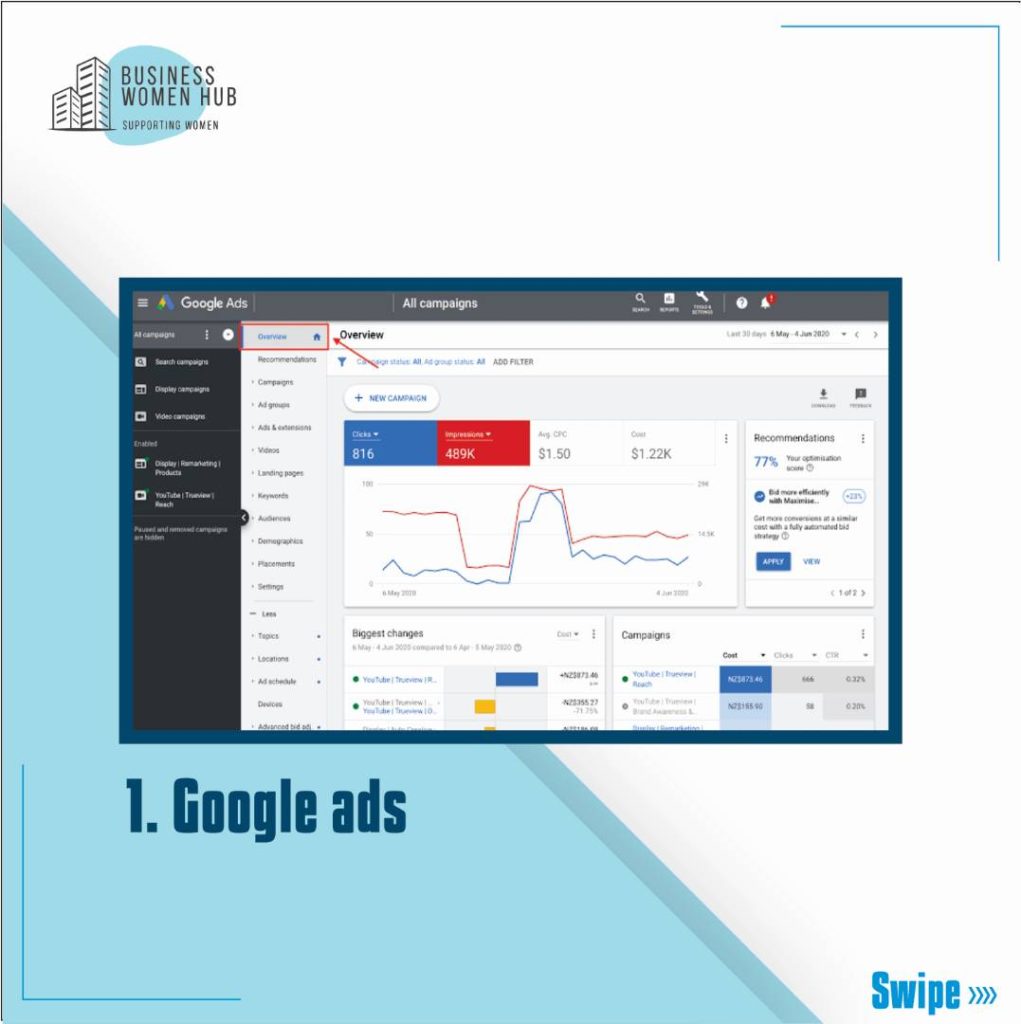
1.Google Ads
Google offers one of the most powerful online marketing tools on the market: Google Ads. This complex advertising system with advanced targeting options will help you reach customers all around the web including Google partners’ websites, YouTube, and, perhaps most importantly, Google ’search results.
2.Google Reviews
Regardless of what you’re selling, customers and prospects will eventually try to contact you about your products or services. And, in the name of great customer service, the best thing you can do is to make it easier for them to reach you.
The first good practice here is to stay connected to your customers by keeping your GMB reviews section alive. Interact with them by replying to their reviews no matter if they’re positive or not. This way you’ll show that you care about what people say about your business and that you acknowledge and act on your customers’ feedback.
Remember that people rely on ratings when deciding on where and how they will spend their money. That’s why it’s crucial to list your products on Google Shopping and encourage users to leave Google shopping reviews.
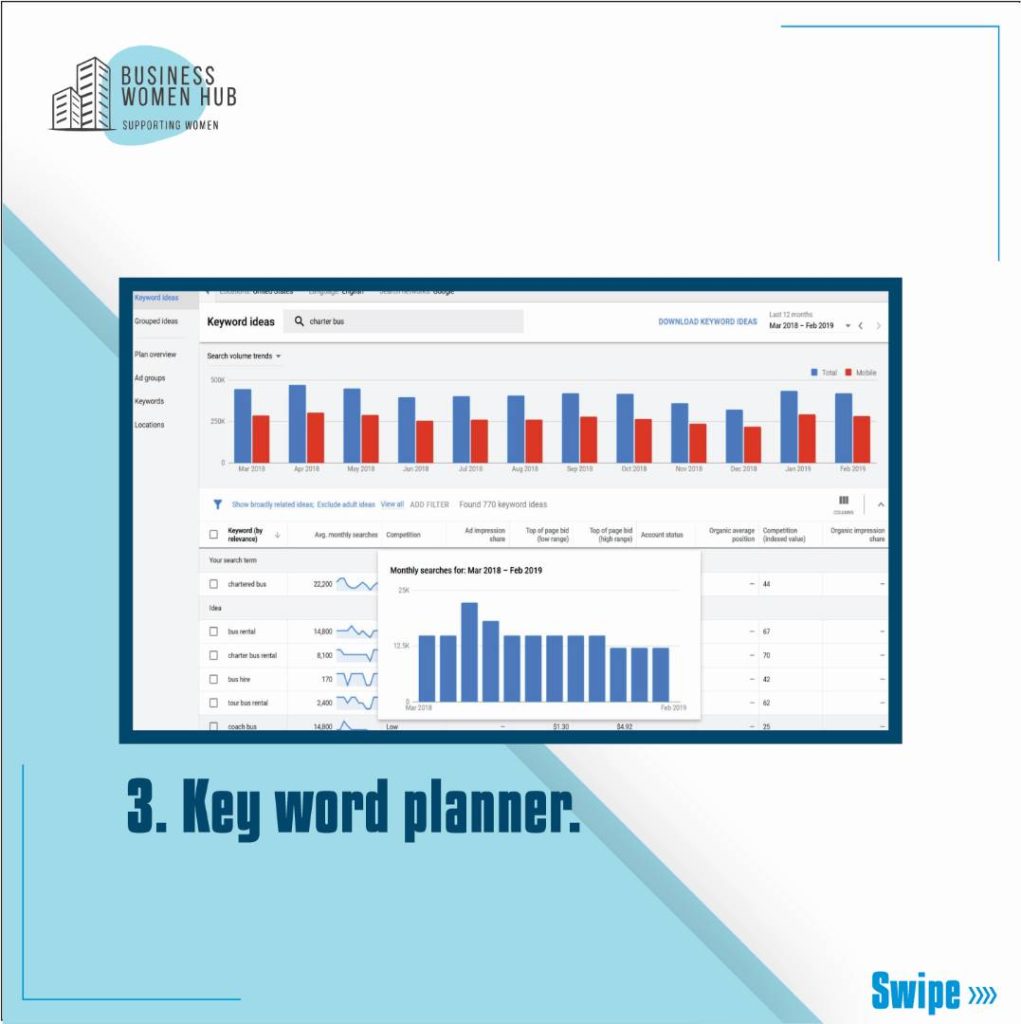
3. Keyword Planner
Whether you advertise your business through a website, blog, or other forms of content, search engine optimization is definitely one of the most important components of a successful online marketing strategy. You don’t need to become an expert right away as SEO is a complex field of digital marketing. Luckily, Google provides some great tools to make your life easier here. Use them while preparing content for your website to make it more discoverable.
To do so effectively, you’ll need to optimize the copy of your website, publish meaningful blog posts, and so on. Weaving in keywords relevant to your niche and to the search phrases your target audience uses to find businesses similar to yours is a great practice.
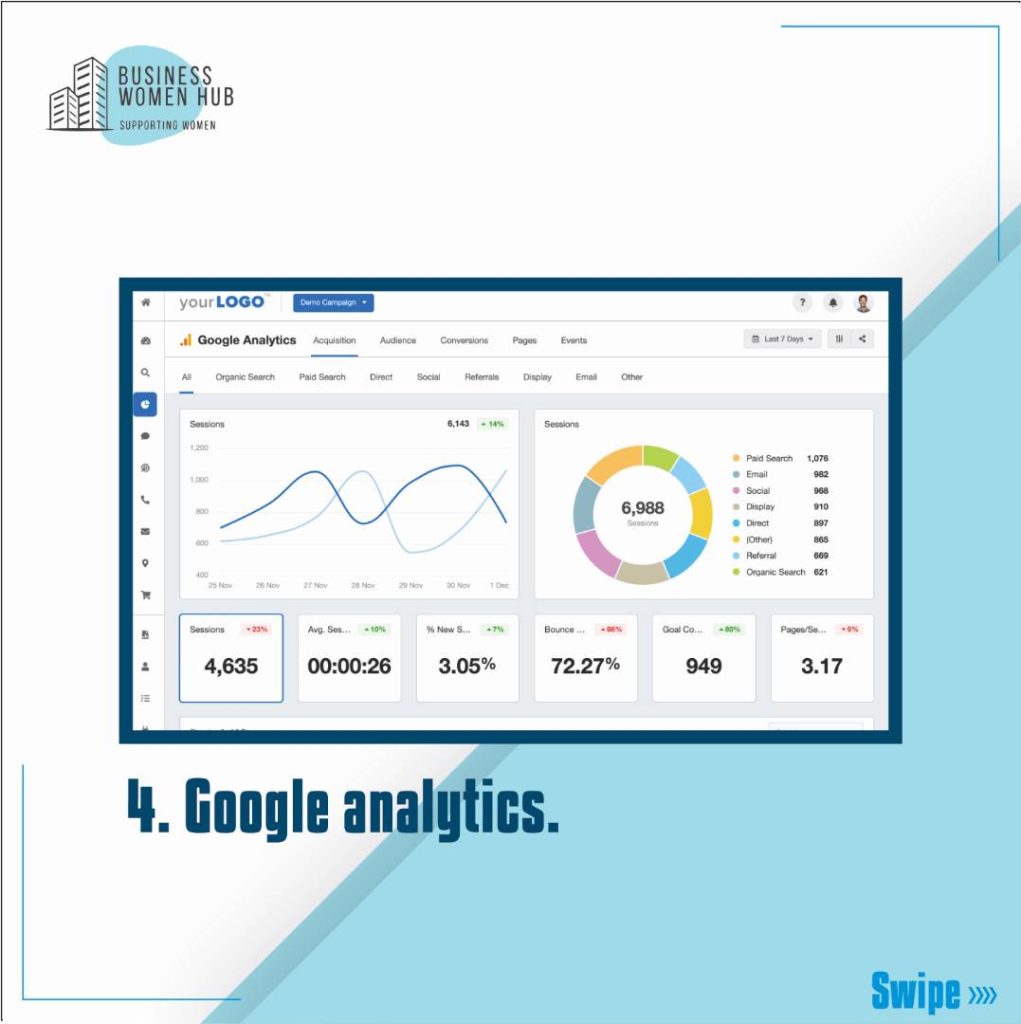
4. Google Analytics
Google Analytics is yet another powerful tool among Google’s numerous products. If you want to grow your business, it is essential that you measure your results and draw conclusions. This process enables you to come up with countermeasures whenever something’s not going as planned and make improvements.
Google Analytics is able to measure the results of your website, mobile app, online store, social media channels, and more. The best thing here is that when you get comfortable using it, you can set up pretty advanced measurements, including cross-platform, user-centric analytics. Proficiency in Google Analytics comes with access to a world of insights that, when skillfully used, can lead to serious improvements to your digital ROI.
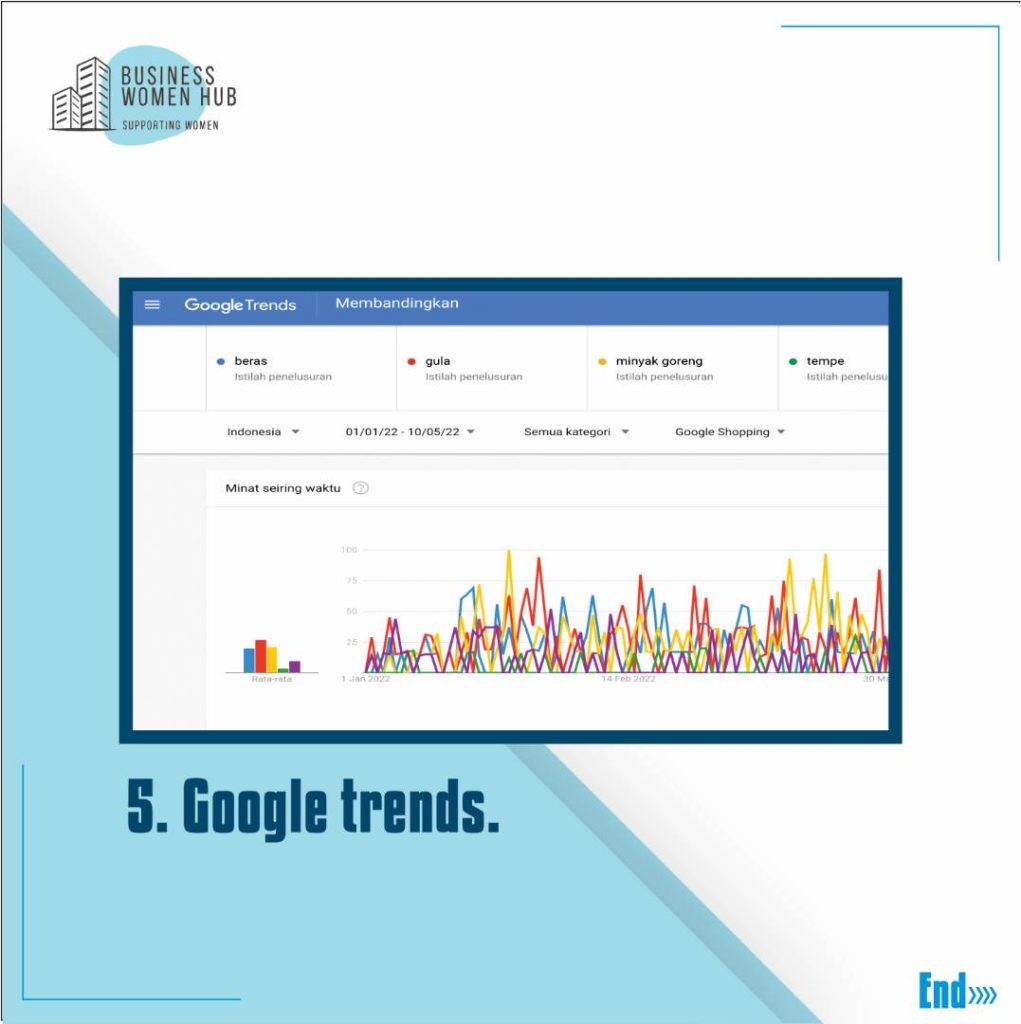
5. Google Trends
Getting attention for your business on the internet is about being where your audience is. To achieve that, you don’t need to spend hours digging through online forums and relevant threads on social media. Meet Google Trends, your new assistant for researching trending topics.
Google Trends analyzes all of the searches Google users perform and displays summaries in easy-to-read forms like diagrams and heat maps. Thanks to that you can not only see what is trending on the internet in a certain period of time but also check how frequently phrases connected to your business are searched.
Following through on our sales funnel highlights and it’s importance in our business , we will take a look at the second stage – The Interest stage.
Here, the prospect has expressed some level of consideration toward your offer. They’ll perform some research and maybe investigate other opportunities too. They recognize that they have a need, but they don’t want to act too quickly.In order to keep their interest and guide them further down the sales funnel, offer them resources and valuable content that will appeal to them.
Avoid trying to sell too early or you’ll scare them off by being too forward. Instead, focus on establishing yourself as an expert that’s looking out for their best interest rather than just trying to make a sale. This way you are able to build TRUST- a key necessity in sales.
This week , we will be more critical about our sales output and sales processes via understudying the sales funnel. The sales funnel is the visual representation of how you generate leads and nurture prospects through the sales process.
When you fully understand your sales funnel, you’ll be able to refine your sales approach and properly scale your entire process. As highlighted in this post , a sales funnel will help you :
– Forecast sales revenue – Indicate gaps in the sales process – Lead to optimization opportunities
Stay with us this week as we go over what your sales funnel actually means and why you should take the time to properly optimize it.