Posted on Leave a comment

New Year’s Resolution for Female Entrepreneur

2024 taught us valuable lessons, and 2025 is the year to apply them. Here are actionable resolutions to empower your journey as a female entrepreneur:

Stop dimming your light to fit in. Let 2025 be the year you fully embrace your true self. Celebrate what makes you unique—your authenticity will set you apart in the business world.

2. Support Other Women

Collaborate with female-owned businesses to reach new audiences and foster mutual growth. Together, we can achieve more and create lasting relationships that strengthen our community.

3. Value Your Potential

Leave negativity behind and recognize your achievements. Running a business is no small feat—celebrate your journey and milestones, and practice self-love daily

4. Improve Self-Care

Your business thrives when you do. Set time aside each day to care for yourself. Even a moment to pause, reflect, and breathe can make a difference.

Let these resolutions guide you toward success and fulfillment in 2025. Together, let’s continue to break barriers and build legacies!

Posted on Leave a comment

4 Tips to Maximize Profits in Business

Profitability is a measure of a company’s ability to generate maximum revenue while incurring minimal costs. In the most basic sense, profit goes up as sales increase and/or costs decrease.
In reality, though, achieving profitability is anything but simple. Because sales and costs are not necessarily incremental, focusing too much on increasing sales could leave you at risk if there is a sudden, unforeseen decrease in demand.

Cost of goods sold Adjust pricing/Cost of Goods Sold (COGS) (COGS) are the direct costs associated with making a product or delivering a service—mainly raw materials and labor. It’s critical that COGS is calculated accurately and kept as consistent as possible so that products or services may be priced correctly.
To achieve this, companies must define, track and price the time and material resources needed to complete each build. By standardizing the manufacturing process, you should be able to accurately anticipate true costs and avoid large discrepancies from one build to the next—thus standardizing COGS.

Review Your Product Portfolio and Pricing


Related to both of the above items, it’s important to understand the true unit margins for each product in your portfolio and update that data frequently.
A good rule of thumb: Before adding a new offering, review your current portfolio. Are products underperforming? Do you have difficult-to-produce items that are eating away at your margins, time and money?

Increase Customer Lifetime Value

Never underestimate the power of happy clients. Understanding your customers and delivering consistently excellent experiences is perhaps the most cost-effective way to increase loyalty and acquire new customers via referrals.
You can show appreciation for your existing customers, increase their lifetime value, deliver new leads and boost your profits. How? Consider: Incentives, Encourage referrals, Recommendations and reviews, Customer retention.

Refine Demand Forecasts

If you have more componentry or raw material inventory than demand, you’ll end up spending to store it, or worse, have it expire and need to be replaced. But if you don’t have enough, you’ll pay for rush orders and expedited shipping—both of which increase COGS.

Posted on Leave a comment

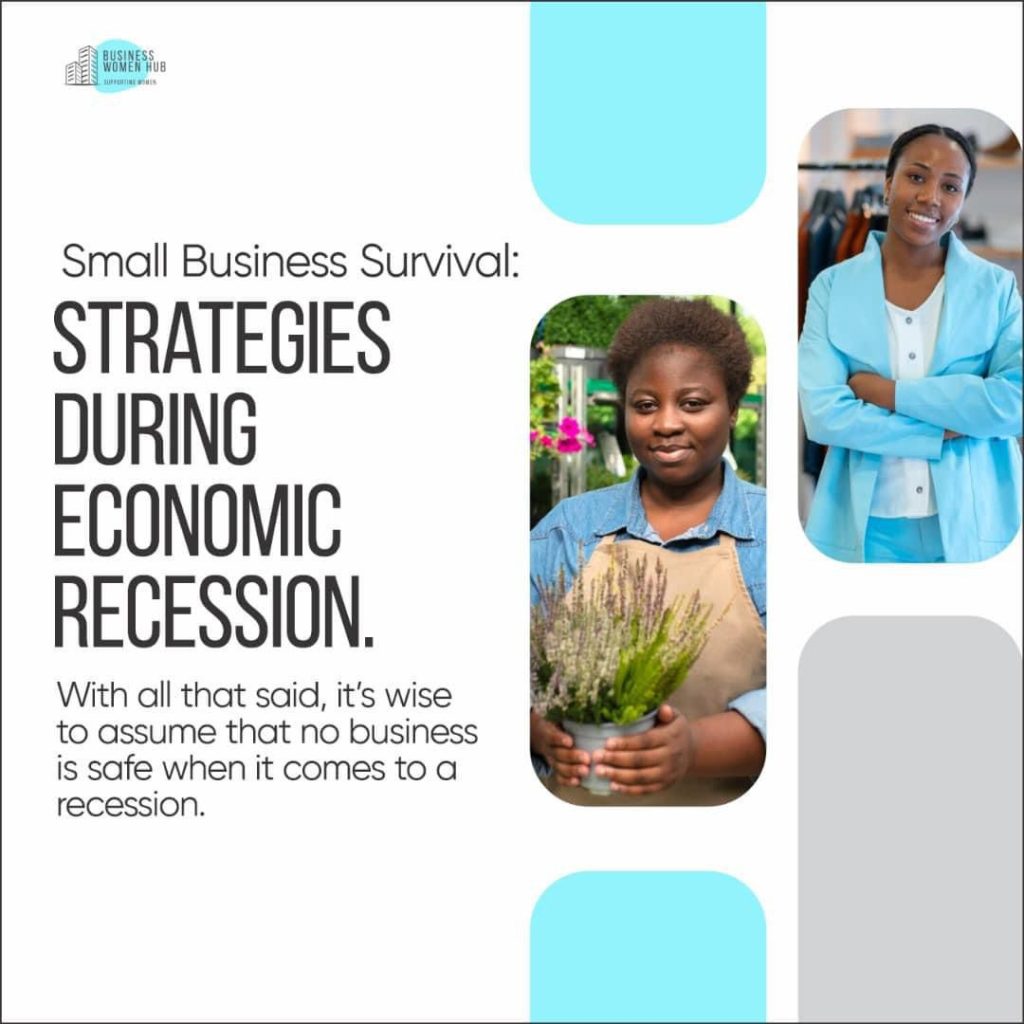
Small Business Survival: Strategies During Economic Recession.

With all that said, it’s wise to assume that no business is safe when it comes to a recession. So here are some strategies for business survival during a recession you can employ to give your business the best chance.

Cut or reduce unnecessary costs


This is an obvious one but it’s by no means a silver bullet solution, nor is it sustainable. However, when times turn tough you might want to consider the following:
1.Negotiating down your monthly rent and any other supplier costs

2. Find cheaper vendors for utilities and cut any non-essential technology costs

3. Delay payables and collect receivables sooner

4. Consider whether poorly performing employees are worth retaining

5. Look at flexible staffing options

Nurture your existing customer base

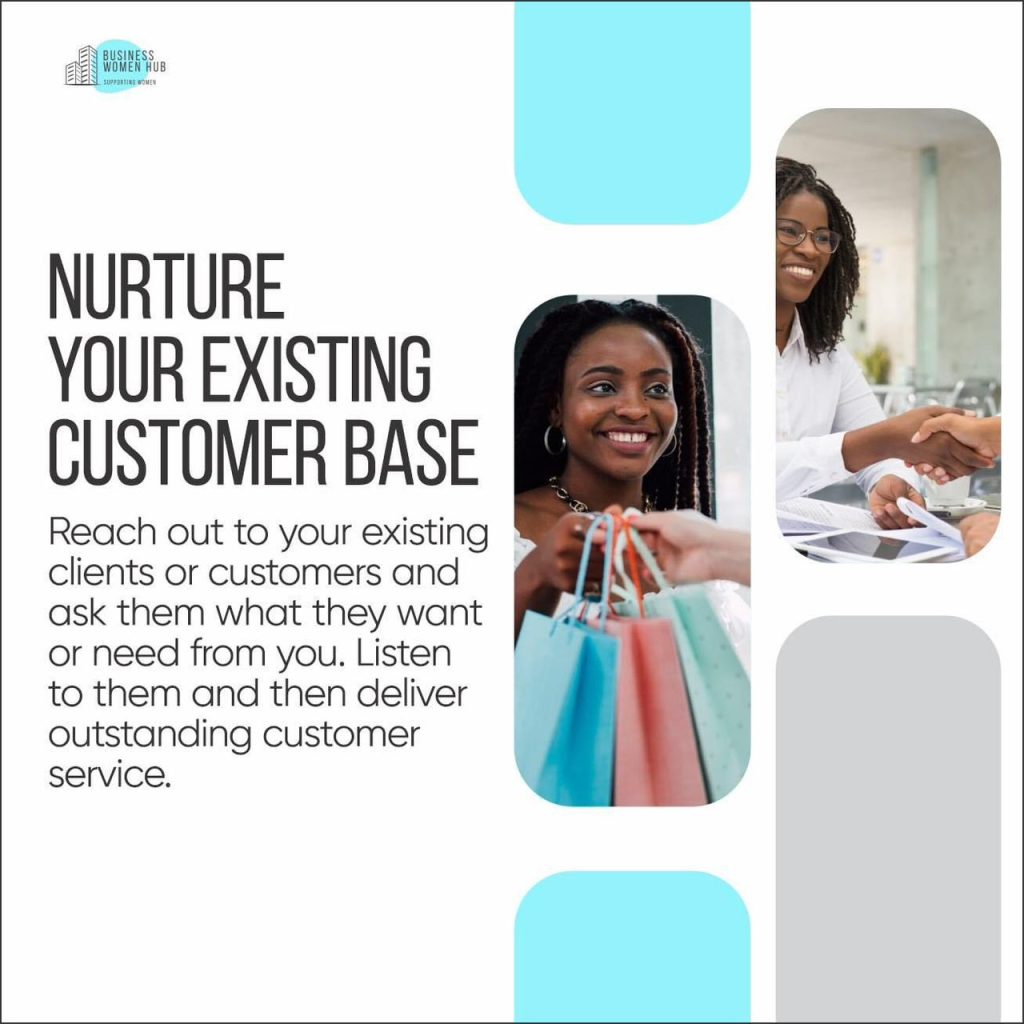
Reach out to your existing clients or customers and ask them what they want or need from you. Listen to them and then deliver outstanding customer service. If your existing customer base is nurtured throughout a difficult time, they are more likely to be loyal and recommend you to their networks. You might even consider cutting the bottom 20% of your worst-performing customer base to ensure you’re devoting precious resources to those that are worth it.

Support the employees you’re retaining

A recession naturally provokes anxiety and fear, especially if costs are being cut and employees are being furloughed or even laid off. Letting your poorest-performing employees go may be a step you need to take. If so, build morale and motivation in the employees you’re retaining by clearly communicating with your staff what is happening within the business. Try to involve them in the decision-making process, so they can feel included and part of the solution. Motivate them to work hard because you’re all in it together.

Build relationships

Always keep the lines of communication open. Get out there, network and build relationships. Keep your ears open, your eyes peeled and your thinking outside the box because you’re going to need your wits about you to spot those much-needed opportunities.

Posted on Leave a comment

4 Strategies to Enhance Startup Revenue and Profit

Startup founders often aspire to rapid and lasting success. However, attaining substantial revenue growth proves to be a hurdle for numerous entrepreneurs. The key lies in a continuous readiness to adjust, innovate, and perfect operational methods.

Finding the right mentors for the problem

The first step is connecting with mentors who had faced similar challenges. This investment was invaluable. Insights from experienced mentors can provide breakthrough solutions. Seeking guidance from experts in specific areas, like sales, can significantly impact business growth.

A simple 20-minute conversation with a mentor could provide the breakthrough needed to solve an issue you’ve been struggling with for months or even years. Finding mentors excelling in your specific issue, not just your business model, is crucial.

Setting yourself up to scale

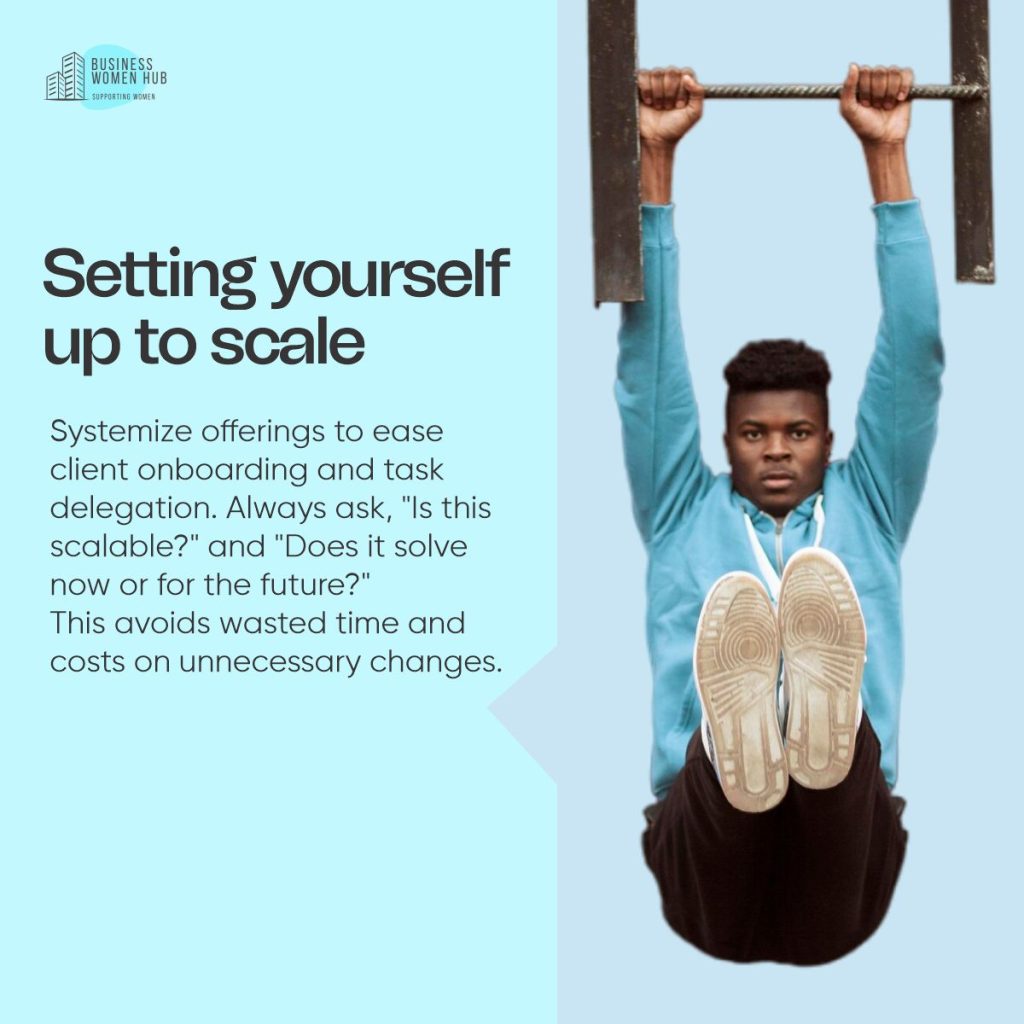
Setting up for growth by systemizing the offerings and operations. Starting with custom services can cause issues in onboarding clients and managing accounts, making it hard to delegate tasks. Always questioning scalability and future relevance will save one from unnecessary expenses and time wasted on non-essential changes.

It’s always difficult onboarding new clients and finding emoloueedy who could manage accounts, preventing them from stepping back from the daily client fulfillment tasks. During this stage, it is advisable to ask these questions, “Is this solution scaleable?” and “Does this solution solve for right now, or does it solve for a future problem?”

Asking these questions would save you from spending countless hours and money on implementing change that wasn’t needed.

Understanding your teams’ true bandwidth capabilities

By using time-tracking software, you should be able to see how much work the team could actually do. It can help you see which clients were taking up too much time and which tasks were taking too long. Adjusting some clients’ payments based on their needs can help manage more accounts without overwhelming the team.

Additionally, you can streamline many procedures and tasks to boost efficiency, enabling the team to focus more on executing KPIs rather than on tedious administrative tasks that weren’t truly needed at the end of the day.

Over time, the data showed the true client-to-account executive ratio in ensuring you can keep growing as fast as you want to.

Diversify services to offer

A smart strategy for boosting revenue is to find complimentary items and services that complement your best-selling products and services.

It is possible to increase average customer lifetime value by identifying and addressing customers’ unmet wants and then delivering products that fill in the gaps and help sell the company’s primary income generators.

Posted on Leave a comment

Attract More Online Traffic and Customers to your Small Retail Business with these 4 Innovative Techniques

Attract More Online Traffic and Customers to your Small Retail Business with these 4 Innovative Techniques

As a small retail business owner, you might not have funds or technical know-how to run expensive, complicated paid ads. That’s why it is essential to optimize your budget and implement tried-and-trusted strategies to get the best return on your ad spend.

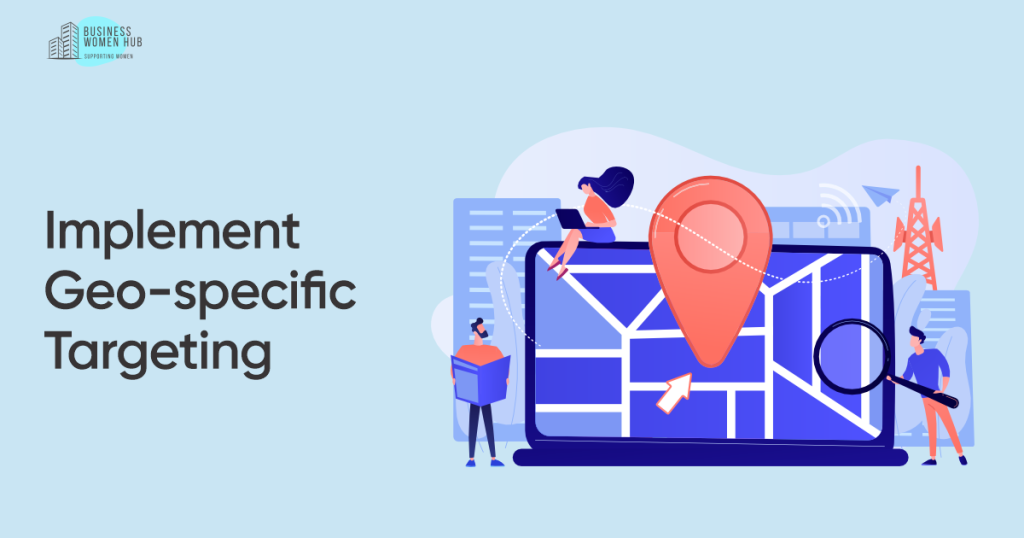
Implement geo-specific targeting

Implementing geo-specific targeting allows you to focus your advertising efforts on people who are most likely to convert into real customers.

  1. First, determine the locations you wish to target.
  2. Log into your ads account and select the campaign you want to target geographically.
  3. Use the targeted locations as keywords in your ad copy.
  4. Monitor your ad analytics to assess the number of clicks, calls, or conversions generated by your targeted ads, then refine your strategy accordingly.

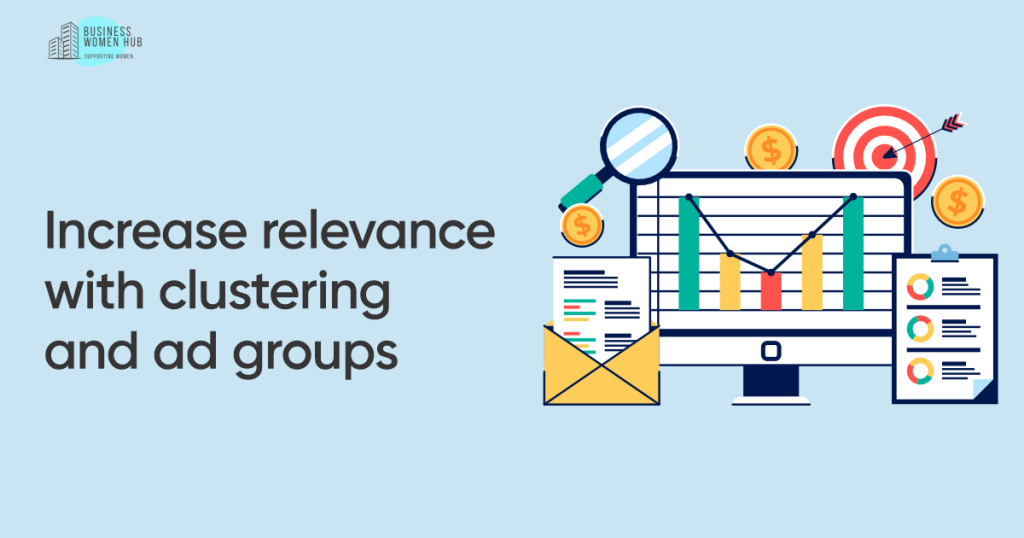
Increase Relevance with Clustering and Ad groups

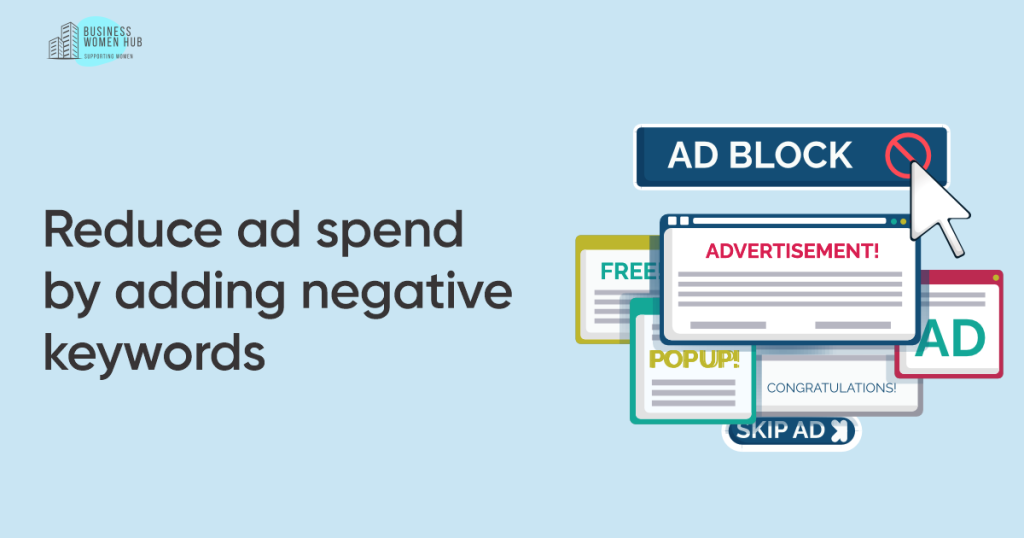
To identify negative keywords, review past campaigns to see if any irrelevant keywords triggered your ads. Further, brainstorm any common terms that don’t align with your products or business.

  1. Log in to your Google Ads account.
  2. Choose the campaign or ad group where you want to add negative keywords.
  3. In the left-hand menu, click “Keywords,” and then select “Negative Keywords.”
  4. Click the “+” button to add new negative keywords. You can enter individual keywords or upload a list.
  5. Once you’ve added the desired negative keywords, click “Save” to apply them to your campaign.

Reduce Ad Spend by Adding Negative Keywords

Ad groups can then be used to house clusters of related keywords and the ads that target them. Using the same example as above, you might create separate ad groups for RTW, Bespoke, respectively. For each ad group, you’ll write tailored ad copy that specifically addresses the keywords in that group. Clustering ensures that your ads are matched with the most relevant search queries and the right types of customers, based on their interests. Grouping increases ad relevance, which can reduce your cost-per-click (CPC) and increase your ROl.

Increase Online Sales with Google Shopping ads

You can increase traffic online for your small business through google ads. Google or search engine ads are unique ads that are created using the product data directly from your Google Merchant Center account.

  1. Create a Google Merchant Center account.
  2. Set up your product feed.
  3. Upload your product feed to Google Merchant Center.
  4. Link your Google Merchant Center and Google Ads accounts.
  5. In the Google Merchant Center, navigate to the “Account Linking” section.
  6. Sign in to your Google Ads account and create a new campaign. Click on the “+ New Campaign” button, select
  7. “Sales” or “Leads” as your campaign goal, and then choose
  8. “Shopping” as the campaign type.

Posted on Leave a comment

5 SMART BUDGETING TIPS FOR SMALL BUSINESS OWNERS

Budgeting tips are important for business owners as they provide financial control, help manage costs, facilitate informed decision making, and enable effective financial planning. By implementing these strategies, business owners can achieve greater financial stability, growth, and long-term success.

Certainly! Here are the details for each smart budgeting tip for small business owners:

TRACK EVERY EXPENSE: To effectively manage your finances, it’s crucial to track every expense incurred by your small business. This includes keeping a record of both major and minor expenditures. By diligently tracking your expenses, you gain insights into where your money is going and can identify areas where you might need to cut back or find more cost-effective alternatives.

SET CLEAR FINANCIAL GOALS: Establishing clear financial goals provides a roadmap for your business’s financial success. It could include objectives like increasing revenue, reducing costs, improving cash flow, or investing in expansion. By defining these goals, you can align your budgeting efforts towards achieving them.

UTILIZE BUDGETING TOOLS: Take advantage of budgeting tools that are designed to simplify the process and help you stay on top of your finances. There are several online platforms and software available that can assist in budget creation, expense tracking, and financial analysis. These tools can provide visual representations of your financial data, making it easier to identify trends and make informed decisions.

REGULARLY MONITOR AND ADJUST: Budgeting is not a one-time task; it’s an ongoing process. Regularly monitor your budget and compare it to your actual financial performance. Identify any discrepancies or areas where you may need to make adjustments. This allows you to stay proactive in managing your finances and make necessary changes to keep your business on track.

BUILD AN EMERGENCY FUND: Small businesses can face unexpected challenges or downturns. Building an emergency fund is essential for financial resilience. Allocate a portion of your budget towards creating a contingency fund that can be used to cover unexpected expenses or sustain your business during difficult times. Having this safety net can provide peace of mind and help mitigate potential financial risks.

Implementing these smart budgeting tips can contribute to the financial stability and growth of your small business. Remember, consistently reviewing and adapting your budgeting strategies based on your business’s evolving needs is key to long-term financial success.