Posted on Leave a comment

From Busy to Profitable: How to Set Business Goals That Actually Make You Money This Year

As a new year begins, many women entrepreneurs sit down to set goals with excitement and high hopes. “Post more.” “Get more followers.” “Be more consistent.”
While these goals sound productive, they often lead to one thing: busyness without profit.
This year, it’s time to shift the conversation. Profitable growth doesn’t come from doing more; it comes from doing what matters. Here’s how to set business goals that are intentional, sustainable, and directly connected to revenue.
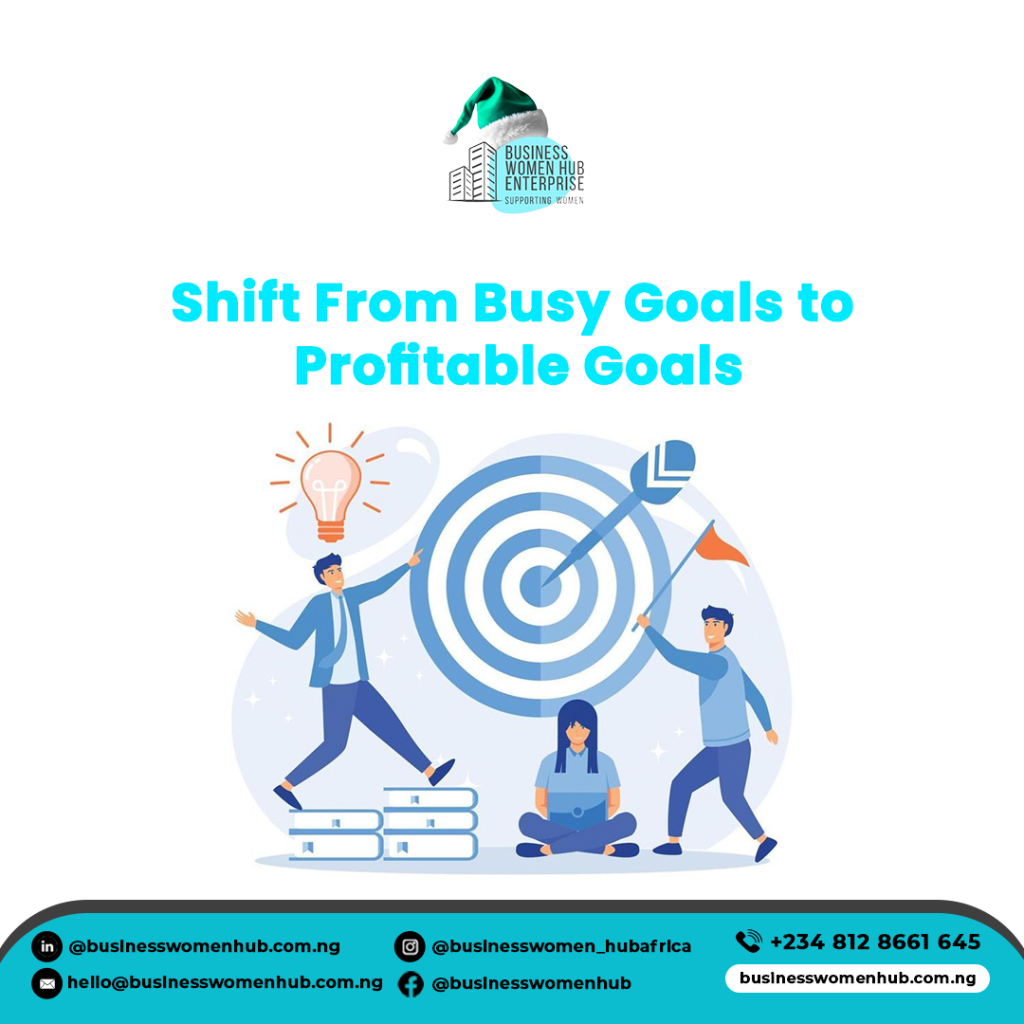
Shift From Busy Goals to Profitable Goals

Not all goals grow your business. Some only keep you occupied. Activity alone does not guarantee income. Profitable goals focus on outcomes, not just effort. Instead of asking, “How can I do more?”, profitable women ask, “What actually moves my business forward?”

Profitable goals help you:

  • Align your time with revenue
  • Stop doing what looks good but pays little
  • Focus on activities that drive real growth
  • Measure success beyond likes, views, and followers

To get started:

  • Identify the activities that brought in money last year
  • Separate revenue-generating tasks from support tasks
  • Ask, “Does this goal directly or indirectly lead to income?”
  • Prioritize clarity over volume
  • Choose fewer goals with clearer impact

A profitable year begins when you stop chasing busy and start choosing intentionally.

Set Goals That Match Your Capacity

Big goals are inspiring. Burnout is not. One common mistake many women make is setting goals based on pressure, comparison, or excitement, without considering their capacity. Profit doesn’t come from exhaustion; it comes from sustainability.

Your goals must respect:

  • Your time
  • Your energy
  • Your resources
  • Your current season of life

Before committing to your goals:

  • Review your current workload honestly
  • Decide how much time you can realistically give your business
  • Set goals that fit your life, not just your ambition
  • Build margin for rest and learning
  • Focus on consistency, not overwhelm

Growth that lasts is built on realistic plans. Sustainable goals protect both your profit and your peace.

Tie Every Goal to a Clear Revenue Path

A goal without a revenue path is just a wish. If you want more income this year, every major goal must answer one critical question: How does this make money, or support making money?

Profitable goals are connected to:

  • Offers
  • Pricing
  • Clients
  • Systems
  • Visibility that converts

To create revenue-driven goals:

  • Link each goal to a specific offer or service
  • Decide how the goal supports sales or client growth
  • Clarify your primary income streams
  • Set numbers, not vague intentions
  • Break annual goals into clear monthly actions

When your goals are connected to revenue, progress becomes measurable and motivating. Clarity turns effort into earnings.
Review, Refine, and Commit With Confidence

Goal setting is not a one-time activity; it’s an ongoing process. Profitable women don’t just set goals; they review them, refine them, and recommit with intention. Flexibility is part of the strategy, not a failure.

To stay aligned:

  • Review your goals weekly or monthly
  • Track what’s working and what’s not
  • Adjust your approach without guilt
  • Celebrate small wins along the way
  • Stay committed, even when progress feels slow

Profitable goals grow with you. When you consistently review and refine, success becomes intentional, not accidental.

Final Thought

This year, don’t just set goals that keep you busy. Set goals that pay you, protect your energy, and move your business forward with purpose.
Profit is not about doing more.
It’s about choosing better.
Posted on Leave a comment

BUILD IT RIGHT: The Ultimate Guide to Structuring & Registering Your Business

Before the profits, before the fancy branding, and long before the marketing campaigns… There is one thing that every successful business stands on: structure.

Most entrepreneurs don’t fail because they lack skill, passion, or ideas. They fail because the business lacks a clear identity, a solid legal foundation, and a framework for growth. Structure is not a luxury; it is the backbone of every sustainable brand.
Below is a breakdown on how to build a business that is not just running… but built to last.

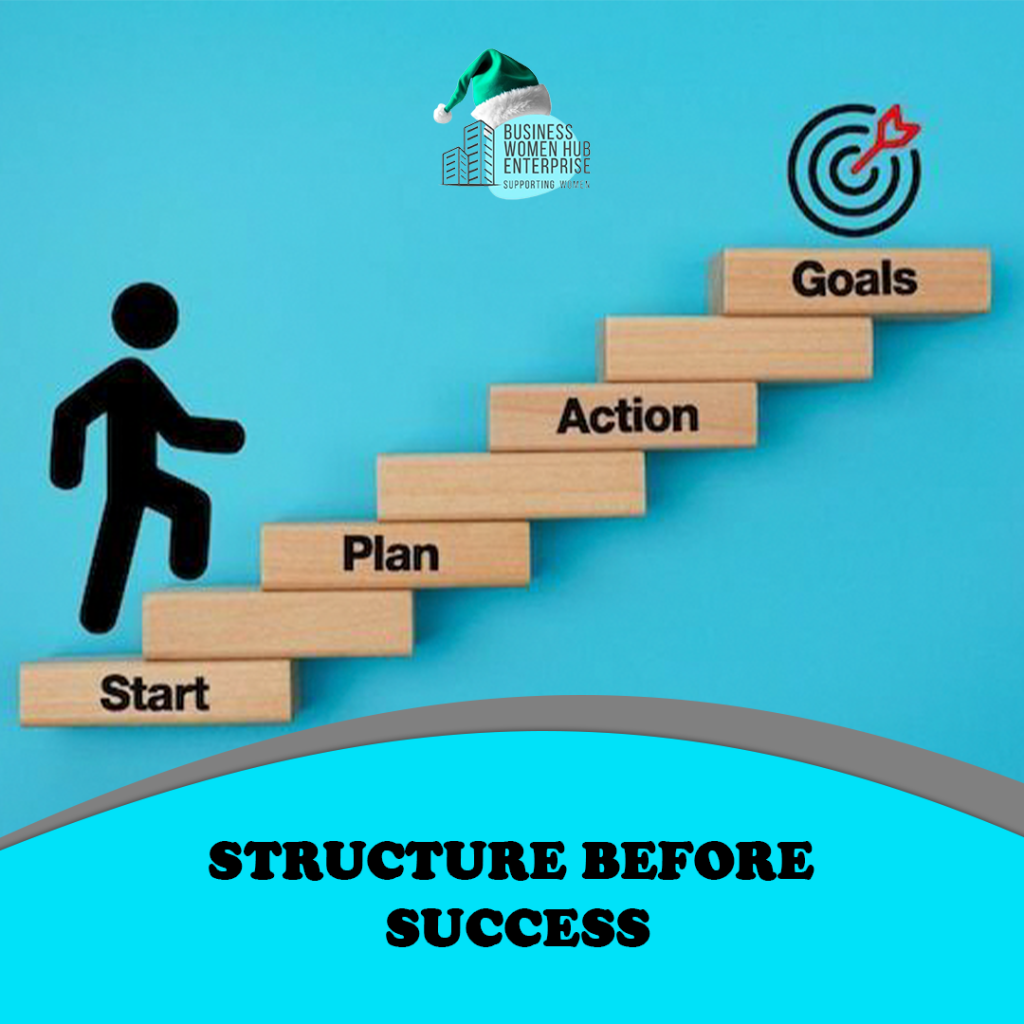
Structure Before Success

Before anything else, build structure. A business without registration is like a house without a foundation, one storm and it all collapses.
Registering your business is more than paperwork; it is the foundation that protects you, strengthens your brand, and creates opportunities you would never access otherwise.

Here’s what proper structure does for you:

  • Gives your business a legal identity
  • Protects your name from being claimed by someone else
  • Builds customer trust (registered brands are taken more seriously)
  • Opens doors to grants, loans, partnerships, and corporate contracts
  • Helps you separate your personal finances from your business finances

Reflection for the week: Is my business built to grow… or just built to survive?

Choosing the Right Business Type (It Matters!)

Not every business should be registered the same way. Your structure affects your tax, ownership, liability, and long-term possibilities.

Here are the main options every entrepreneur should understand:

  • Business Name (BN): Best for solo or small operators. Easy to register and manage, but offers limited protection. Great for makeup artists, food vendors, freelancers, and small retail brands.
  • Limited Liability Company (LTD): A separate legal entity that protects your personal assets. It carries stronger credibility and unlocks bigger opportunities. Perfect for tech startups, fashion brands, service companies, and growing businesses.
  • NGO / Incorporated Trustee: Ideal for non-profits, social impact initiatives, and community projects.

Key takeaway: Don’t register a business “because someone else used it.” Register for the future you’re building, not the present you’re in.

Why Business Registration Protects You

A registered business isn’t just a certificate; it’s a shield.
Here’s how it protects you:

  • Name protection: Once registered with CAC, no one else can use your name.
  • Legal protection: LTDs safeguard your personal assets if something goes wrong.
  • Financial clarity: Investors, banks, and partners trust structured businesses.
  • Ownership security: Your business becomes transferable and inheritable.

Registration is not an expense; it’s peace of mind. When your business is structured, you can grow without fear.

Documentation Every Business Should Have

Even with registration, your business is not fully protected without the right documents.
Every serious business needs:

  • CAC Certificate: Your official legal recognition
  • TIN (Tax Identification Number): Required for compliance and business banking
  • Business Bank Account: Essential for proper financial separation
  • Founders’ or Partnership Agreement: To avoid misunderstandings and future conflict
  • Operating Policies & Basic Contracts: Terms for payments, delivery, refunds, and services

A structured business does not operate on “verbal agreements.” Documentation protects your money, your time, and your peace of mind.

Posted on Leave a comment

THE POWER OF BUSINESS RESILIENCE: How Strong Women Rise, Adapt & Lead

In the world of business, storms are guaranteed. Markets shift, clients change, challenges come unannounced, but the women who rise, thrive, and build lasting legacies all have one thing in common: resilience.

This week’s theme dives into the unshakeable foundation every woman entrepreneur must build to succeed: the ability to keep standing, keep showing up, and keep evolving no matter what comes your way.

Storms Will Come, But You Must Stand

Every successful woman in business has a story. A slow month. A lost client. A tough mistake. A financial setback. For a moment, she almost gave up. Resilience isn’t pretending everything is perfect; it’s choosing to rise every time life or business tries to break you.
Here’s your reminder: Your strength isn’t measured by how smoothly things go, but by how you respond when things get tough.

Your resilience checklist:

  • Accept challenges as part of the journey, not evidence of your failure
  • When things feel chaotic, pause → breathe → observe → respond
  • Track both your wins and lessons; they are equally important
  • Build systems so your business doesn’t collapse when you feel overwhelmed

Resilient women don’t avoid storms; they walk through them with wisdom. Your business won’t grow because everything is easy; it will grow because you refuse to stay down.

Discipline Beats Motivation Every Time

Motivation is a feeling. Discipline is a decision. And resilient entrepreneurs understand this deeply. If you only show up when you feel inspired, your business will remain unstable. But when you show up with discipline — even on low-energy days — you create momentum.

Build your discipline muscle:

  • Choose small, non-negotiable daily or weekly actions
  • Create routines that keep your business moving
  • Fight procrastination — it steals opportunities
  • Use simple tools: reminders, planners, calendars, systems

Discipline isn’t punishment; it is self-respect. And when motivation disappears (because it will), discipline becomes your backbone.

Adaptability Is Your Superpower

The business world evolves quickly; trends, customers, platforms, and even expectations shift overnight. The most resilient women aren’t the strongest… they’re the most adaptable. When something isn’t working, resilience means adjusting, not quitting.

Become adaptable by choice:

  • Review your strategies often and update what’s not effective
  • Listen to your customers; their feedback is free guidance
  • Stay open to new tools, platforms, and methods
  • Embrace reinvention: it’s a sign of growth, not confusion

Adaptation isn’t losing yourself. It’s upgrading yourself. Relevance comes from flexibility.

Protect Your Energy, It’s a Business Asset

Your business can only be as strong as you are. Burnout doesn’t just affect your mood; it affects your creativity, consistency, and decision-making. Resilience isn’t just pushing through. It’s also knowing when to preserve yourself.

Protect your energy like a CEO:

  • Say “no” when something doesn’t serve you
  • Rest without feeling guilty
  • Delegate tasks that drain your spirit
  • Surround yourself with people who energize and uplift you

A clear mind and healthy energy create a high-performing business. Your well-being is part of your business strategy, not an afterthought.

Posted on Leave a comment

Sustaining Success with Intention: A Guide for Women Ready to Grow on Purpose

Success is not a race, it’s a rhythm. For women in business, sustaining success requires more than hustle; it demands intention, clarity, strategy, and a willingness to evolve. Too often, we fall into the trap of “doing more” – more clients, more revenue, more noise, believing that speed equals strength.

But what if your growth journey could be different? What if instead of chasing momentum, you focused on what truly matters? What if your success was defined not by how fast you move, but by how powerfully and purposefully you build? This guide will help you build a business that grows with purpose, not pressure.

Growth with Purpose, Not Pressure

As women in business, we’re conditioned to chase more: more clients, more revenue, more visibility. But sustainable success isn’t about doing more. It’s about doing what matters most.
The most powerful entrepreneurs don’t just move fast; they move with meaning.

Here’s your reminder:

  • Refocus your energy: Not everything that grows is good growth. Choose alignment over activity.
  • Strengthen your systems: A thriving business runs on structure, not stress.
  • Lead with clarity: Your team, clients, and brand take direction from you; stay focused.
  • Protect your peace: Burnout is not a strategy. Rest is fuel.
  • Revisit your ‘why’: When things feel blurry, reconnect with your original fire.

You’ve already proven you can build, now grow intentionally. Let your evolution be defined by purpose, not pressure.

Clarity Turns Ideas into Strategy

A great idea is only the beginning. Clarity is what transforms it into a business that wins.
When you’re clear, your message lands, your marketing aligns, and your momentum accelerates. Confusion, on the other hand, slows everything down. Sharpen your business idea until it becomes powerful, purposeful, and profitable.

Gain clarity by focusing on:

  • Define your purpose: Why does your brand exist beyond profit?
  • Identify your audience: Who are you serving and what change do you help them achieve?
  • Craft your value promise: What unique benefit sets you apart?
  • Map your path: Outline short-term goals and your long-term vision.
  • Stay consistent: Every product, post, and decision should echo your core purpose.

✨ Remember: confusion costs opportunities. Clarity creates demand.

Turn Strategy into Action

Clarity without execution is just a dream on paper. The difference between inspiring ideas and impactful businesses is consistent action. You don’t need to do everything immediately, just the right things intentionally.

Here’s how to activate your strategy:

  • Prioritize: Focus on tasks that drive results, not the ones that fill your time.
  • Plan your week: Break big goals into small daily steps.
  • Stay accountable: Track your wins, no matter how small.
  • Choose progress over perfection: Done is always better than perfect.
  • Maintain momentum: Small, consistent actions lead to unstoppable success.

Execution creates evidence. Each step proves your idea works and builds your confidence to keep going.

Refine, Improve, and Evolve

Once your idea is in motion, the real magic begins. Success isn’t about getting it perfect on the first try; it’s about staying adaptable and improving as you grow. The best businesswomen evolve with intention.

Keep improving your idea by:

  • Collecting feedback: Your customers reveal what’s working and what needs adjustment.
  • Reviewing your results: Understand what’s driving impact.
  • Staying open-minded: Innovation thrives on curiosity.
  • Revisiting your goals: Ensure your actions align with your bigger picture.
  • Upgrading continuously: Don’t wait for perfect, refine as you rise.

Great businesses aren’t built overnight. They’re built through observation, adaptability, and evolution.

Posted on Leave a comment

Mastering the Art of Grace Under Pressure: How to Handle Difficult Clients Like a True Professional

Every entrepreneur, consultant, or service provider eventually faces them: the demanding, unsatisfied, or overly critical clients who test your patience and professionalism. But here’s the truth: how you handle these challenging moments speaks louder about your brand than any marketing campaign ever could.

Dealing with difficult clients isn’t just about conflict resolution; it’s about emotional intelligence, leadership, and protecting your reputation. Below is a 4-step guide to help you turn tension into transformation and challenges into opportunities.

Professionalism Over Emotion

Every business encounters clients who demand more, complain often, or never seem satisfied. The key is not to match their energy, but to elevate yours. When emotions rise, keep your standards higher. You can’t control someone else’s behavior, but you can always control your response.

  • Stay calm and listen: Often, clients just want to feel heard.
  • Acknowledge their frustration: Empathy softens tension faster than arguments.
  • Respond, don’t react: Pause before replying, clarity beats haste.
  • Keep communication factual: Focus on solutions, not feelings.
  • Know when to escalate: If boundaries are crossed, involve a superior or use official channels.

A professional response today can turn a negative situation into a testimonial tomorrow. Your composure is your power; every difficult client is an opportunity to showcase your leadership.

Turn Complaints into Opportunities

A complaint isn’t always a threat; it’s feedback in disguise. When handled well, even the most dissatisfied client can become your biggest advocate.

  • Listen attentively: Let them explain before responding.
  • Thank them for their honesty: It disarms defensiveness and shows maturity.
  • Identify the root cause: Delay? Miscommunication? Expectation gap?
  • Offer solutions, not excuses: Replace “Sorry, but…” with “Here’s what we can do.”
  • Follow up after resolution: Rebuild trust and show commitment.

Every complaint is a mirror; it reflects what your business can improve. Handled right, complaints don’t destroy relationships; they strengthen them.

Setting Boundaries Without Losing Clients

Professionalism doesn’t mean saying “yes” to everything. Boundaries protect your peace, time, and quality of work, and surprisingly, clients respect them.

  • Define your limits early: Be clear about response times and deliverables.
  • Use polite firmness: “I understand your urgency, but I’ll need till tomorrow for the best result.”
  • Stay consistent: Boundaries lose power when you break them “just this once.”
  • Avoid overpromising: It’s better to exceed expectations than to disappoint.
  • Document agreements: Keep communication clear and professional.

Boundaries aren’t barriers; they’re guidelines that make business relationships healthier. When you teach clients how to treat your business, you protect both your peace and your professionalism.

Ending Business Relationships Gracefully

Sometimes, the most professional thing you can do is walk away, respectfully. Not every client relationship is meant to last, and that’s okay.

  • Identify the signs: Constant conflict, unpaid invoices, or disregard for agreements.
  • Be honest but tactful: “It seems our working styles aren’t aligned at the moment.”
  • Stay polite and professional: No blame, no gossip, just closure with class.
  • Recommend alternatives: If possible, refer them elsewhere.
  • End on a positive note: Thank them for the opportunity to work together.

Ending with grace isn’t weakness, it’s maturity. Always choose peace and professionalism over drama. Your brand will thank you later.

💡 Final Thoughts

Difficult clients are inevitable, but how you handle them defines your business. Every tough situation is a test of patience, communication, and character. Stay calm, stay kind, and stay professional. That’s how strong brands and strong leaders are built.

Posted on Leave a comment

Investment Options Every Woman Entrepreneur Should Explore

Being a woman in business already takes courage, but building lasting wealth takes strategy. Too many women stop at saving without realizing that true financial freedom comes from investing. Savings protect your money, but investing helps it grow.

If you’ve ever wondered how to make your money work harder for you, this guide breaks it down into four practical parts, from savings and stocks to real estate and reinvesting in your own business.

Your Business Deserves More Than Just Savings

Running a business is bold. Growing wealth? That’s strategic. Many women entrepreneurs rely solely on savings; a good start, but not the full picture. Savings = Protection, while Investments = Growth. When you invest, your money starts earning for you, even while you’re busy building your brand.

Here are beginner-friendly options to explore:

  • Mutual Funds: Start small and let professionals manage the risk.
  • Treasury Bills & Government Bonds: Safe, low-risk, and more rewarding than a savings account.
  • Real Estate Investment: Not just about buying land, REITs (Real Estate Investment Trusts) let you invest in property without huge capital.
  • Stock Market: Learn, start small, and grow.
  • Business Expansion: Reinvest in your own business; it can yield the best returns.

As a woman in business, your money should work as hard as you do. Don’t just hustle for income, build wealth for freedom.

Stocks Made Simple

The stock market can seem intimidating, but think of it as planting seeds that grow into money trees. When you buy stocks, you’re owning small parts of strong companies, and sharing in their success.
Savings = Safety, Stocks = Growth Potential
You don’t need millions to start. What you need is knowledge, patience, and consistency.

Here’s how to begin:

  • Start Small: Begin with what you can afford to lose.
  • Think Long-Term: Real wealth in stocks grows over the years.
  • Diversify: Don’t put all your money in one company.
  • Learn Before You Leap: Read, attend webinars, follow credible sources.
  • Use Licensed Brokers: Always work with certified professionals.

Don’t fear the stock market; fear staying stagnant. With patience, it can become your best wealth-building tool.

Real Estate, Beyond Buying Land

Real estate is a classic path to wealth, but it’s not just for the rich. You can start small and still benefit. It’s not only about owning land; it’s about creating income streams.
Land = Future Wealth, Rentals & REITs = Ongoing Cashflow.

Ways to get started:

  • REITs (Real Estate Investment Trusts): Own shares of large real estate portfolios without buying property.
  • Partnership Investments: Collaborate with other women or investors to co-own property.
  • Short-Term Rentals: Turn apartments into Airbnbs or serviced homes.
  • Commercial Spaces: Shops, kiosks, and offices often bring consistent rental income.

Real estate doesn’t just build wealth; it builds legacies. Start where you are, with what you have.

Reinvesting in Your Business = The Best ROI

Sometimes, the smartest investment isn’t “out there”, it’s within your business. Every time you reinvest profits, you’re sowing seeds for bigger future growth.
Spend = Expense, Reinvest = Growth

Here’s how to reinvest wisely:

  • Upgrade Skills: Invest in courses, coaching, and mentorship.
  • Improve Branding: Better design and visibility attract higher-paying clients.
  • Automate & Scale: Use tools that save time and reduce costs.
  • Expand Offers: Introduce new products or services.
  • Track Results: Monitor how reinvestment impacts growth and revenue.

Every naira you put back into your business is a seed that will multiply. Don’t just earn, grow.

In Conclusion

Financial empowerment isn’t just about making money; it’s about making it work for you. As women entrepreneurs, it’s time to move from saving to strategic investing.
Your business deserves growth.
Your money deserves purpose.
And you deserve freedom.

Posted on Leave a comment

Smart Budgeting for Small Business Owners: 4 Steps to Financial Freedom

Running a small business is exciting, but without smart money management, even the most promising ventures can struggle to survive. The truth is, profitability isn’t just about how much you earn; it’s about how wisely you manage what you have.

Here are four powerful steps every small business owner can take to master budgeting and build a thriving, sustainable business.

Every Naira Needs a Job

The difference between a thriving small business and one that’s constantly “hustling to survive” often comes down to money management. Smart budgeting isn’t about restriction; it’s about direction. Every naira that enters your business should already have a purpose before it lands.

  • Pay yourself first: don’t neglect your personal income while running your business
  • Separate business and personal expenses (two accounts = more clarity, less confusion)
  • Allocate funds for essentials: operations, marketing, staff, and reinvestment
  • Keep an emergency cushion: aim for 3–6 months of operating costs
  • Track and review weekly: your budget should be alive, not a forgotten spreadsheet

Budgeting is not about how much you make, but how wisely you manage it. When you give your money a mission, your business gains momentum.

Cut Costs Without Killing Quality

The fastest way to save money isn’t always by earning more, it’s by keeping more of what you already make.
Small businesses often leak money through unnecessary costs that add no real value. Cutting costs doesn’t mean cutting corners; it means spending smarter.

  • Audit your expenses: cancel unused subscriptions and unnecessary services
  • Negotiate with suppliers for better rates or discounts on bulk orders
  • Go digital: reduce printing, paperwork, and wasted office supplies
  • Outsource smartly: pay for expertise instead of wasting time (time = money)
  • Focus on what drives revenue, cut what doesn’t

Every naira saved is a naira that can be reinvested into growth. Lean doesn’t mean cheap; it means strategic.

Track It or Lose It

If you don’t know where your money is going, you’ll never know why it’s not enough.
Many small business owners avoid “looking too closely” at their finances out of fear, but clarity and control begin with tracking.

  • Use simple tools: Google Sheets, Excel, or affordable apps like Wave or QuickBooks
  • Record every transaction, no matter how small, it all adds up
  • Review weekly to see where most of your money is going
  • Separate cash flow into income, expenses, profit, and savings
  • Adjust your budget monthly based on your findings

Numbers don’t lie. When you track your money, you take control of your business story.

Reinvest for Growth

One of the biggest mistakes small business owners make is spending all their profits personally. Growth happens when your profits work for the business before they work for you. Reinvestment is not an expense; it’s fuel for expansion.

  • Allocate a portion of profits back into the business (marketing, staff, product improvement)
  • Invest in tools that save time and increase efficiency
  • Improve customer experience: better packaging, faster delivery, higher quality
  • Upskill yourself and your team, knowledge is an asset
  • Think long-term: small sacrifices today create sustainable success tomorrow

Don’t just make money. Multiply it. Reinvestment turns small wins into big victories.

In Summary

Smart budgeting isn’t about having the biggest income; it’s about making the smartest financial decisions. By giving every naira a purpose, cutting unnecessary costs, tracking cash flow, and reinvesting profits, you set your business on the path to sustainable growth.
Remember: financial discipline today builds the business freedom you dream of tomorrow.

Posted on Leave a comment

Ads That Attract & Convert: How to Turn Scrolls Into Sales

Running ads isn’t just about boosting posts or throwing money into Facebook and Instagram campaigns. Great ads are crafted, not guessed.
They’re built on strategy, psychology, and creativity, working together to grab attention and turn viewers into buyers.

If you want your ads to do more than just get “seen,” here’s a breakdown of how to create campaigns that attract, connect, and convert.

Attention is the First Currency

You can write the best copy, design the most beautiful graphics, or offer the juiciest discount, but if your ad doesn’t grab attention, it won’t convert.
Your dream client is scrolling past hundreds of posts every single day. The real question is: why should she stop at yours?

  • Use a bold, scroll-stopping headline
  • Pair it with visuals that tell a quick, relatable story
  • Keep your copy clear and benefit-driven
  • Speak directly to a pain point or desire your audience already feels
  • Always end with a strong call-to-action

✨ Your ad isn’t just another post, it’s a magnet. Make it too powerful to ignore.

Benefits Sell, Features Don’t

One of the biggest mistakes in advertising is focusing on what the product does instead of what it does for the customer. People don’t buy a dress. They buy the confidence they feel when they wear it.
They don’t buy coaching. They buy the clarity, confidence, and transformation that comes from it.

  • Highlight the transformation, not the item
  • Use emotional language like feel, experience, enjoy
  • Write from the customer’s perspective: “You’ll get…” not “We offer…”
  • Stick to one clear promise per ad

✨ Remember: customers don’t care about your product itself, they care about how it changes their life.

Copy + Creative = Conversion

Conversion doesn’t happen by accident, it happens when words and visuals work together.
Think of your ad as a relay race: the image grabs attention, the headline passes the baton, the copy builds momentum, and the CTA finishes strong.

  • Make your visuals attention-grabbing
  • Keep your headline short, punchy, and specific
  • Use copy to deepen interest and connect emotionally
  • Guide the reader with a clear, irresistible CTA

✨ An ad without strategy is just noise. But an ad where copy and creative align? That’s where conversion lives.

Test, Track, Tweak

The truth is, the best ads are rarely born on the first try. Winning ads are built by testing, tracking, and tweaking.
What grabs one audience may flop with another, and that’s perfectly okay. Smart marketers don’t just launch ads, they learn from them.

  • Run A/B tests with different headlines, visuals, or CTAs
  • Track meaningful metrics (clicks, saves, purchases, not just likes)
  • Use the data to double down on what works and cut what doesn’t
  • Keep experimenting. Your winning ad today might not work tomorrow

✨ Great ads aren’t lucky. They’re crafted, tested, and optimized over time.

Posted on Leave a comment

4 Power Moves to Expand Your Small Business