Posted on — Leave a comment

You Can’t Pour From an Empty Cup: Why Taking Breaks Is Essential for Business Growth

Building a successful business takes dedication, but it shouldn’t come at the expense of your well-being. Sometimes, the most productive thing you can do is take a break.

As women in business, we often find ourselves juggling several responsibilities at once. From attending to customers and managing orders to creating content, meeting deadlines, handling family responsibilities, and planning for business growth, there always seems to be something demanding our attention.

With so much to do, taking a break can sometimes feel like wasting valuable time. You might even feel guilty about stepping away when there are still unfinished tasks waiting for you.
But here’s the truth: Being busy all the time doesn’t necessarily mean you’re being productive.

Working without adequate rest can leave you mentally drained, less creative, easily distracted, and struggling to give your best. Taking breaks allows you to recharge, regain focus, and approach your responsibilities with renewed energy.

Here are four reasons why making rest a priority can make a difference in your business journey.
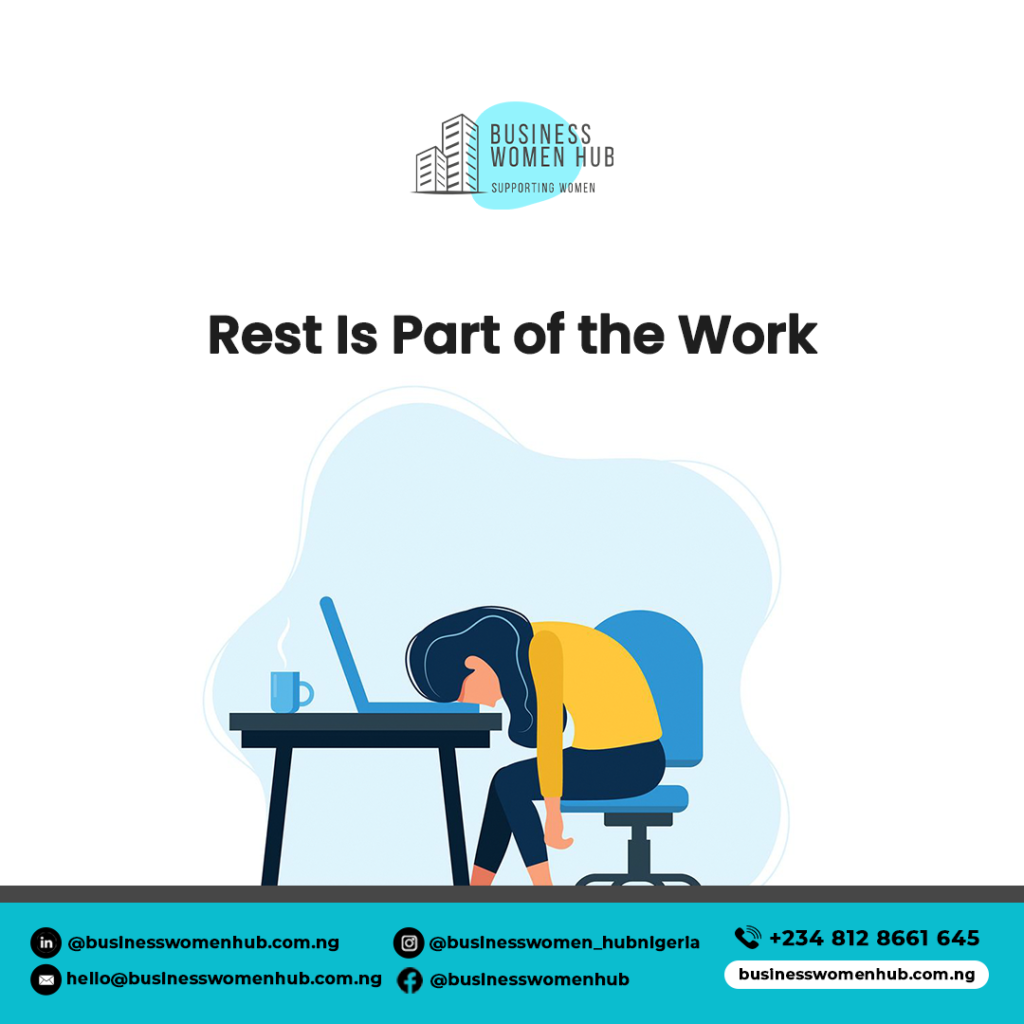
Rest Is Part of the Work

Your business needs your attention, but it also needs you to be healthy, focused, and energised. Constantly pushing yourself without resting can eventually affect the quality of your work and decision-making.

Learn to recognise when your body needs a pause. Take short breaks between tasks, step away from your screen, and stop feeling guilty about resting. You don’t have to wait until you’re completely exhausted before giving yourself time to recharge.

Remember: Taking care of yourself is also an investment in the business you’re building.
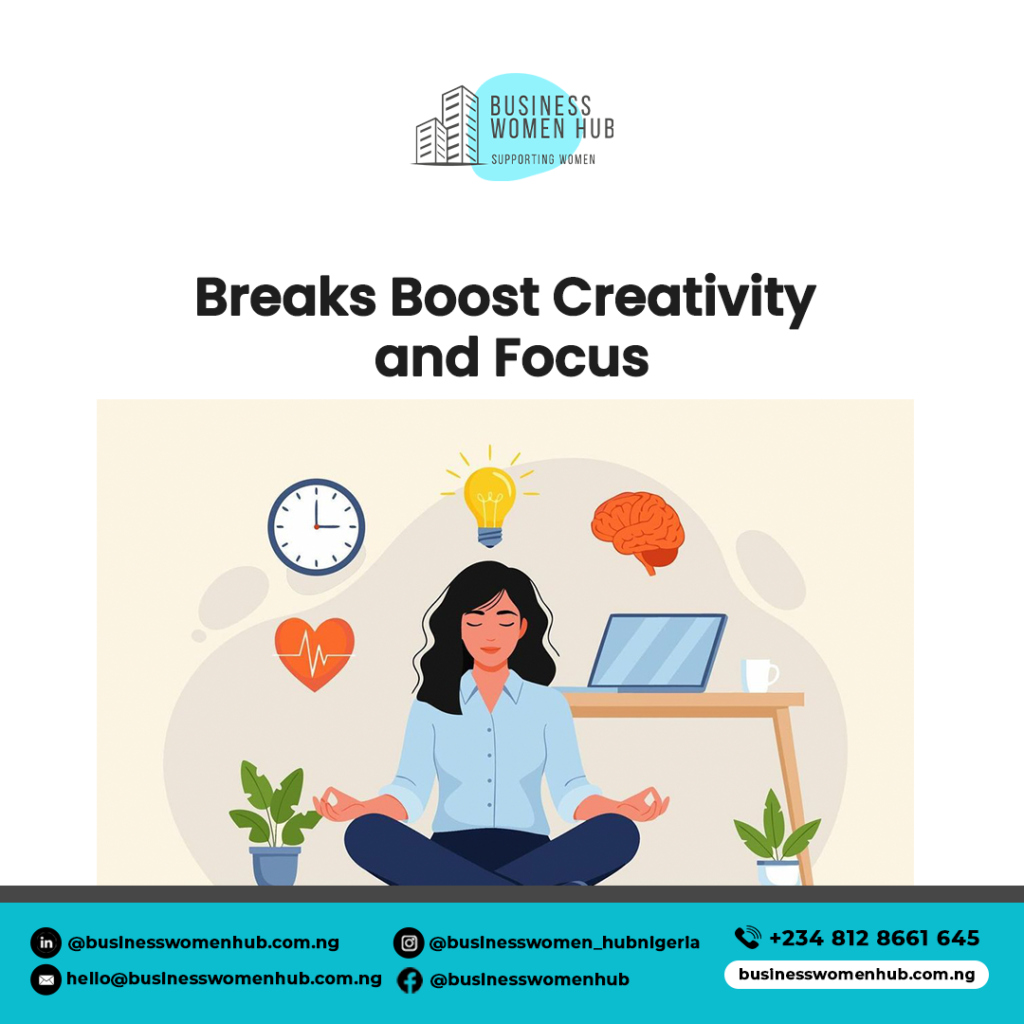
Breaks Boost Creativity and Focus

Have you ever spent hours trying to complete a task, only to realise that you’re getting nowhere? Sometimes, staring at the same problem for longer doesn’t make the solution appear.

Stepping away can give your mind the breathing room it needs to process ideas and find fresh perspectives. Take a short walk, stretch, listen to music, or simply enjoy a few quiet minutes away from work.

You may be surprised how much easier that task becomes when you return with a refreshed mind.

Remember: You don’t always need to work harder to find a solution. Sometimes, you just need to pause.
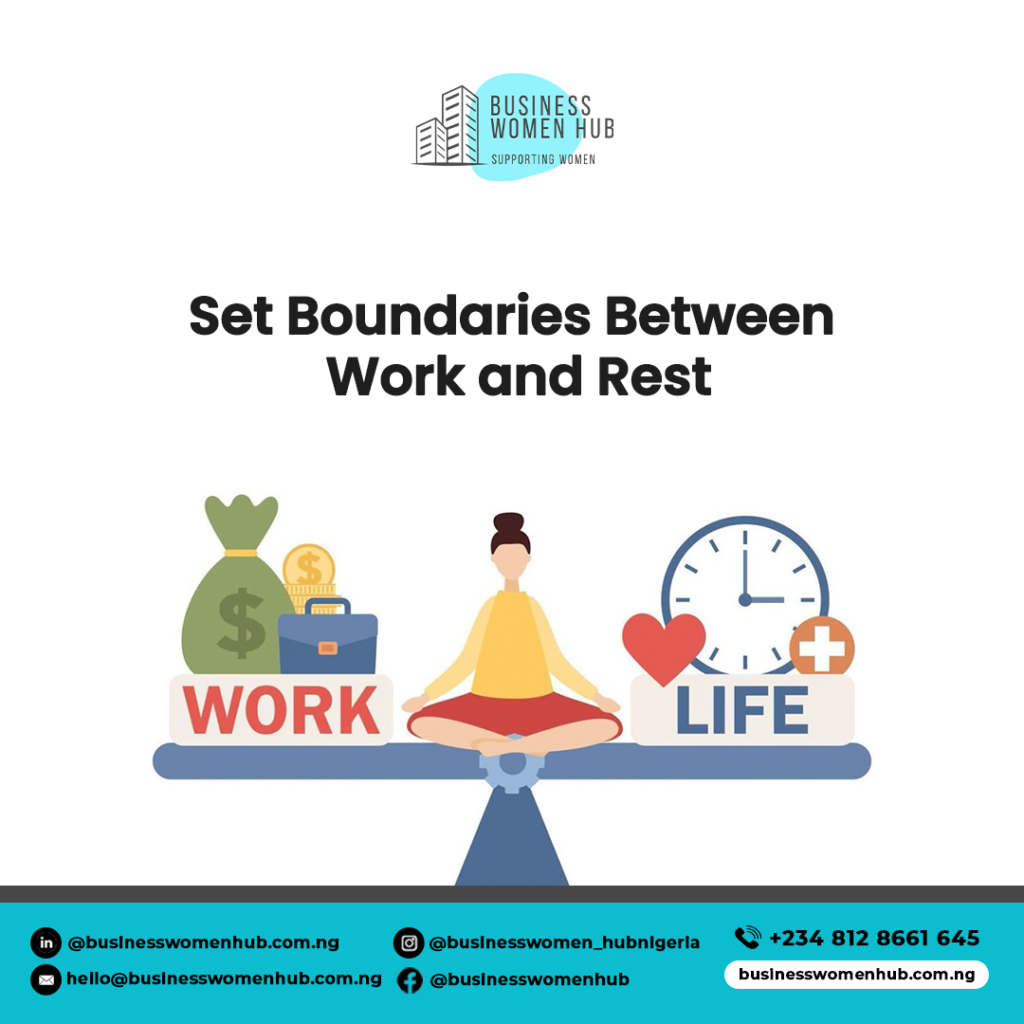
Set Boundaries Between Work and Rest

Running a business can make it difficult to switch off. Customer messages arrive late at night, new ideas come up during family time, and there’s always another order or task to attend to.

However, without clear boundaries, your business can gradually take over every part of your life. Set reasonable working hours, schedule breaks, delegate where possible, and avoid responding to non-urgent messages outside your work hours.

Make time for activities that have nothing to do with business. You deserve moments when you’re simply enjoying life without thinking about your next task.

Remember: Your business deserves your dedication, but it shouldn’t consume every moment of your life.

Rest Today, Return Stronger Tomorrow

Taking breaks doesn’t mean you’re losing focus or becoming less ambitious. It means you’re choosing a healthier and more sustainable way to pursue your goals.

Make rest part of your routine by scheduling downtime, getting enough sleep, celebrating your progress, and recognising when you need to slow down. You can also make work easier by creating systems, planning, and managing your workload more effectively.

You don’t have to exhaust yourself to prove how committed you are. Consistency matters, but so does having the energy to keep going.

Remember: You don’t have to burn out to build a successful business. Take your breaks, protect your peace, and give yourself room to grow.

Final Thoughts

Your business journey is a marathon, not a sprint. There will always be another customer to attend to, another idea to explore, another target to meet, and another goal to chase.

But in the middle of all that, don’t forget yourself.

Give yourself permission to pause, breathe, rest, and enjoy the little moments outside work. You are more than the business you run, and your worth isn’t measured by how many hours you spend working.

Keep building your dreams, but remember to take care of the woman behind them.

Posted on — Leave a comment

The Power of No: Why Saying No Can Help Your Business Grow

Sometimes, protecting your time, energy, and goals starts with one simple word: NO.

As women in business, we’re often expected to be available, helpful, accommodating, and ready to take on every opportunity that comes our way. So, saying “no” can feel uncomfortable.

You may worry about disappointing a client, losing an opportunity, upsetting someone, or being seen as difficult. But saying yes all the time can come at a cost. It can leave you overwhelmed, stretched too thin, distracted from your goals, and even frustrated with the very business you’re trying to grow.

Learning to say no doesn’t make you difficult or selfish. It means you understand your priorities, recognise your limits, and invest your time and energy intentionally.

Here are four things to remember:

No Is a Complete Sentence

You don’t have to say yes to every request simply because someone asked.

Your time, attention, and energy are limited, and not every request deserves access to them. Before agreeing to something, consider whether it fits into your priorities and whether you genuinely have the capacity to handle it well.

And remember, you don’t always need a long explanation. A simple, respectful “I’m unable to take this on at the moment” can be enough.

Your boundaries don’t need a five-paragraph explanation to be valid.

Say No Without Feeling Guilty

Sometimes, the hardest part of saying no is dealing with the guilt that comes afterward.

We may say yes because we don’t want to disappoint someone or because we’re afraid they’ll think we’re rude. But saying yes when you really mean no can leave you overwhelmed and resentful over time.

You can be kind without overcommitting. Be clear, polite, and firm. Where appropriate, you can suggest an alternative or another person who may be able to help.

And if someone doesn’t understand your boundary, that doesn’t automatically mean the boundary is wrong.

You are allowed to protect what matters to you without feeling guilty about it.

Not Every Opportunity Is Your Opportunity

Entrepreneurs are constantly told to “grab every opportunity.” But sometimes, the wisest business decision is to walk away. An opportunity can be good and still not be right for you.

Before saying yes, ask yourself:

  • Does this align with my business goals?
  • Do I actually have the capacity for it?
  • What will it cost me in time, money, or energy?
  • Will it move my business forward?
  • Am I choosing this because I want it, or because I’m afraid of missing out?

Not every opportunity needs your attention. Sometimes, choosing alignment over FOMO is what keeps you focused on the bigger picture.

Make “No” Part of Your Business Strategy

Saying no isn’t only a personal boundary; it’s also a valuable business skill.

As your business grows, you’ll have to make decisions about the clients you work with, the projects you accept, the partnerships you pursue, and where you spend your time.

That means learning to say no to work that constantly drains you, commitments that distract you from your priorities, clients who repeatedly cross your boundaries, and pressure that makes you compromise your values.

The goal isn’t to say no to everything. It’s to become more intentional about what deserves a yes.

Because every time you say no to something that doesn’t serve your goals, you create more room for the things that do.

Final Thoughts

Saying no can feel uncomfortable at first, especially when you’re used to being the person who always helps, always shows up, and always says yes.

But your business cannot grow sustainably if you are constantly running on empty.

So, the next time you’re faced with a request or opportunity, pause before answering. Ask yourself whether it deserves your time, energy, and attention.

A confident “no” isn’t about closing doors. It’s about making room for the right ones.

Posted on — Leave a comment

Smart Business Strategies for Women Entrepreneurs: Work Smarter, Grow Better

Running a business can sometimes feel like a never-ending to-do list. There is always another customer to respond to, another order to fulfil, another post to create, and another task waiting for your attention.

But here’s the truth: being busy doesn’t always mean your business is growing.

Smart entrepreneurship is about knowing where to put your time, money, energy, and attention so that your efforts actually move your business forward.

So, how can you work smarter and build a business that is ready for growth? Here are four practical strategies every woman entrepreneur can put into action.

Work Smarter, Not Just Harder

You don’t have to do everything yourself to prove that you are serious about your business. Sometimes, the smarter move is to step back and identify what truly deserves your attention.

Start by focusing on activities that directly contribute to customers, sales, and business growth. Make better use of the resources you already have, whether that’s your time, money, technology, or professional connections.

Look for repetitive tasks that can be automated, and delegate responsibilities when you can. Most importantly, pay attention to what is actually producing results. If a strategy isn’t working, don’t keep doing it simply because you’ve always done it that way.

Remember: Working harder may keep you busy, but working smarter helps you make meaningful progress.

Make Your Money Work for Your Business

You can’t make good business decisions if you don’t understand what is happening with your money.

You don’t need to be an accountant or financial expert, but you should know your sales, expenses, revenue, and profit. These numbers help you understand whether your business is actually making money and where you may need to make changes.

Keep your business and personal finances separate, track your expenses, and think carefully before spending. Every business expense should have a clear purpose, whether it is helping you serve customers, improve your operations, or grow your business.

For example, making ₦500,000 in sales sounds great, but if your expenses take up ₦450,000, your actual profit tells a very different story.

Remember: Revenue shows what came in. Profit helps you understand what you actually made.

Build Relationships That Grow Your Business

Business isn’t only about what you sell. It is also about who knows you, trusts you, recommends you, and opens doors for you.

A strong relationship can lead to a new customer, a valuable referral, a business partnership, a collaboration, or even an opportunity you didn’t know existed.

Network intentionally and connect with people who can add value to your journey. But don’t make every relationship about what you can gain. Look for ways to support and provide value to others too.

And don’t forget to follow up. A great conversation can easily become a forgotten conversation if you never reconnect.

Be reliable, professional, consistent, and visible. Let people clearly understand what you do and how your business can help them.
Remember: Your network isn’t just a list of contacts. When built intentionally, it can become an important part of your growth strategy.

Adapt, Improve, and Stay Ahead

The business world never stays the same for long. Customer preferences change, technology evolves, competitors emerge, and new opportunities appear.

Instead of resisting change, make learning and adaptation part of your business strategy.

Listen to your customers because their questions, complaints, and feedback can reveal what they need next. Keep an eye on what is happening in your industry and continue learning new skills.

Most importantly, don’t be afraid to test new ideas. Try something, measure the results, learn from what happened, and make adjustments where necessary.

A strategy that worked perfectly last year may not produce the same results today. That doesn’t necessarily mean your business is failing; it may simply mean it is time to evolve.

Remember: Staying relevant requires the willingness to learn, adapt, and improve.

Build Smarter, Not Just Bigger

Growing a business isn’t about doing more things at the same time. It’s about doing the right things intentionally.

Work smarter with your time. Understand your money. Build meaningful relationships. Stay open to change.

These small but intentional shifts can help you spend less energy simply trying to keep up and more energy building a business that can grow sustainably.

Don’t just build a business that works today. Build one that can grow with tomorrow.

Posted on — Leave a comment

Beyond the Shop: 4 Powerful Merits of Having an E-Commerce Store

In today’s fast-moving digital world, having a physical business location is no longer the only way to reach customers. An e-commerce store can help you take your products beyond your immediate environment, make shopping easier, build trust, and create systems that support long-term growth.

Whether you run a food business, fashion brand, beauty business, service-based business, or retail store, an online storefront can open your business up to opportunities you may never have imagined.

Here are four powerful ways an e-commerce store can benefit your business.

Take Your Business Beyond Your Location

Your business shouldn’t be limited to the customers who live or work around you.

With an e-commerce store, customers can discover your products from different cities, states, and even countries. Your location may be where your business operates, but it doesn’t have to determine how far your products can travel.

An online store allows you to:

  • Reach more customers: Sell beyond your immediate community and expand your customer base.
  • Stay open 24/7: Customers can browse your products and place orders even when you’re not available.
  • Break geographical barriers: You can serve customers who may never visit your physical store.
  • Enter new markets: Your online presence can introduce your products to an entirely new audience.
  • Increase visibility: A well-presented storefront makes it easier for potential customers to discover your business.

The takeaway: Don’t let geography put a limit on your ambition. Your business can go much further when your products are available online.

Make Shopping Easier for Your Customers

Customers love convenience. The easier it is for people to find, understand, and purchase your products, the better their shopping experience becomes.

An e-commerce store removes many of the barriers that can make shopping stressful or time-consuming.

Customers can:

  • Discover products easily without having to visit a physical store.
  • Shop from anywhere – whether they’re at home, at work, or on the go.
  • See important information such as prices, pictures, descriptions, sizes, colours, and available options in one place.
  • Compare their options and make better purchasing decisions.
  • Return easily for repeat purchases because they already know where to find your products.

Convenience can be a powerful competitive advantage. When you make it easier for customers to shop with you, you also make it easier for them to choose you over the competition.

The takeaway: Don’t just sell a product. Create a shopping experience that makes customers want to come back.

Build a Professional and Trustworthy Brand

Your e-commerce store is more than a place to display your products. It is an extension of your brand.

A well-organised and professional online storefront can make your business appear more credible and give potential customers greater confidence in buying from you.

You can use your online store to:

  • Create a professional presence: Give customers a central place to learn about and shop from your business.
  • Showcase your products beautifully: Quality images and clear descriptions help customers understand exactly what you offer.
  • Build credibility: A consistent and organised digital presence can strengthen customer confidence.
  • Tell your brand story: Communicate who you are, what your business stands for, and why customers should choose you.
  • Stand out from competitors: A strong digital presence can help your business make a memorable impression.

Remember, customers don’t only buy products. They also buy confidence. Your online store should communicate one simple message: “You can trust this business.”

Sell Smarter and Create Room for Growth

Running a business already comes with enough responsibilities. Your sales process shouldn’t add unnecessary stress.

An e-commerce store can help you organise your products, simplify the buying process, reduce repetitive enquiries, and create more opportunities to generate sales.

With the right online system, you can:

  • Organise your products: Keep your offerings in one easy-to-access location.
  • Reduce repetitive questions: Customers can find prices, product information, and other details directly on your store.
  • Understand customer preferences: Your sales activity can reveal which products customers are interested in and what they buy most.
  • Create more sales opportunities: Your storefront can receive orders while you focus on other important areas of your business.
  • Prepare for growth: A reliable online sales system gives you a stronger foundation for serving more customers as your business expands.

Growth becomes easier when you have systems working alongside you.

Your Business Deserves to Go Further

An e-commerce store is not simply another business expense. When used effectively, it can become an investment in visibility, convenience, credibility, and growth.

Your physical store can serve the people around you, but your online store can help you reach people far beyond your immediate location.

So, if you’ve been wondering whether your business is ready to go online, perhaps the better question is:

How much further could your business go if your customers could shop from you anytime, anywhere?

The digital marketplace is already filled with customers looking for products like yours. Make it easy for them to find you, trust you, and buy from you.

Posted on — Leave a comment

Overcoming Fear in Business: How to Build Confidence, Take Action, and Grow Your Business

Every entrepreneur experiences fear. Whether it’s the fear of failure, being judged, losing money, or making the wrong decision, these emotions are part of the journey. The difference between those who succeed and those who remain stuck isn’t the absence of fear; it’s the decision to keep moving despite it.

Fear often whispers that you’re not ready, not experienced enough, or that the risks are too great. But every thriving business started with someone who chose to act before they felt completely confident.

If you’ve been waiting for the “perfect time” to launch, expand, or take the next step in your business, this is your reminder: progress begins the moment you choose courage over comfort.

Fear Is Not a Stop Sign

Fear is natural, but it shouldn’t determine the direction of your business. Instead of seeing fear as a signal to stop, view it as evidence that you’re stepping into new opportunities and growth.

Here are a few ways to move forward despite fear:

  • Acknowledge your fear instead of ignoring it.
  • Take one bold step, even if it’s small.
  • Stop waiting to feel “ready.” Confidence comes through action.
  • Learn from mistakes rather than allowing them to define you.
  • Focus on possibilities instead of worst-case scenarios.

The truth is, fear doesn’t have to disappear before you move. Your dreams become possible the moment you decide they’re bigger than your doubts.

Build Confidence Through Small Wins

Confidence isn’t something you’re born with; it’s something you develop through consistent action.

Every customer you serve, every product you sell, every challenge you overcome, and every lesson you learn strengthens your belief in yourself. Small victories create the momentum needed for bigger successes.

To build lasting confidence:

  • Celebrate every win, no matter how small.
  • Keep learning to reduce uncertainty.
  • Measure your progress against your own growth, not someone else’s success.
  • Prepare consistently for opportunities.
  • Replace negative self-talk with words of encouragement.

Confidence doesn’t mean you’re no longer afraid. It means you’ve learned to trust yourself enough to move forward anyway.

Don’t Let Fear Make Your Decisions

Fear often disguises itself as procrastination, perfectionism, or excessive caution. Before long, valuable opportunities slip away because of overthinking.

Successful entrepreneurs don’t let fear drive their decisions; they let their purpose lead.

Here’s how to stay in control:

  • Make decisions based on your long-term goals.
  • Stop overthinking and start taking action.
  • Accept that perfection isn’t required for progress.
  • Ask for guidance and support when needed.
  • Continue showing up, even when it feels uncomfortable.

Every opportunity avoided because of fear is an opportunity someone else may embrace. Choose courage over comfort, one decision at a time.

Courage Creates the Business You Dream Of

Behind every successful business is someone who found the courage to begin.

Building a thriving business isn’t about waiting for perfect conditions. It’s about showing up consistently, taking calculated risks, learning from experience, and refusing to quit when challenges arise.

Develop a courageous business mindset by:

  • Believing in the value you bring to the market.
  • Taking calculated risks instead of avoiding all risks.
  • Seeing challenges as opportunities for growth.
  • Surrounding yourself with people who support your vision.
  • Remaining consistent, even when results take time.

Remember, courage isn’t the absence of fear; it’s choosing your purpose despite your fear. Every step you take today moves you closer to the business and life you’re working to build.

Final Thoughts

Fear will always be part of entrepreneurship, but it doesn’t have to be in charge.

Every successful business owner has faced moments of uncertainty. What sets them apart is their willingness to act despite it. The more you take action, the stronger your confidence becomes, and the more your business grows.

So, don’t wait until fear disappears. Start where you are, use what you have, and keep moving forward.
Your future business is built on the courageous decisions you make today.

Posted on — Leave a comment

Smart Money Habits Every Entrepreneur Needs to Build Lasting Wealth

Running a successful business isn’t just about making more sales; it’s about managing your money wisely. Many entrepreneurs focus on increasing revenue but overlook the financial habits that create long-term stability and wealth.

The truth is, smart money management is what separates businesses that survive from those that thrive. Whether you’re just starting or growing an established business, adopting healthy financial habits can help you make better decisions, reduce stress, and build a business that truly works for you.

Here are four smart money habits every entrepreneur should develop.

Pay Yourself First, Not Last

One of the biggest financial mistakes entrepreneurs make is paying every bill, supplier, and business expense before setting aside money for themselves. While your business deserves investment, so do you.

Creating wealth starts with developing the habit of paying yourself first, even if it’s a small amount. Remember, consistency is far more important than the size of the amount.

Here are a few smart habits to adopt:

  • Set aside a percentage of every sale as your income or savings.
  • Separate your business and personal finances.
  • Create a monthly budget and stick to it.
  • Build an emergency fund for unexpected business expenses.
  • Treat saving as a business expense, not an afterthought.

Key Takeaway: A profitable business should also create a financially secure entrepreneur. Your business should work for you, not leave you constantly working for money.

Know Where Every Naira Goes

You can’t improve what you don’t measure.

Many businesses don’t struggle because they fail to make money; they struggle because they don’t know where their money goes. Tracking your income and expenses gives you the clarity you need to make smarter financial decisions.

Start by taking control of your cash flow:

  • Record every sale and every expense.
  • Review your cash flow every week.
  • Identify unnecessary spending and eliminate it.
  • Track your most profitable products or services.
  • Use simple bookkeeping tools to stay organized.

Key Takeaway: Every naira should have a purpose. When you tell your money where to go, you’re less likely to wonder where it went. Financial awareness is the first step toward financial freedom.

Spend to Grow, Not to Impress

As your business grows, it’s easy to confuse spending with investing. A fancy office, expensive equipment, or unnecessary upgrades may look impressive, but they don’t always contribute to business growth.

Before making any purchase, ask yourself: “Will this help my business grow?”

Spend wisely by:

  • Investing in tools that improve productivity.
  • Prioritizing marketing that delivers measurable results.
  • Buying inventory based on customer demand, not assumptions.
  • Avoiding unnecessary debt for non-essential purchases.
  • Focusing on value instead of appearances.

Key Takeaway: Growth comes from intentional investments, not expensive distractions. Every smart financial decision you make today strengthens your business for tomorrow.

Build Wealth Beyond Today’s Sales

Making sales feels rewarding, but real financial success comes from what you do after the money reaches your account.

Successful entrepreneurs don’t just earn; they save, invest, and plan for the future. Every profit should contribute to building long-term financial security.

Develop these wealth-building habits:

  • Save consistently from your business profits.
  • Reinvest strategically into areas that generate more income.
  • Diversify your income streams where possible.
  • Set financial goals for the next 6–12 months.
  • Celebrate your progress while continuing to plan.

Key Takeaway: Today’s profits should become tomorrow’s financial security. Strong businesses are built on smart money habits, and smart money habits create lasting success.

Final Thoughts

Financial success doesn’t happen by chance; it happens through consistent, intentional decisions. Every smart choice you make today, from tracking your expenses to saving regularly and investing wisely, strengthens both your business and your personal financial future.

You don’t need to earn millions before practicing good financial habits. Start with what you have, stay consistent, and let your money work as hard as you do.

Remember: Building a successful business isn’t just about increasing your income; it’s about managing your money wisely enough to create lasting wealth.

Posted on — Leave a comment

Confidence & Mindset Reset for the Next Level: 4 Powerful Shifts Every Woman Entrepreneur Needs to Grow

Every successful business starts with one powerful decision: believing that you are capable of building something greater.

As women entrepreneurs, it’s easy to get caught up in self-doubt, comparison, and the pressure to have everything figured out before taking the next step. But the truth is, growth doesn’t begin when you’re fearless; it begins when you choose to move forward despite your fears.

If you’re ready to elevate your business, it starts with resetting your mindset. Here are four powerful confidence shifts that will help you embrace your next level with courage and purpose.

Believe Bigger Than Your Doubts

Every new level in business begins with a new level of belief. Before others invest in your vision, you must first believe that you are capable of achieving it. Confidence isn’t about knowing everything. It’s about trusting yourself to learn, grow, and figure things out along the way.

Choose confidence over self-doubt by embracing these mindset shifts:

  • Replace limiting thoughts with empowering ones.
  • Speak to yourself the way you would encourage another woman in business.
  • Celebrate your progress. Every milestone, no matter how small, is proof that you’re moving forward.
  • Stop comparing your journey. Your timeline is unique, and your success doesn’t have to look like anyone else’s.
  • Own your expertise. You know more than you think. Share your knowledge with confidence.
  • Show up consistently. Confidence grows through action, not by waiting until you feel “ready.”

Remember: The next level isn’t reserved for the most qualified; it’s often reached by those who dare to believe they belong there. Your confidence is your competitive advantage.

Reset Your Mindset for Growth

Your business can only grow as much as your mindset allows. When your thoughts are dominated by fear, failure, or uncertainty, it’s difficult to recognize the opportunities that surround you. A mindset reset helps you exchange fear for possibility and hesitation for action.

Here are practical ways to strengthen your mindset:

  • Let go of yesterday’s setbacks. One challenge does not define your future.
  • Focus on opportunities instead of obstacles. Every problem carries both a lesson and a solution.
  • Embrace continuous learning. Every new skill expands your confidence.
  • Speak positively about your business. The words you use shape the way you lead.
  • Surround yourself with growth-minded people. Your environment influences your perspective more than you realize.

Remember: Success begins in your mind long before it appears in your business. Reset your thinking today, and you’ll reset your future.

Lead with Confidence, Even Before You Feel Ready

Many women delay taking the next step because they don’t feel completely prepared. However, confidence rarely comes before action. It grows through courage, experience, and consistency. Your next opportunity may simply require you to say “yes” before you feel 100% ready.

Here’s how to build confident leadership:

  • Make decisions with conviction. Trust the knowledge and experience you’ve gained.
  • Speak up about your business. Your voice deserves to be heard.
  • Take calculated risks. Growth often exists just outside your comfort zone.
  • Learn from mistakes instead of fearing them. Every setback strengthens your resilience.
  • Keep showing up consistently. Consistency builds both credibility and confidence over time.

Remember: Courage creates confidence. Every bold step you take prepares you for the next one. Lead boldly because your business is waiting for the woman you’re becoming.

Become the Woman Your Next Level Requires

Every new level of success demands a stronger version of you. Growing your business isn’t only about increasing sales or attracting more customers. It’s also about becoming a better leader, developing stronger habits, and cultivating the mindset needed to sustain success.

The entrepreneur you aspire to become is built through intentional daily choices.

Here’s how to step confidently into your next level:

  • Develop empowering daily habits. Small disciplines create remarkable results over time.
  • Protect your confidence. Don’t allow criticism or comparison to shrink your vision.
  • Invest in your personal growth. Read, learn, network, and remain curious.
  • Lead with resilience. Challenges are stepping stones, not stop signs.
  • Visualize your future consistently. Start acting today like the leader you’re becoming.

Remember: Your next level isn’t waiting for a different person. It’s waiting for a more confident, resilient, and intentional version of you.

Final Thoughts

Confidence isn’t something you’re born with; it’s something you build. Every decision to show up, learn, take action, and believe in your vision strengthens the leader within you.

As you pursue your next level, remember that mindset is your foundation. When you believe bigger than your doubts, reset your thinking for growth, lead before you feel completely ready, and intentionally become the woman your vision requires, there’s no limit to what you can achieve.

Your next level starts with the way you think. Choose confidence. Choose growth. Choose yourself.

Posted on — Leave a comment

Packaging That Speaks: How to Create a Customer Experience People Never Forget

In today’s competitive marketplace, having an excellent product is no longer enough. Before customers taste your food, wear your clothing, use your service, or experience the quality of what you offer, they have already formed an opinion about your brand.

That opinion begins with your packaging and presentation.

From the colors you use to the way your products are packaged, delivered, and displayed, every detail communicates something about your business. Thoughtful presentation doesn’t just make your brand look good; it creates trust, builds emotional connections, and transforms first-time buyers into loyal customers.

If you want customers to remember your business long after their purchase, here are four powerful ways to create a memorable customer experience through packaging and presentation.

First Impressions Matter

Your packaging is often the first interaction customers have with your business. Before they experience your product, they experience your brand.

A polished, professional presentation immediately communicates quality, credibility, and attention to detail. On the other hand, poor packaging can make even an outstanding product appear less valuable.

To create a strong first impression:

  • Invest in clean, professional packaging that reflects your brand.
  • Use consistent colors, fonts, and branding across all customer touchpoints.
  • Pay attention to how your products are displayed, both online and offline.
  • Ensure your business materials look polished and intentional.
  • Remember that even the smallest details influence how customers perceive your business.

Your packaging is not just a container; it’s an extension of your brand story. Make every first impression one that customers won’t forget.

Your Brand Should Feel Like an Experience

Customers may forget exactly what they bought, but they’ll remember how your business made them feel.

The most successful brands don’t simply sell products; they create experiences. Every package opened, every delivery received, and every interaction should leave customers feeling valued.

You can create memorable experiences by:

  • Including handwritten thank-you notes or branded inserts.
  • Making your unboxing or delivery process enjoyable.
  • Maintaining consistency across your products, social media, and customer service.
  • Designing experiences that evoke positive emotions.
  • Delivering excellence at every customer touchpoint.

When your brand feels intentional, customers become emotionally connected to your business, and emotionally connected customers are far more likely to return and recommend you to others.

Presentation Adds Perceived Value

Presentation has the power to elevate how customers perceive your product.

Even when two businesses offer similar products, customers often place greater value on the one presented more professionally. An attractive presentation builds confidence, strengthens trust, and increases the willingness to buy.

To elevate your presentation:

  • Use quality packaging materials that align with your brand identity.
  • Invest in clear, professional product photography.
  • Keep displays neat and attractive during exhibitions, markets, or in-store presentations.
  • Ensure labels, pricing, and product information are clear and easy to read.
  • Focus on a clean, simple, and consistent presentation style.

Presentation doesn’t replace quality; it reveals it. When customers can clearly see the value of what you offer, they’re more likely to trust your business, make a purchase, and recommend you to others.

Create Moments Customers Remember

The businesses’ customers return to are often those that create memorable moments beyond the sale.

Simple gestures can leave lasting impressions and turn ordinary transactions into meaningful experiences. Your goal shouldn’t be to make a sale; it should be to create a story your customers are excited to share.

Here are a few ways to create memorable moments:

  • Personalize the customer experience whenever possible.
  • Follow up after purchases to express appreciation.
  • Encourage customers to share their experiences on social media.
  • Listen to customer feedback and continuously improve.
  • Make every interaction feel thoughtful, valuable, and intentional.

People remember how your brand made them feel long after they’ve forgotten the price they paid.

Remember

Exceptional packaging and presentation are not about being expensive; they’re about being intentional.

Every package, every delivery, every product display, and every customer interaction contributes to the story your brand tells. When you consistently deliver excellence through thoughtful presentation, you create experiences that customers remember, recommend, and return for.

Remember, your product may bring customers in the first time, but the experience you create is what keeps them coming back.

Because in business, memorable experiences create loyal customers, and loyal customers build lasting brands.

Posted on — Leave a comment

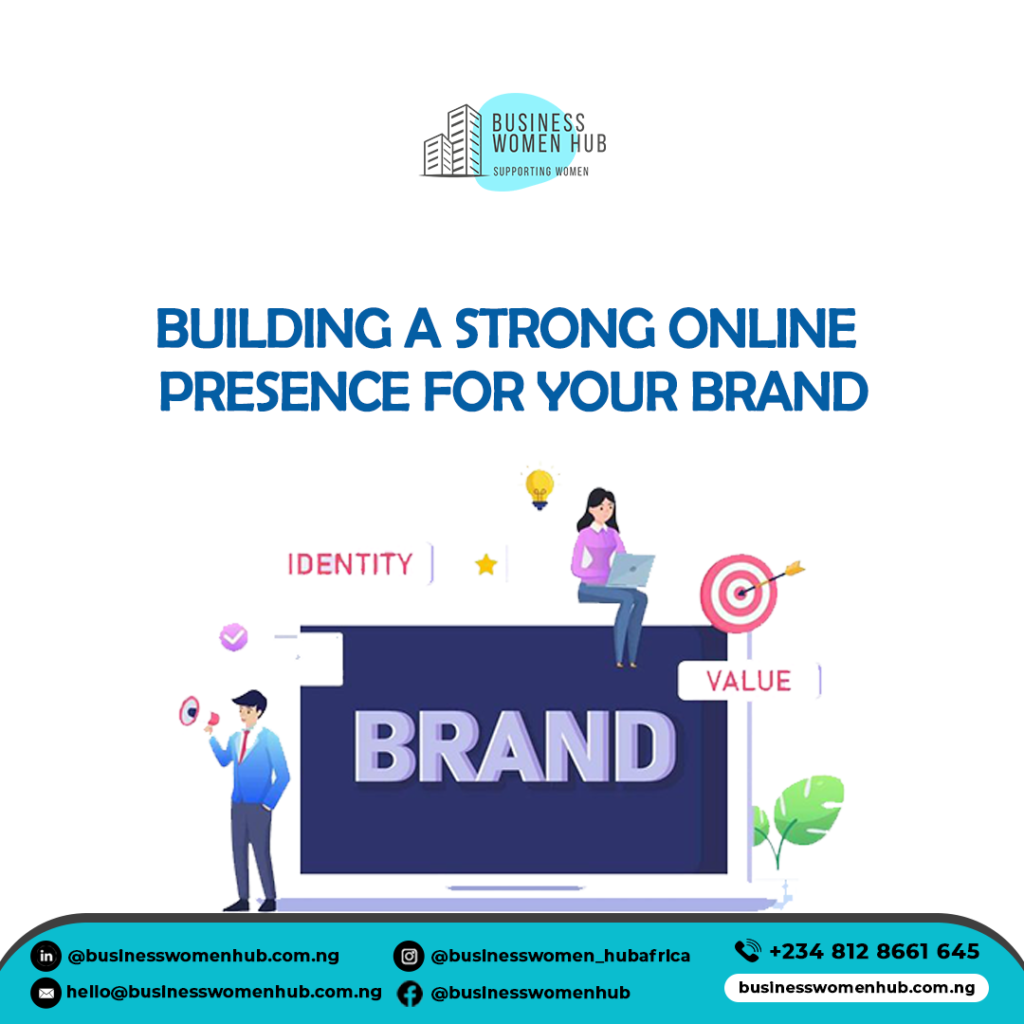
Your Brand Is Speaking Online: What Is It Saying?

Building a Strong Online Presence That Attracts, Engages, and Converts

In today’s digital world, your online presence is often the first interaction people have with your business. Before a customer sends a message, visits your store, or makes a purchase, they have likely searched for you online. What they find in those few moments can determine whether they choose your brand or move on to another.

For women entrepreneurs, service providers, consultants, coaches, and product-based business owners, building a strong online presence is no longer optional; it is essential. Your digital presence serves as your storefront, your sales representative, and your brand ambassador, working for you around the clock.
Here are four essential pillars that can help you build a stronger, more visible, and more impactful brand online.

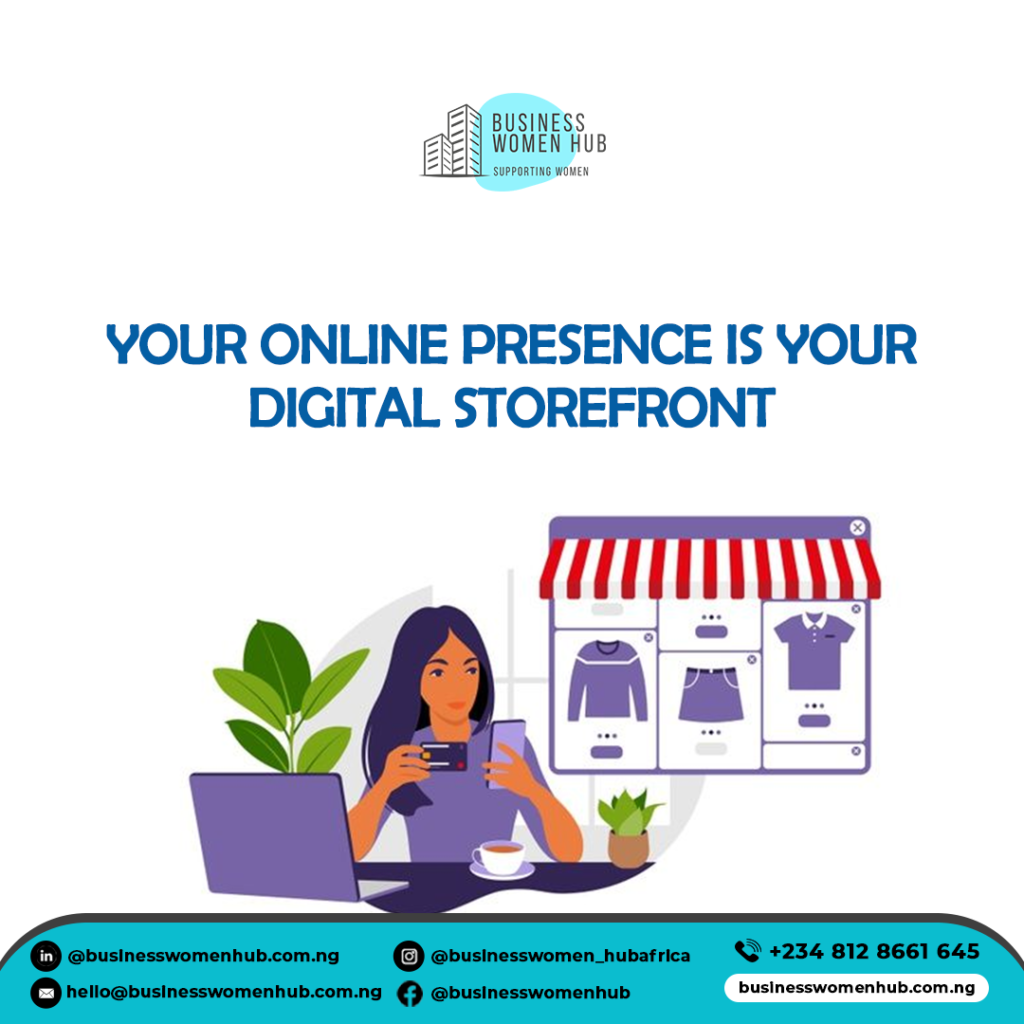
Your Online Presence Is Your Digital Storefront

Think of your social media pages, website, and online profiles as your digital storefront. They create first impressions and communicate the quality, professionalism, and credibility of your business.

To strengthen your digital presence:

  • Optimize your profiles with clear bios, updated contact information, and a compelling brand message.
  • Use consistent branding, including your logo, colors, fonts, and tone of voice across all platforms.
  • Make it easy for customers to reach you through your phone number, website, email address, or WhatsApp link.
  • Showcase your expertise by sharing valuable information and demonstrating your knowledge.
  • Keep your platforms active and up to date to build trust and credibility.

Your online presence continues working even when you are offline. Make sure it accurately reflects the value and excellence your brand represents.

Content Builds Visibility and Trust

People buy from brands they know, trust, and remember. Consistent content keeps your business visible while positioning you as an expert in your field. The goal is not to post constantly but to post intentionally.

Effective content strategies include:

  • Educating your audience through helpful tips, insights, and solutions.
  • Regularly showcasing your products or services so people understand what you offer.
  • Sharing customer testimonials and success stories to build credibility.
  • Telling your brand story to create emotional connections.
  • Prioritizing value over vanity metrics such as likes and followers.

Every piece of content you share is an opportunity to build trust. The more consistently you show up, the more memorable your brand becomes.

Build Engagement, Not Just Followers

Having thousands of followers means little if your audience is not engaging with your brand. Successful businesses focus on building communities rather than simply growing numbers.

Meaningful engagement can be created by:

  • Starting conversations through questions, polls, and discussions.
  • Responding promptly to comments, direct messages, and inquiries.
  • Celebrating customers by highlighting their experiences and successes.
  • Showing authenticity and allowing your audience to connect with the real people behind the brand.
  • Maintaining consistent interaction to strengthen trust over time.

Engagement transforms followers into customers and customers into loyal advocates. Strong relationships remain one of the most valuable assets any business can build.

Monitor, Improve, and Stay Relevant

Building a strong online presence is an ongoing process. The digital landscape changes quickly, and successful brands adapt to those changes while remaining true to their values.

To stay relevant:

  • Review your performance to understand which platforms and content deliver the best results.
  • Listen to your audience and use their feedback to improve.
  • Update your profiles and business information regularly.
  • Learn and adopt new trends that align with your brand goals.
  • Commit to continuous improvement through small, consistent adjustments.

The strongest brands do not simply show up online; they remain visible, valuable, and relevant.

Final Thoughts

Your online presence is more than a collection of social media accounts. It is the digital representation of your brand, your values, and the experience customers can expect from your business.

By building a professional digital storefront, creating valuable content, engaging your audience, and continually improving your approach, you position your brand for sustainable growth and long-term success.

Remember: your brand is speaking online every day. Make sure it is telling the right story.

Posted on — Leave a comment

Building a Simple Sales Page That Converts: Clarity Over Complexity

In a world where everyone is shouting for attention, simplicity is your competitive advantage. Many women overcomplicate their sales pages because they believe “more” means “more convincing.” More words. More design. More sections. More details.
But here’s the truth: A simple, clear sales page converts better than a complicated one.

Your sales page has one job: to move your reader from interest to decision. Not to impress. Not to overwhelm. Not to prove how much you know.
This week, we’re building with intention, not pressure. Let’s break it down step by step.

Simplicity Sells, Clarity Converts

When someone lands on your sales page, they should instantly understand: What this is, Who it’s for, and What result they’ll get. If they have to “figure it out,” you’ve already lost them.
Here’s where to start:

  • Start with One Clear Offer: one page. One goal. One transformation. Don’t stack multiple offers or try to solve five different problems at once.
  • Lead with the Result: What will your buyer walk away with?
    Lead with that, not your background story. Results create momentum.

  • Speak Directly to your Ideal Client: Use their language, not industry jargon. If they wouldn’t say it that way, don’t write it that way.

  • Remove Distractions: Too many links, images, pop-ups, or side offers weaken your message. Focus their attention on one decision.
  • Choose Clarity Over Creativity: If it’s clever but confusing, remove it. If it’s clear and simple, keep it.

✨ Remember: Confused people don’t buy. Clear messaging creates confident buyers. Build simple. Build intentionally. Build to convert.

Structure Creates Confidence

A powerful sales page follows a structure, not chaos. When your reader lands on your page, they should feel guided, not overwhelmed. Structure builds trust. Trust builds sales.

Here’s a simple framework you can use:

  • Headline: Clearly state the transformation or promise. What will change after they buy?
  • The Problem: Show that you deeply understand their struggle. Name what frustrates them. Reflect their reality.
  • The Solution: Introduce your offer as the bridge between where they are and where they want to be.
  • The Benefits: What changes after they buy? Paint the picture. Help them see themselves on the other side.
  • What’s Included: Outline exactly what they’re getting. No guessing.
  • Proof: Testimonials, results, case studies, or credibility markers. Proof removes doubt.
  • Clear Call to Action: Tell them exactly what to do next.
    “Enroll Now.”
    “Book Your Spot.”
    “Get Instant Access.”

✨ A simple structure removes confusion and increases confidence, for both you and your buyer.

Sell the Transformation, Not the Features

Your audience is not buying: Modules, worksheets, videos, templates. They are buying a result.
Instead of listing features like this:

  • 6 training videos
  • 3 templates
  • 2 live sessions

Shift it to this:

  • Build a sales system that works for you
  • Save hours of guesswork
  • Attract clients consistently
  • Gain clarity and confidence in your offer

See the difference?
Features describe.
Benefits persuade.
Transformation converts.

Here’s how to refine your messaging:

  • Turn every feature into a benefit
  • Show the “before and after” transformation
  • Use emotional triggers (relief, confidence, freedom, growth)
  • Address objections before they ask
  • Keep your tone conversational and relatable

✨ People don’t buy information. They buy outcomes. When you sell the transformation, your page becomes persuasive, without pressure.

Refine for Results: Test, Tweak, Improve

Your first sales page does not have to be perfect. It needs to be live. Perfection delays growth. Data creates growth.

Once your page is published:

  • Review where people drop off
  • Simplify sections that feel heavy
  • Strengthen your call-to-action
  • Add testimonials as you receive them
  • Improve headlines based on engagement

Ask yourself:

  • Is this clear?
  • Is this compelling?
  • Is this necessary?

✨ A simple sales page that is refined consistently will outperform a “perfect” page that never launches.
Done builds data.
Data builds direction.
Direction builds sustainable success.

Final Thoughts: Build With Intention

You do not need a complicated funnel to start making sales. You need clarity. Structure. Confidence. A simple sales page built with intention can: Position you as an authority, build trust with your audience, convert consistently, and grow with your business.

Keep building.
Keep refining.
Keep selling with intention.

Because simplicity doesn’t weaken your message, it strengthens it.