Posted on Leave a comment

From Being Online to Growing Your Business: 4 Steps to Turn Digital Visibility into Real Growth

Your customers are online. They are searching, comparing, asking questions, discovering new brands, and making purchasing decisions every day.

So if your business isn’t visible online, you could be missing opportunities to connect with people already looking for what you offer.
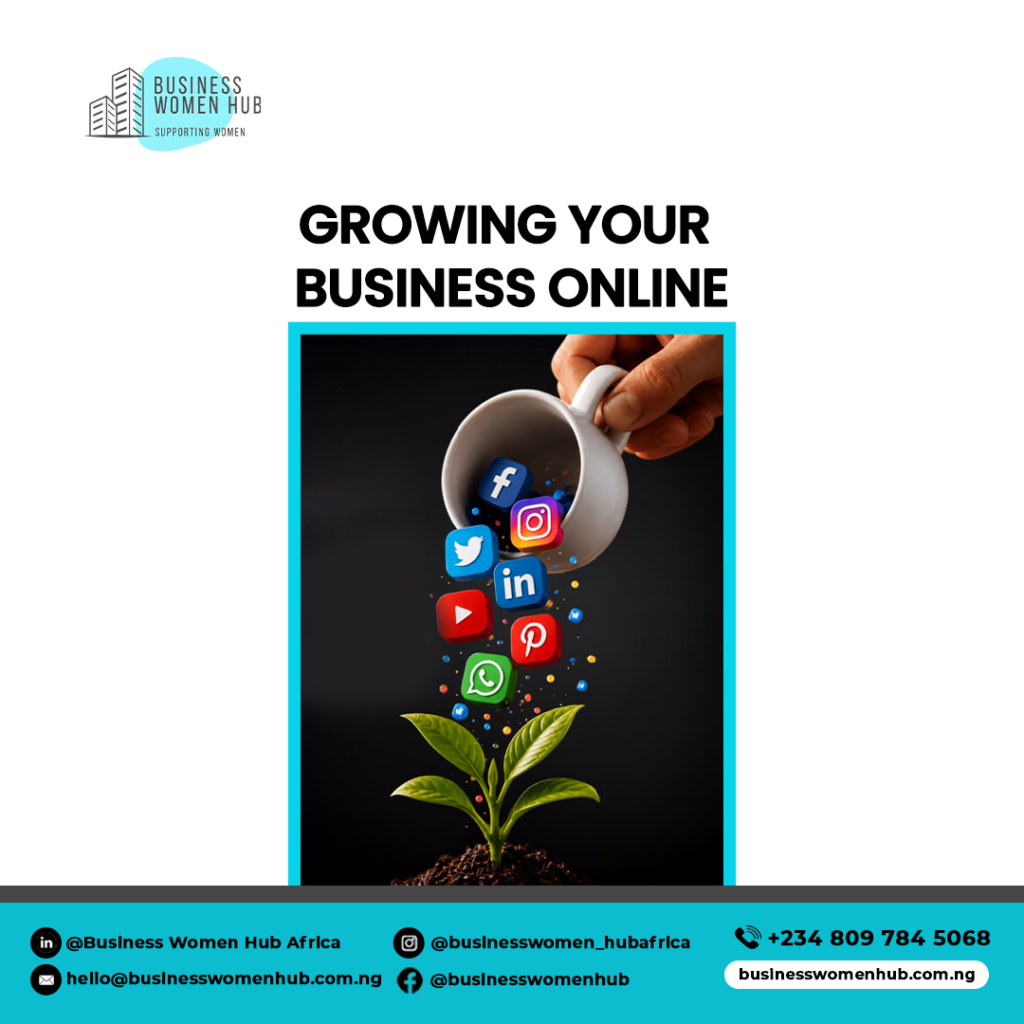
But here’s the thing: being online is only the beginning.

Having a social media page, posting occasionally, or gaining followers does not automatically translate into business growth. To truly grow online, you need to build a strong foundation, attract the right audience, turn attention into sales, and stay consistent with a strategy that works.

Here are four important steps to help you move from simply being online to actually growing your business online.
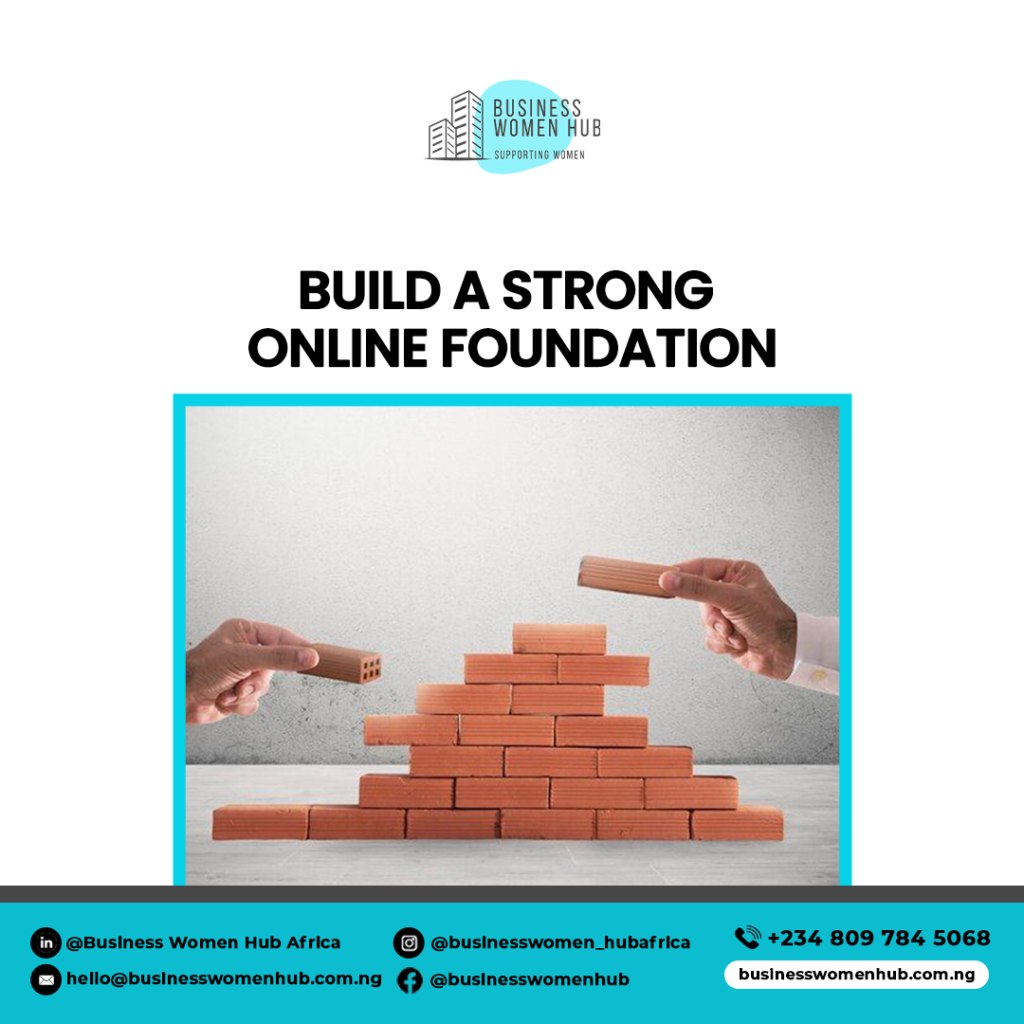
Build a Strong Online Foundation

Before you focus on growing your audience, make sure your business is easy to find, understand, and trust.

Think about what happens when a potential customer discovers your business for the first time. Can they immediately tell what you sell? Do they know who your products or services are for? Can they easily contact you or place an order?

Your online presence should answer these questions clearly.

Start by:

  • Defining your online presence: Be clear about what your business offers, who you serve, and what makes your brand different. Your profile, content, and messaging should communicate this consistently.
  • Choosing the right platforms: You don’t have to be everywhere. Focus your energy on the platforms where your ideal customers are most active.
  • Creating a professional profile: Your profile picture, bio, business description, contact information, photos, and other details should make potential customers feel confident about doing business with you.
  • Showing up consistently: One post today and silence for the next three weeks won’t do much for your visibility. Consistency helps people remember your brand and builds familiarity and trust over time.
  • Making it easy to buy: Don’t make customers search endlessly for how to place an order. Provide a clear way to contact you, shop your products, make enquiries, or complete a purchase.

Remember: If customers can’t find you online, they may never discover what your business has to offer.

Turn Visibility into Engagement

Getting people to see your business is important, but visibility alone isn’t enough.

The next step is to turn that visibility into engagement.

Your content shouldn’t simply fill up your social media feed. It should give people a reason to stop, pay attention, respond, share, save, ask questions, or start a conversation with your brand.

Here’s how you can increase engagement:

  • Know your audience: Create content based on the questions, challenges, needs, interests, and desires of the people you want to serve.
  • Share value: Don’t make every post about selling. Educate your audience, solve problems, share useful tips, inspire them, or entertain them. When your content is valuable, people have a reason to keep coming back.
  • Tell your story: People want to know the person and purpose behind a business. Share your journey, lessons, experiences, challenges, wins, and the reason you started.
  • Encourage interaction: Ask questions. Invite opinions. Create conversations. And when people comment or send messages, respond. Engagement is a two-way street.
  • Use clear calls-to-action: Don’t assume people automatically know what to do next. Tell them. Whether you want them to visit your store, send a message, leave a comment, share a post, or place an order, make the next step clear.

Remember: People don’t just buy products; they connect with brands they trust and relate to.

Turn Online Attention into Sales

Likes, comments, views, and followers can be exciting, but they aren’t the final goal of a business.

Business growth happens when attention turns into action, and action turns into sales.

Your online presence should guide potential customers through a journey: from discovering your business, to becoming interested, to trusting your brand, and eventually making a purchase.

Here’s how to make that happen:

  • Showcase your products clearly: Use quality photos and videos. Provide useful descriptions, prices, sizes, features, and other information customers need to make a decision.
  • Highlight the benefits: Don’t only tell people what your product is. Show them why they need it. Explain the problem it solves, the convenience it provides, or the result it can help them achieve.
  • Build trust: Customer testimonials, reviews, experiences, user-generated content, and real results can help potential buyers feel more confident about choosing your business.
  • Make buying simple: Every additional step between interest and purchase creates an opportunity for a customer to change their mind. Make your ordering and payment process as straightforward as possible.
  • Follow up: Not everyone who shows interest will buy immediately. Some people need more information, time, or a reminder. Following up professionally can turn a missed opportunity into a customer.

Remember: Visibility gets you noticed, but a good customer journey gets you paid.
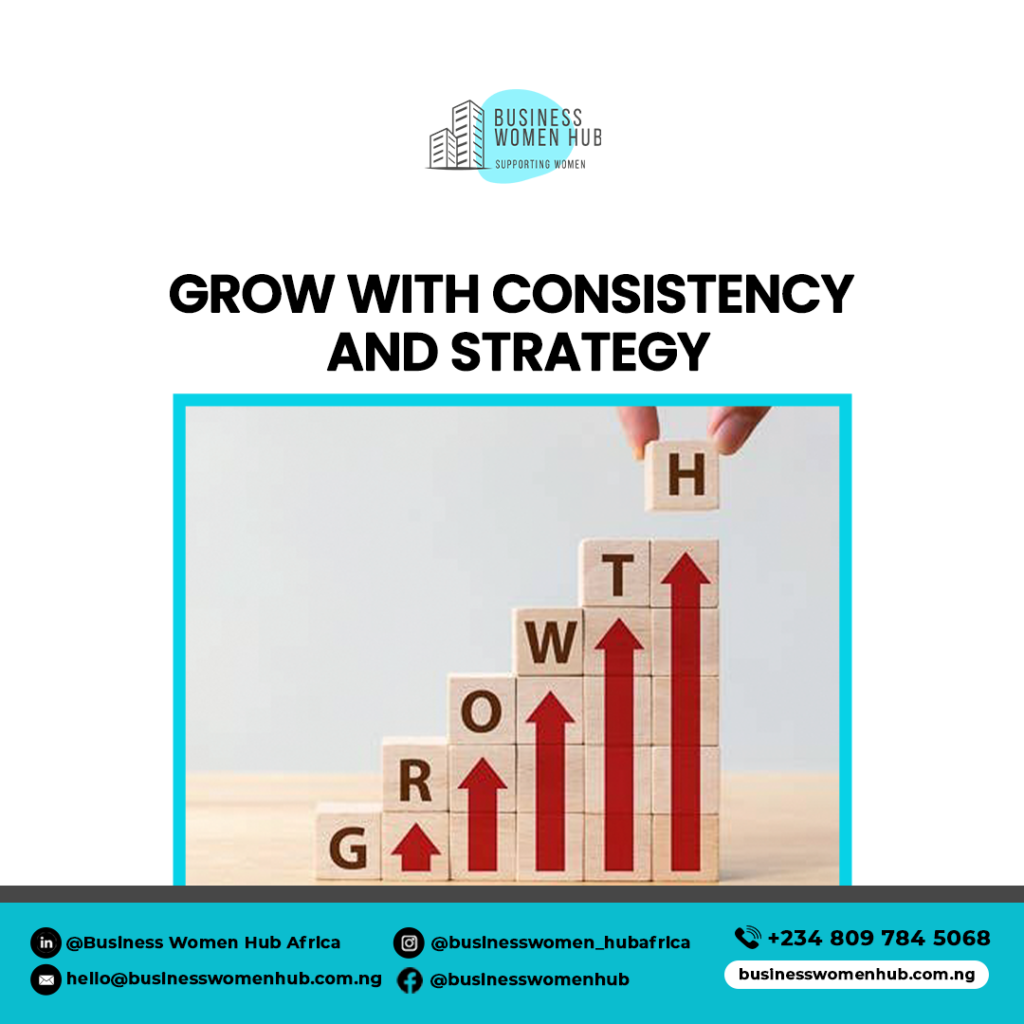
Grow with Consistency and Strategy

There is no magic formula that makes a business successful online overnight.

Sustainable online growth takes consistency, learning, testing, patience, and improvement.

You don’t need to chase every trend or be present on every platform. What matters is building an online presence that consistently works towards your business goals.

Keep growing by:

  • Tracking what works: Pay attention to the content, products, offers, and strategies that generate meaningful results. Use what you learn to make better decisions.
  • Staying consistent: Some days your engagement may be high. Other days, it may feel like nobody is paying attention. Don’t let a slow day convince you to disappear. Keep showing up.
  • Learning and adapting: The digital space is constantly changing. Customer behaviour, platforms, trends, and expectations evolve. Be willing to learn, experiment, and adjust your approach.
  • Promoting your business: Don’t simply wait for customers to find you. Regularly remind people what you sell, what you offer, where they can shop, and how they can do business with you.
  • Continuously improving: Your online presence should evolve alongside your business. As your products, audience, goals, and brand grow, your digital strategy should grow with them.

Remember: Online growth isn’t about going viral. It’s about being visible, valuable, and consistent.

Ready to Grow Your Business Online?

Start with one thing today. Review your online presence and ask yourself: Can my ideal customer find me, understand what I offer, trust my brand, and easily buy from me?

If the answer is yes, you’re on the right track. If not, you now know exactly where to begin.

Posted on Leave a comment

Don’t Just List It, Promote It: How to Use Your BWH Store Link to Attract Customers and Drive Sales

Your products are listed. Your BWH Store is ready. But here’s the real question: how many potential customers actually know where to find it?

Having your products listed on the BWH Global Storefront is a great first step, but listing alone is not enough. To attract customers and increase your chances of making sales, you need to actively promote your store.

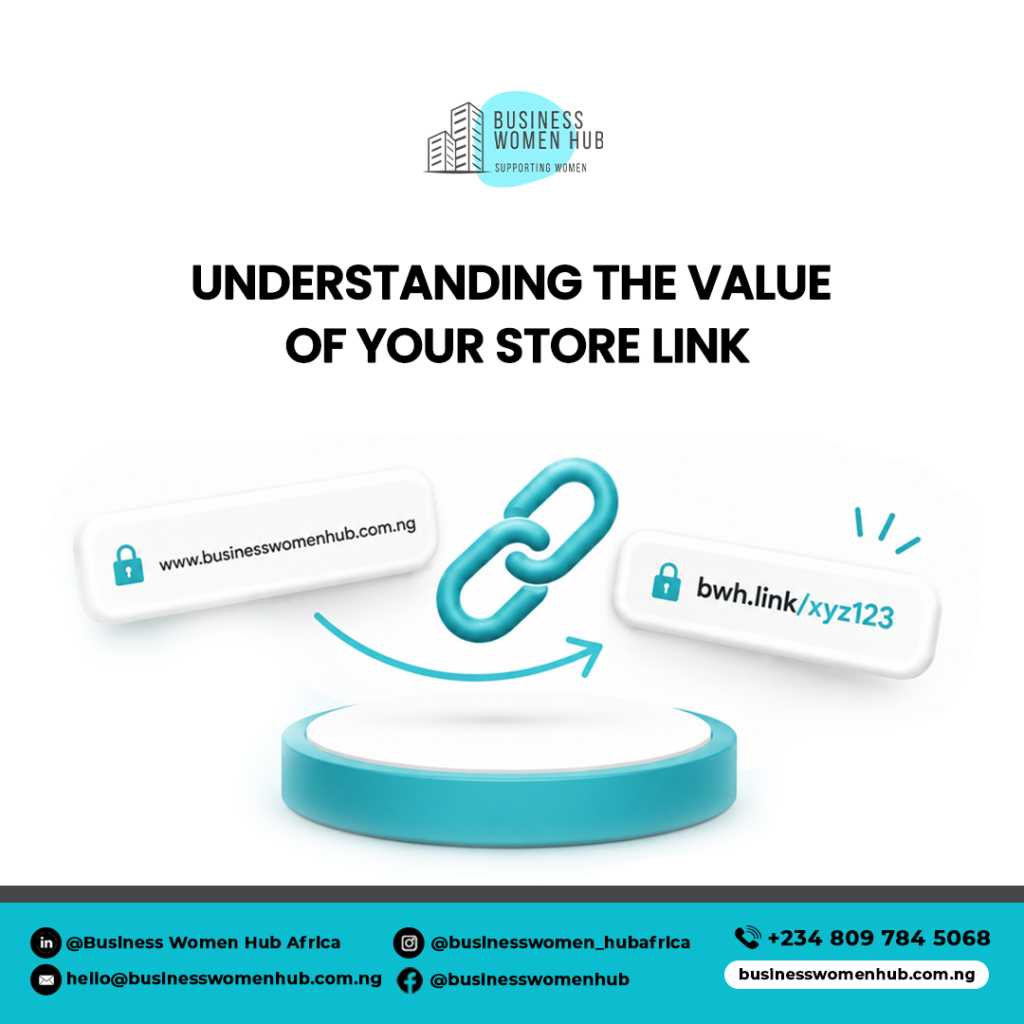
Your unique BWH Store link is more than just a URL. It is your personal online shop address, a direct pathway that takes potential customers from discovering your business to exploring your products and making a purchase.

Here’s how to make the most of it.

Understand the Value of Your Store Link

Your store link can be a powerful tool for visibility, convenience, and sales. Every time you share it, you allow more potential customers to discover your business and explore what you have to offer.

Here’s why your store link matters:

  • It makes shopping easy: Customers can view your products and shop directly without unnecessary back-and-forth.
  • It gives your business more visibility: Every time you share your link, you introduce your store to more potential customers.
  • It promotes all your products: One link can lead customers to your entire collection, not just one product.
  • It works for you 24/7: Your store can be visited and explored even when you are not actively online.
  • It gives customers a direct path to buy: Instead of saying, “Send me a DM,” give them a link that takes them straight to your store.

Your store link is not just a link; it is a sales tool. But like every good tool, it only works when you actually use it.

Put Your Store Link Where Customers Can Easily Find It

Your store link cannot attract customers if it stays hidden. The goal is simple: make it easy for people to move from seeing your business to shopping from your business.

Some of the best places to share your BWH Store link include:

  • Your social media bio: Add it to your Instagram, TikTok, Facebook, LinkedIn, and other relevant profiles.
  • Your WhatsApp Status: Regularly share your products and direct viewers to your store.
  • Your WhatsApp Business profile: Make your store link easily accessible to customers who contact you.
  • Your social media posts and captions: Promote specific products and lead people directly to your store.
  • Your broadcast messages: Share your store link with existing customers when you launch new products, introduce offers, or restock popular items.

Don’t wait for customers to ask, “Where can I shop?” Make the answer obvious. The easier you make it for people to shop, the easier it becomes for you to sell.

Give People a Reason to Click

Simply posting your store link with “Shop here” every day may not always be enough to get people excited.

People do not always click because they see a link. They click because something has captured their attention. So, get creative with how you promote your products and your store.

Here are a few ideas:

  • Show Your Products in Action: Create product-focused content that shows your products being used, worn, prepared, or enjoyed. Then end with a clear invitation to shop through your store link.
  • Share Customer Reviews: Positive feedback builds trust. Share customer reviews, testimonials, or photos and direct interested customers to your store to shop.
  • Create a Sense of Urgency: Promote limited offers, new arrivals, best-selling products, or products with limited availability. Give customers a reason to act now rather than later.
  • Tell a Story: Share the story behind a product, your brand, or a memorable customer experience. A good story can create an emotional connection and make people more interested in what you sell.
  • Create Themed Collections: Promote products around occasions, seasons, customer needs, or specific interests. For example, instead of simply promoting individual products, you could create content around themes such as: Back-to-school essentials, Gifts for her, Weekend treats, New arrivals, etc.

The goal is to make your promotion interesting enough to stop people from scrolling, and compelling enough to make them click.

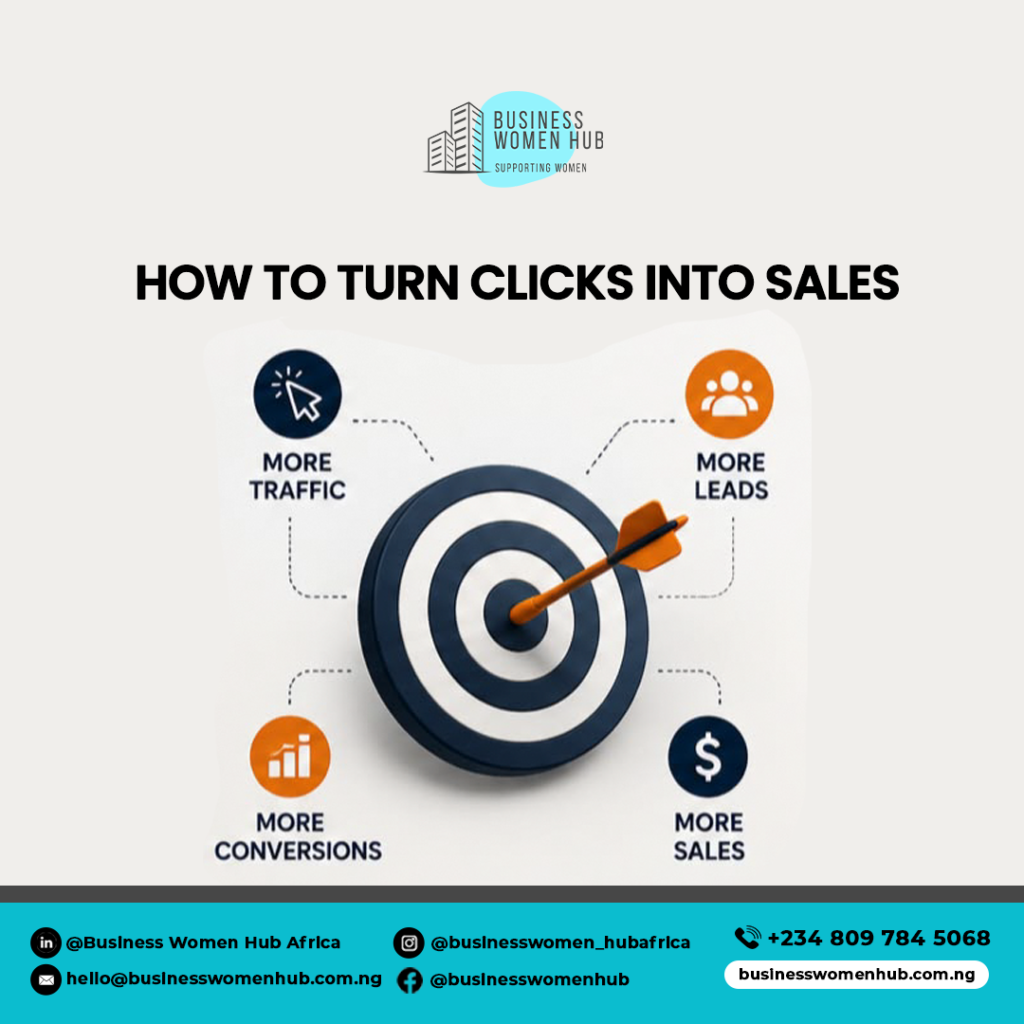
Turn Your Clicks into Sales

Getting people to click your store link is exciting, but the real goal is to turn those clicks into actual sales. Once a potential customer visits your store, your products and presentation should encourage them to take the next step.

Here’s how to increase your chances of turning clicks into sales:

  •  Use clear product images: Let customers see exactly what they are buying.
  • Write helpful product descriptions: Clearly explain what the product is, its benefits, and important details.
  • Keep your store updated: Remove unavailable products and add new ones regularly.
  • Price clearly: Customers should be able to understand what they are paying for without confusion.
  • Promote your best products: Use your strongest products to attract attention and lead customers into your store.

Remember: Promotion gets customers to your store, but a well-presented store helps convince them to buy.

Your Store Link Should Be Part of Your Sales Strategy

Your BWH Store is ready. Your products are listed. Now, it is time to make sure people know where to find you.

Don’t treat your store link as something you only share once in a while. Make it part of your regular marketing strategy. Include it in your content, conversations, product promotions, customer communication, and online presence.

The more strategically you promote your store, the more opportunities you create for people to discover your products.

Don’t just list it and wait. Promote it. Attract attention. Drive traffic. And turn visibility into sales.

Your store is open. Let people know where to shop.

Posted on Leave a comment

Beyond the Shop: 4 Powerful Merits of Having an E-Commerce Store

In today’s fast-moving digital world, having a physical business location is no longer the only way to reach customers. An e-commerce store can help you take your products beyond your immediate environment, make shopping easier, build trust, and create systems that support long-term growth.

Whether you run a food business, fashion brand, beauty business, service-based business, or retail store, an online storefront can open your business up to opportunities you may never have imagined.

Here are four powerful ways an e-commerce store can benefit your business.

Take Your Business Beyond Your Location

Your business shouldn’t be limited to the customers who live or work around you.

With an e-commerce store, customers can discover your products from different cities, states, and even countries. Your location may be where your business operates, but it doesn’t have to determine how far your products can travel.

An online store allows you to:

  • Reach more customers: Sell beyond your immediate community and expand your customer base.
  • Stay open 24/7: Customers can browse your products and place orders even when you’re not available.
  • Break geographical barriers: You can serve customers who may never visit your physical store.
  • Enter new markets: Your online presence can introduce your products to an entirely new audience.
  • Increase visibility: A well-presented storefront makes it easier for potential customers to discover your business.

The takeaway: Don’t let geography put a limit on your ambition. Your business can go much further when your products are available online.

Make Shopping Easier for Your Customers

Customers love convenience. The easier it is for people to find, understand, and purchase your products, the better their shopping experience becomes.

An e-commerce store removes many of the barriers that can make shopping stressful or time-consuming.

Customers can:

  • Discover products easily without having to visit a physical store.
  • Shop from anywhere – whether they’re at home, at work, or on the go.
  • See important information such as prices, pictures, descriptions, sizes, colours, and available options in one place.
  • Compare their options and make better purchasing decisions.
  • Return easily for repeat purchases because they already know where to find your products.

Convenience can be a powerful competitive advantage. When you make it easier for customers to shop with you, you also make it easier for them to choose you over the competition.

The takeaway: Don’t just sell a product. Create a shopping experience that makes customers want to come back.

Build a Professional and Trustworthy Brand

Your e-commerce store is more than a place to display your products. It is an extension of your brand.

A well-organised and professional online storefront can make your business appear more credible and give potential customers greater confidence in buying from you.

You can use your online store to:

  • Create a professional presence: Give customers a central place to learn about and shop from your business.
  • Showcase your products beautifully: Quality images and clear descriptions help customers understand exactly what you offer.
  • Build credibility: A consistent and organised digital presence can strengthen customer confidence.
  • Tell your brand story: Communicate who you are, what your business stands for, and why customers should choose you.
  • Stand out from competitors: A strong digital presence can help your business make a memorable impression.

Remember, customers don’t only buy products. They also buy confidence. Your online store should communicate one simple message: “You can trust this business.”

Sell Smarter and Create Room for Growth

Running a business already comes with enough responsibilities. Your sales process shouldn’t add unnecessary stress.

An e-commerce store can help you organise your products, simplify the buying process, reduce repetitive enquiries, and create more opportunities to generate sales.

With the right online system, you can:

  • Organise your products: Keep your offerings in one easy-to-access location.
  • Reduce repetitive questions: Customers can find prices, product information, and other details directly on your store.
  • Understand customer preferences: Your sales activity can reveal which products customers are interested in and what they buy most.
  • Create more sales opportunities: Your storefront can receive orders while you focus on other important areas of your business.
  • Prepare for growth: A reliable online sales system gives you a stronger foundation for serving more customers as your business expands.

Growth becomes easier when you have systems working alongside you.

Your Business Deserves to Go Further

An e-commerce store is not simply another business expense. When used effectively, it can become an investment in visibility, convenience, credibility, and growth.

Your physical store can serve the people around you, but your online store can help you reach people far beyond your immediate location.

So, if you’ve been wondering whether your business is ready to go online, perhaps the better question is:

How much further could your business go if your customers could shop from you anytime, anywhere?

The digital marketplace is already filled with customers looking for products like yours. Make it easy for them to find you, trust you, and buy from you.

Posted on Leave a comment

Overcoming Fear in Business: How to Build Confidence, Take Action, and Grow Your Business

Every entrepreneur experiences fear. Whether it’s the fear of failure, being judged, losing money, or making the wrong decision, these emotions are part of the journey. The difference between those who succeed and those who remain stuck isn’t the absence of fear; it’s the decision to keep moving despite it.

Fear often whispers that you’re not ready, not experienced enough, or that the risks are too great. But every thriving business started with someone who chose to act before they felt completely confident.

If you’ve been waiting for the “perfect time” to launch, expand, or take the next step in your business, this is your reminder: progress begins the moment you choose courage over comfort.

Fear Is Not a Stop Sign

Fear is natural, but it shouldn’t determine the direction of your business. Instead of seeing fear as a signal to stop, view it as evidence that you’re stepping into new opportunities and growth.

Here are a few ways to move forward despite fear:

  • Acknowledge your fear instead of ignoring it.
  • Take one bold step, even if it’s small.
  • Stop waiting to feel “ready.” Confidence comes through action.
  • Learn from mistakes rather than allowing them to define you.
  • Focus on possibilities instead of worst-case scenarios.

The truth is, fear doesn’t have to disappear before you move. Your dreams become possible the moment you decide they’re bigger than your doubts.

Build Confidence Through Small Wins

Confidence isn’t something you’re born with; it’s something you develop through consistent action.

Every customer you serve, every product you sell, every challenge you overcome, and every lesson you learn strengthens your belief in yourself. Small victories create the momentum needed for bigger successes.

To build lasting confidence:

  • Celebrate every win, no matter how small.
  • Keep learning to reduce uncertainty.
  • Measure your progress against your own growth, not someone else’s success.
  • Prepare consistently for opportunities.
  • Replace negative self-talk with words of encouragement.

Confidence doesn’t mean you’re no longer afraid. It means you’ve learned to trust yourself enough to move forward anyway.

Don’t Let Fear Make Your Decisions

Fear often disguises itself as procrastination, perfectionism, or excessive caution. Before long, valuable opportunities slip away because of overthinking.

Successful entrepreneurs don’t let fear drive their decisions; they let their purpose lead.

Here’s how to stay in control:

  • Make decisions based on your long-term goals.
  • Stop overthinking and start taking action.
  • Accept that perfection isn’t required for progress.
  • Ask for guidance and support when needed.
  • Continue showing up, even when it feels uncomfortable.

Every opportunity avoided because of fear is an opportunity someone else may embrace. Choose courage over comfort, one decision at a time.

Courage Creates the Business You Dream Of

Behind every successful business is someone who found the courage to begin.

Building a thriving business isn’t about waiting for perfect conditions. It’s about showing up consistently, taking calculated risks, learning from experience, and refusing to quit when challenges arise.

Develop a courageous business mindset by:

  • Believing in the value you bring to the market.
  • Taking calculated risks instead of avoiding all risks.
  • Seeing challenges as opportunities for growth.
  • Surrounding yourself with people who support your vision.
  • Remaining consistent, even when results take time.

Remember, courage isn’t the absence of fear; it’s choosing your purpose despite your fear. Every step you take today moves you closer to the business and life you’re working to build.

Final Thoughts

Fear will always be part of entrepreneurship, but it doesn’t have to be in charge.

Every successful business owner has faced moments of uncertainty. What sets them apart is their willingness to act despite it. The more you take action, the stronger your confidence becomes, and the more your business grows.

So, don’t wait until fear disappears. Start where you are, use what you have, and keep moving forward.
Your future business is built on the courageous decisions you make today.

Posted on Leave a comment

The Psychology of Why Customers Buy: 4 Powerful Principles Every Business Owner Should Know

Have you ever wondered why some businesses seem to attract customers effortlessly while others struggle to make sales, even when they offer great products?

The answer often lies in understanding the psychology behind buying decisions.
Customers don’t simply buy products because they’re available. They buy because something about the product, the brand, or the experience speaks to their needs, emotions, and confidence.

When you understand why people buy, you stop chasing customers and start creating meaningful connections that naturally lead to sales.

Let’s explore four powerful psychological principles that influence buying decisions and how you can use them to grow your business.

People Buy Solutions, Not Products

Customers rarely purchase a product simply because it exists. They buy because they believe it will solve a problem, make life easier, save time, or improve their lives in some way.

The businesses that consistently succeed aren’t always the ones with the most innovative products; they’re the ones that clearly communicate the value their customers truly need.

How to position your business for more sales:

  • Focus on your customer’s problem before talking about your product.
  • Highlight the transformation your product delivers, not just its features.
  • Use simple, relatable language your audience understands.
  • Share real-life examples and success stories from satisfied customers.
  • Ask yourself: “Why would someone choose this today?”

Key Takeaway: Customers are buying outcomes, not objects. When you clearly communicate the solution you provide, selling becomes a natural conversation rather than a difficult task.

People Buy with Emotion, Then Justify with Logic

Many business owners assume customers make decisions based purely on facts and logic. In reality, psychology tells us something different.

Most purchasing decisions begin with emotion. Customers often choose a product because it makes them feel confident, secure, excited, understood, or inspired. Logic helps them justify that emotional decision afterward.

How to build emotional connections:

  • Tell authentic stories your audience can relate to.
  • Show empathy and demonstrate that you understand their challenges.
  • Use testimonials and customer experiences to build confidence.
  • Create memorable experiences that make customers feel appreciated.
  • Keep your brand authentic and consistent across every interaction.

Key Takeaway: People may forget what you said, but they’ll remember how your business made them feel. Emotional connections create loyal customers who return again and again.

Trust Is the Greatest Sales Strategy

Before customers spend their money, they usually ask themselves one important question: “Can I trust this business?”

Trust removes uncertainty, reduces fear, and gives customers the confidence to move forward with a purchase. Without trust, even the best products can struggle to sell.

Simple ways to build trust:

  • Be transparent about your products, services, and pricing.
  • Deliver on every promise you make.
  • Respond professionally and promptly to customer inquiries.
  • Showcase genuine customer reviews and success stories.
  • Stay consistent in your communication, branding, and customer service.

Key Takeaway: Trust isn’t built through clever marketing; it is earned through consistency. The more credible your business becomes, the easier it is for customers to choose you over your competitors.

Make Buying Easy

Sometimes customers don’t say “no” because they aren’t interested; they leave because the buying process feels confusing or complicated.

Every extra step, unclear instruction, or delayed response increases the chances of losing a sale.

Remove buying barriers by:

  • Keeping your ordering process simple and straightforward.
  • Clearly explaining pricing, payment methods, and delivery options.
  • Responding quickly to customer questions.
  • Using clear calls to action that tell customers exactly what to do next.
  • Providing excellent after-sales support that encourages repeat business.

Key Takeaway: Convenience is one of the strongest influences on purchasing decisions. A smooth buying experience increases customer satisfaction, encourages repeat purchases, and generates valuable referrals.

Final Thoughts

Understanding the psychology of why customers buy isn’t about manipulating people; it’s about understanding them.

Successful businesses recognize that customers are looking for solutions, emotional connection, trust, and convenience. When you focus on delivering these consistently, selling becomes less about persuasion and more about serving people well.

As you grow your business, remember these four principles:

  • Solve real problems.
  • Connect emotionally.
  • Build trust consistently.
  • Make buying effortless.

When you do these well, you’re not just gaining customers; you’re building lasting relationships that fuel long-term business growth.

Posted on Leave a comment

Packaging That Speaks: How to Create a Customer Experience People Never Forget

In today’s competitive marketplace, having an excellent product is no longer enough. Before customers taste your food, wear your clothing, use your service, or experience the quality of what you offer, they have already formed an opinion about your brand.

That opinion begins with your packaging and presentation.

From the colors you use to the way your products are packaged, delivered, and displayed, every detail communicates something about your business. Thoughtful presentation doesn’t just make your brand look good; it creates trust, builds emotional connections, and transforms first-time buyers into loyal customers.

If you want customers to remember your business long after their purchase, here are four powerful ways to create a memorable customer experience through packaging and presentation.

First Impressions Matter

Your packaging is often the first interaction customers have with your business. Before they experience your product, they experience your brand.

A polished, professional presentation immediately communicates quality, credibility, and attention to detail. On the other hand, poor packaging can make even an outstanding product appear less valuable.

To create a strong first impression:

  • Invest in clean, professional packaging that reflects your brand.
  • Use consistent colors, fonts, and branding across all customer touchpoints.
  • Pay attention to how your products are displayed, both online and offline.
  • Ensure your business materials look polished and intentional.
  • Remember that even the smallest details influence how customers perceive your business.

Your packaging is not just a container; it’s an extension of your brand story. Make every first impression one that customers won’t forget.

Your Brand Should Feel Like an Experience

Customers may forget exactly what they bought, but they’ll remember how your business made them feel.

The most successful brands don’t simply sell products; they create experiences. Every package opened, every delivery received, and every interaction should leave customers feeling valued.

You can create memorable experiences by:

  • Including handwritten thank-you notes or branded inserts.
  • Making your unboxing or delivery process enjoyable.
  • Maintaining consistency across your products, social media, and customer service.
  • Designing experiences that evoke positive emotions.
  • Delivering excellence at every customer touchpoint.

When your brand feels intentional, customers become emotionally connected to your business, and emotionally connected customers are far more likely to return and recommend you to others.

Presentation Adds Perceived Value

Presentation has the power to elevate how customers perceive your product.

Even when two businesses offer similar products, customers often place greater value on the one presented more professionally. An attractive presentation builds confidence, strengthens trust, and increases the willingness to buy.

To elevate your presentation:

  • Use quality packaging materials that align with your brand identity.
  • Invest in clear, professional product photography.
  • Keep displays neat and attractive during exhibitions, markets, or in-store presentations.
  • Ensure labels, pricing, and product information are clear and easy to read.
  • Focus on a clean, simple, and consistent presentation style.

Presentation doesn’t replace quality; it reveals it. When customers can clearly see the value of what you offer, they’re more likely to trust your business, make a purchase, and recommend you to others.

Create Moments Customers Remember

The businesses’ customers return to are often those that create memorable moments beyond the sale.

Simple gestures can leave lasting impressions and turn ordinary transactions into meaningful experiences. Your goal shouldn’t be to make a sale; it should be to create a story your customers are excited to share.

Here are a few ways to create memorable moments:

  • Personalize the customer experience whenever possible.
  • Follow up after purchases to express appreciation.
  • Encourage customers to share their experiences on social media.
  • Listen to customer feedback and continuously improve.
  • Make every interaction feel thoughtful, valuable, and intentional.

People remember how your brand made them feel long after they’ve forgotten the price they paid.

Remember

Exceptional packaging and presentation are not about being expensive; they’re about being intentional.

Every package, every delivery, every product display, and every customer interaction contributes to the story your brand tells. When you consistently deliver excellence through thoughtful presentation, you create experiences that customers remember, recommend, and return for.

Remember, your product may bring customers in the first time, but the experience you create is what keeps them coming back.

Because in business, memorable experiences create loyal customers, and loyal customers build lasting brands.

Posted on Leave a comment

Storytelling for Business Success: How Your Story Can Build Trust, Create Connections, and Grow Your Brand

In today’s competitive business world, having a great product or service is no longer enough. Customers are constantly faced with choices, and what often sets one business apart from another is not just what it sells, but the story behind it.

People connect with people before they connect with products. They want to know who you are, what you stand for, and why your business exists. This is where storytelling becomes one of the most powerful tools for business success.

Why Stories Matter More Than Sales Pitches

While features, prices, and promotions may attract attention, stories build trust. A compelling story helps customers understand your journey, relate to your experiences, and develop confidence in your brand. Every successful business has a story, and so do you.

Your story could include:

  • What inspired you to start your business?
  • The challenges you faced along the way.
  • Important milestones you’ve achieved.
  • Lessons you’ve learned through your journey.
  • The values and mission that drive your business.

Customers may discover your business because of what you sell, but they stay because of the story they connect with.

Finding Powerful Stories in Everyday Business Experiences

Many entrepreneurs believe they don’t have interesting stories to share. The truth is that storytelling doesn’t require dramatic events or extraordinary achievements. Some of the most powerful stories come from everyday experiences.

Your daily business activities are filled with moments that can educate, inspire, and connect with your audience. These include:

  • Customer interactions that taught you valuable lessons.
  • Small and big business victories.
  • Behind-the-scenes moments.
  • Challenges you’ve overcome.
  • Personal and professional growth experiences.

People appreciate authenticity. They don’t expect perfection; they want to see real experiences, genuine growth, and relatable journeys. Every day in business gives you another story worth sharing.

Using Storytelling to Build Stronger Customer Relationships

Stories create emotional connections, and emotional connections create loyal customers. When people feel understood, they are more likely to engage with your content, trust your recommendations, and become advocates for your brand.

To build stronger relationships through storytelling:

  • Focus on your customers’ challenges and aspirations.
  • Share testimonials that highlight real transformations.
  • Use relatable examples and experiences.
  • Show empathy in your communication.
  • Make your audience feel seen, heard, and valued.

Customers may initially buy because they need your product, but they remain loyal because they feel connected to your brand. Connection creates community, and community creates growth.

Creating a Consistent Brand Story

A strong brand story is not something you tell once and forget. It should be woven into every aspect of your business. From your social media content and website to your customer interactions and marketing campaigns, your story should consistently communicate who you are and what you stand for.

To create a consistent brand story:

  • Clearly define your mission.
  • Identify the values that guide your decisions.
  • Communicate your vision for the future.
  • Maintain consistent messaging across all platforms.
  • Ensure your customer experience reflects your story.

The most memorable brands are not built solely on products or services; they are built on stories that people believe in and want to be part of.

Final Thoughts

Your story is one of your most valuable business assets. It has the power to build trust, strengthen relationships, create loyal communities, and differentiate your business in a crowded marketplace.

Don’t underestimate the impact of sharing your journey. Be authentic, be consistent, and be intentional about the stories you tell. Because at the heart of every successful business is a story that inspires people to connect, believe, and grow alongside the brand.

Posted on Leave a comment

Mindset Shifts That Unlock Business Growth

4 Powerful Ways to Think Differently and Grow Your Business with Confidence

Building a successful business is not only about strategy, funding, or marketing; it starts with mindset. The way you think influences the decisions you make, the risks you take, and the opportunities you pursue.

Many women in business have incredible ideas, talents, and visions, yet their growth is often limited by fear, self-doubt, perfectionism, or burnout. The good news is that small mindset shifts can create powerful transformations in how you lead, build, and grow your business.

This week, we’re exploring four mindset shifts that can unlock greater confidence, clarity, and sustainable business growth.

Start Before You’re Ready

Many women delay launching ideas, products, or opportunities because they’re waiting for the “perfect time.” But growth rarely begins with certainty; it begins with courage.

The truth is, you do not need all the answers before taking your first step. Waiting until everything feels perfectly aligned can keep you stuck longer than necessary. Most successful entrepreneurs started with limited resources, little experience, and many uncertainties, but they chose to begin anyway. Progress matters far more than perfection.

How to Move Forward Confidently:

  • Take action, even if the first step feels uncomfortable
  • Learn while building because experience teaches faster than waiting
  • Use the resources and skills you already have
  • Focus on progress, not flawless execution
  • Trust that every small action creates momentum

Your breakthrough often begins with the decision to start, even before you feel fully ready.

Focus on Solving, Not Selling

Customers rarely buy products simply because of the product itself. They buy because they believe it will solve a need, challenge, or problem they have.

Businesses that grow sustainably understand the importance of creating value before chasing transactions. Instead of constantly asking, “How can I sell more?” ask yourself, “How can I help people better?” When your audience feels understood, they naturally become more connected to your brand.

How to Create Value That Drives Growth:

  • Identify the specific problem your business solves
  • Speak directly to your audience’s needs and challenges
  • Focus on benefits, not just features
  • Build trust before asking for a sale
  • Prioritize impact over quick wins

Serve with purpose, and growth will follow.

Embrace Failure as Feedback

Every successful businesswoman has experienced disappointments, missed opportunities, and moments where things did not go according to plan. The difference is that they chose to learn rather than quit.

Failure is not proof that you are incapable; it is often proof that you are trying, learning, and growing. Growth does not come from avoiding mistakes; it comes from understanding them and improving. Every setback carries a lesson that can sharpen your strategy and strengthen your resilience.

How to Use Challenges as Fuel for Progress:

  • Ask yourself, “What can I learn from this?”
  • Separate temporary outcomes from your long-term potential
  • Reflect on what worked and what needs adjustment
  • Appreciate growth, not just achievements
  • Stay flexible and keep improving

Failures are not roadblocks; they are lessons and redirections that can lead you closer to success.

Protect Your Energy Like a CEO

As your business grows, your time and energy become some of your most valuable resources. You cannot give your best to your clients, team, and business when you are constantly running on empty.

Strong leaders understand that protecting their well-being is not selfish; it is necessary for building a sustainable business. Burnout does not increase productivity. Clarity, focus, and balance do. The way you manage your energy affects the way you lead.

How to Lead with Intention:

  • Set healthy boundaries around your time
  • Prioritize tasks that align with your goals
  • Create space for rest and renewal
  • Learn to say no when necessary
  • Focus your energy on what creates meaningful impact

Growth becomes sustainable when you operate from strength, not exhaustion. Protect your energy because your business thrives when you do.

Final Thoughts

Business growth is not only about doing more; it is about thinking differently. The right mindset can help you take bold action, build stronger connections, overcome challenges, and lead with confidence.

As you continue your journey, remember this:

  • Start before you feel fully ready
  • Focus on solving real problems
  • Learn from every challenge
  • Protect your energy intentionally

Small mindset shifts can create lasting transformation. And sometimes, the biggest breakthrough begins with changing the way you think.

Posted on Leave a comment

SEO Made Easy for Women in Business: A Simple Guide to Helping Customers Find You Online

In today’s digital world, having a great product or service is only part of the journey. The other part is making sure people can actually find you. Many women in business hear the term SEO and assume it’s a complicated strategy meant only for large companies or tech experts. The truth is much simpler: SEO is about visibility.

If customers are searching for what you offer, SEO helps place your business in front of them.

The good news? You do not need advanced skills to get started. Small, intentional actions can help your business become easier to find online and connect with the right audience.

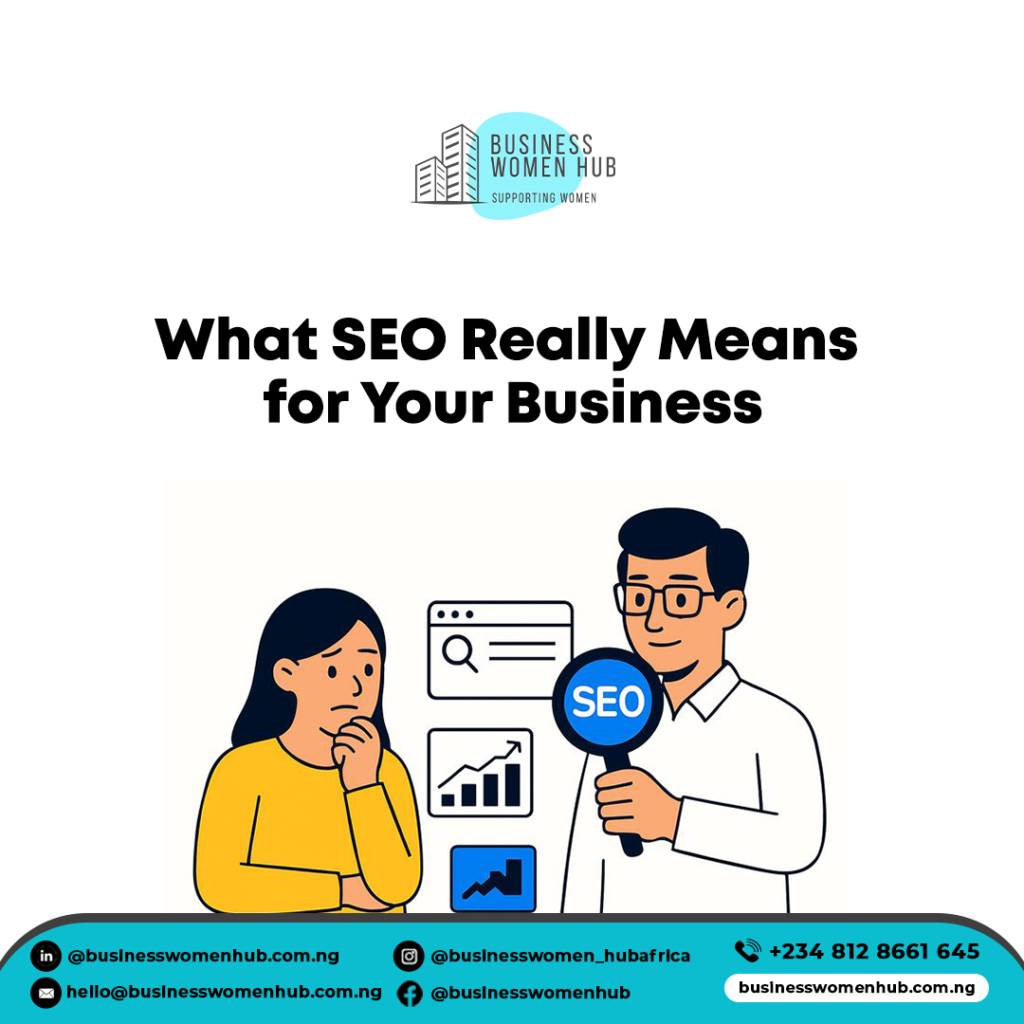
What SEO Really Means for Your Business

SEO stands for Search Engine Optimization, but at its core, it simply means helping people discover your business online when they search for products or services you provide.

Imagine you sell cakes and someone types: “Birthday cake in Lagos.
If your business appears in those results, SEO is working for you.

SEO is not about complex technology. It is about helping the right people find your business quickly and understand what you offer.

Simple ways to start:

  • Use words people actually search for: think like your customer instead of using only industry terms.
  • Be specific about what you do: instead of saying, “Delicious Treats,” Say: “Custom Birthday Cakes in Lagos.”
  • Add your location where necessary: many customers search by location.
  • Keep your message clear: tell people exactly what you sell or provide.
  • Focus on solving problems: ask yourself: What need does my business meet?

Example:
Instead of: “We make amazing cakes.”

Try: “Custom birthday and wedding cakes in Lagos for your special celebrations.”

The clearer your message is, the easier it becomes for customers to find and trust you.

Keywords Are Simply Your Customers’ Language

The word keywords may sound technical, but they are simply the phrases people type into search engines. One important mistake business owners make is describing their business in ways customers do not naturally use.
Your audience may search differently from how you market yourself.

How to find simple keywords:

  • Ask: What would someone type to find my business?
  • Use everyday language
  • Mention your products or services clearly
  • Add locations where needed
  • Use keywords naturally rather than repeating them excessively

Examples: For a fashion business:
Instead of: “Luxury pieces for elegant women.”

Try: “Affordable women’s dresses in Lagos.”

For a hair products business:

Instead of: “Premium beauty solutions.”

Try: “Natural hair growth oil for women.

The goal is not to impress search engines with fancy words. The goal is to speak the same language as your customers.

Your Social Media Posts Can Support SEO Too

Many women assume SEO only applies to websites, but your social media pages also contribute to how people discover your business. Your captions, profile descriptions, hashtags, and product details all help search platforms understand what you do. Every post becomes another opportunity to increase visibility.

Ways to optimize your social content:

  • Write clear captions
  • Mention your products naturally
  • Include your location if needed
  • Use relevant hashtags
  • Give proper product descriptions

Example: Instead of:
“Available now 💕”

Try: “Available now: Handmade Ankara handbags for women in Lagos. Perfect for work, events, and everyday style.”

The second option gives people more context and increases your chances of being discovered.

Before posting, ask yourself: What do I do, and who is it for?

If your audience can answer that question immediately, you are already improving your SEO.

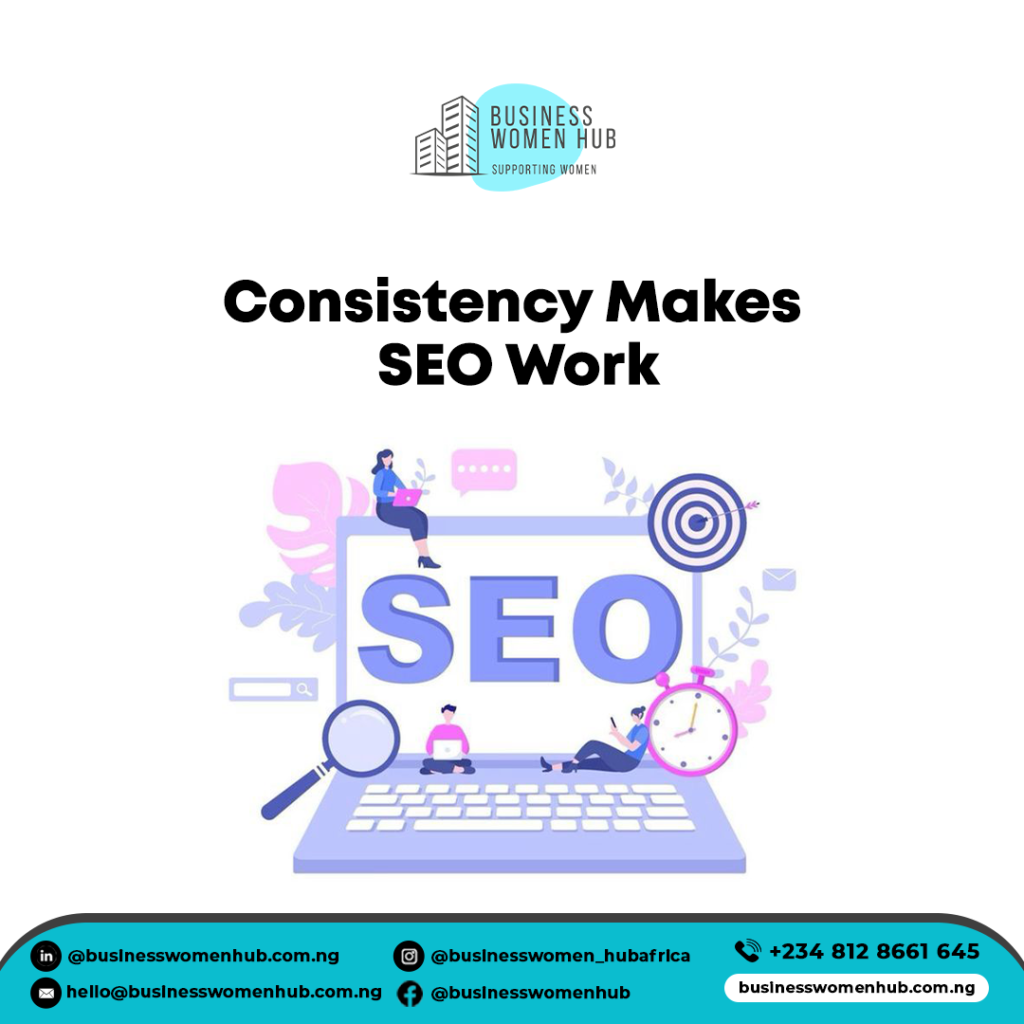
Consistency Makes SEO Work

SEO is not a one-time activity. It is not instant, and results do not happen overnight. Visibility grows when you consistently show up online. Small efforts repeated over time create stronger results than one big effort done once.

Build simple SEO habits:

  • Keep your business information updated
  • Share valuable content consistently
  • Use similar keywords across platforms
  • Answer customer questions online
  • Improve your content regularly

Example: If you own a skincare business and customers frequently ask:
“How do I get rid of dark spots?”

Create helpful content like:
“3 Tips for Managing Dark Spots + Best Products for Healthy Skin”

This does two things:

  • It helps your audience.
  • It increases your chances of appearing when people search for answers.

Final Thoughts: Visibility Creates Opportunity

SEO does not have to feel overwhelming. You do not need expensive tools or advanced knowledge to begin. Start with simple actions:

  • Speak your customers’ language
  • Be clear about what you offer
  • Use relevant keywords
  • Create useful content
  • Stay consistent

Your customers are already searching for solutions. The question is: Will they find your business when they search?
Because being online is good, but being found is even better.

Posted on Leave a comment

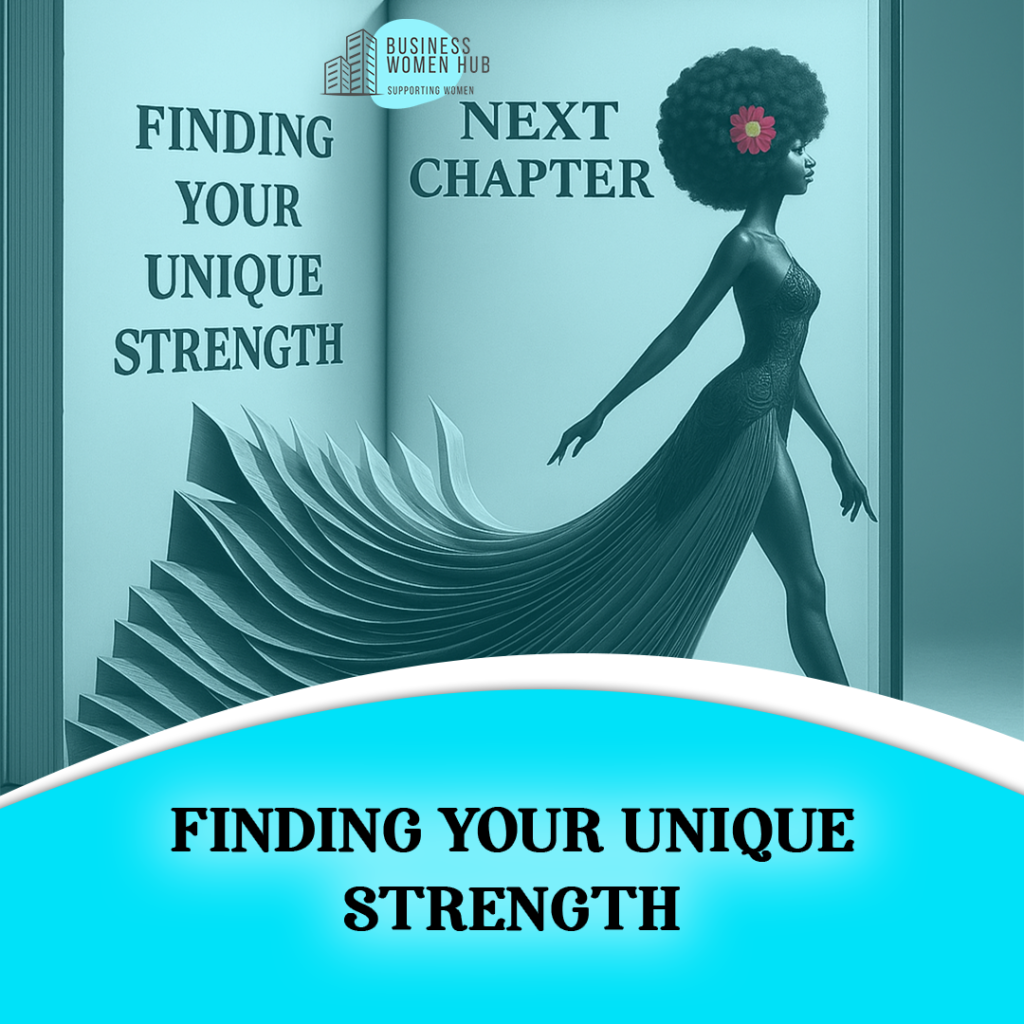
Finding Your Unique Strength: The Power of Embracing Who You Truly Are.

In a world that constantly tells women who they should be, how they should lead, and what success should look like, it’s easy to lose sight of one important truth: your greatest strength already exists within you.

Too often, women in business and leadership spend years trying to improve what they think is “missing,” while overlooking the gifts, experiences, and qualities that already make them powerful. We admire confidence in others, copy strategies that seem successful, and compare ourselves to people on completely different journeys.

But real success doesn’t come from imitation. It comes from alignment. Your unique strength is not something you need to invent; it’s something you need to recognize, refine, and confidently own.
This week’s reflection is about discovering the value in your individuality, embracing your differences, and building confidence rooted in clarity instead of comparison.

Your Strength Is Not a Copy, It’s a Clue

Many women are conditioned to recognize brilliance in others while ignoring it in themselves. We celebrate other people’s talents yet hesitate to acknowledge our own. We follow trends, mimic leadership styles, and try to fit into definitions of success that were never designed for us.

But your true strength isn’t borrowed. It’s built.

It’s hidden in the things you’ve survived, the problems you solve naturally, the wisdom you’ve gained through experience, and the qualities people consistently rely on you for.

Think about it:

  • Are people constantly coming to you for advice, encouragement, or clarity?
  • Do certain tasks energize you instead of exhausting you?
  • Are there things that feel effortless to you but incredibly valuable to others?

These are not random traits; they are clues pointing toward your unique strengths.

One of the biggest mistakes women make is downplaying what comes naturally to them. Because it feels easy, they assume it isn’t valuable. But often, what feels ordinary to you is extraordinary to someone else.

Sometimes, it takes trusted friends, mentors, colleagues, or clients to help you see the greatness you overlook in yourself.

You do not need to master everything, become everything, or imitate everyone. Sustainable success comes from building a life and business around who you truly are, not around trends or expectations.

Instead of constantly trying to “fix” yourself, start focusing on what is already strong within you.

Your Difference Is Your Advantage

The world does not need another copy. It needs authenticity.

In business, leadership, and life, what makes you different is often what makes you valuable. Yet many women spend years trying to blend in because standing out feels uncomfortable.

The truth is, the marketplace is crowded with sameness. What people remember is distinction.

Your story, perspective, communication style, and approach are things no one else can fully replicate. Your background shapes how you lead, serve, solve problems, and connect with people.

Even the frustrations you feel in your industry may be pointing you toward your next opportunity. Often, the things that bother you most are areas where you are uniquely positioned to innovate or create change.

Your voice matters too, whether it is bold and outspoken, calm and thoughtful, visionary, strategic, detailed, or deeply empathetic. There is room for every kind of leadership.

The danger of trying too hard to fit in is that the people who truly need your voice may never find you.

What you think makes you “too much” or “not enough” could actually be the very thing that attracts the right audience, clients, collaborators, or community to you.

You were not created to mimic others. You were created to make an impact in a way only you can.

Strength Doesn’t Always Look Loud

Society often associates strength with loudness, visibility, and constant confidence. We celebrate the people who command attention, speak the most, and dominate the room.

But strength is not always loud. Sometimes, strength is quiet consistency.

It is showing up with grace during difficult seasons. It is making hard decisions when nobody applauds you. It is staying grounded in your values even when external pressure pushes you to change.

Softness is not weakness. In many cases, it reflects emotional intelligence, self-control, and maturity.

Some of the most influential leaders are not the loudest people in the room. They are the ones who listen deeply, create safe spaces, remain dependable, and quietly move things forward.

Consistency, patience, empathy, and calmness are all forms of strength. If you have ever felt “too quiet,” “too soft,” or “too introverted” to lead effectively, remember this:

Leadership is not about becoming the loudest version of yourself. It is about becoming the truest version of yourself.

You do not have to match the energy of every room you enter. Sometimes your presence alone shifts the atmosphere.

Leading differently is still leading.

Confidence Comes From Clarity, Not Comparison

One of the fastest ways to lose confidence is to constantly compare yourself to others.

In today’s digital world, it is easy to scroll through carefully curated highlights of other people’s lives and begin questioning your own progress, gifts, or journey.

But confidence is not built through competition. It is built through clarity. When you are clear about who you are, what you value, and what you bring to the table, comparison loses its power.

Start by defining your core values. What truly matters to you? What kind of impact do you want to make? What principles guide your decisions?

Then identify your strengths clearly and honestly. What do you naturally do well? What do people consistently appreciate about you? What makes your approach different?

Protect your confidence by being intentional about what you consume. Not every voice deserves access to your mind. Curate your environment, your content, and your influences wisely.

It can also help to keep a “confidence file”, a collection of messages, testimonials, achievements, positive feedback, and reminders of the impact you’ve already made. On difficult days, these reminders help reconnect you with your values.

Confidence is not the absence of insecurity or doubt. It is the ability to move forward with clarity despite them.

It is being able to say:

“I may not do it like her, but I do it like me, and that is enough.”

Your strength does not live in someone else’s timeline, voice, or journey. It lives in your truth.

Own it.
Walk in it.
And never underestimate the power of being fully yourself.