Posted on Leave a comment

Saving & Investment Strategies for Female Entrepreneurs: How to Build a Business That Creates Lasting Wealth

Running a successful business is not just about making sales; it’s about managing money wisely, building financial stability, and creating long-term wealth. Many female entrepreneurs work hard to increase revenue, yet struggle to maintain consistent savings or make strategic investments that support sustainable growth.
The truth is that financial success doesn’t happen by chance. It is built through intentional saving, smart investing, and disciplined financial decisions over time. Here are four essential strategies every female entrepreneur can adopt to strengthen her business and secure her financial future.

Build a Business That Saves Before It Spends

One of the most powerful habits of successful entrepreneurs is consistent saving. Unfortunately, many business owners treat savings as something they will do after all expenses have been covered. In reality, savings should be a priority, not an afterthought.

A strong savings culture helps your business survive unexpected challenges, take advantage of new opportunities, and operate with confidence.

To build a healthy savings habit:

  • Separate your personal and business finances.
  • Set a monthly savings target, regardless of how small it may seem.
  • Save for opportunities, not just emergencies.
  • Treat savings as a fixed business expense.
  • Stay consistent, because small amounts saved regularly can produce significant results over time.

Revenue may help your business grow, but savings help it survive and thrive.

For women seeking a structured and supportive way to save consistently, the BWH ESUSU Savings Platform provides a community-driven approach to achieving business and financial goals.

Save with a Purpose

Saving becomes much easier when there is a clear goal attached to it. Successful entrepreneurs do not save randomly; they save intentionally. Before setting money aside, ask yourself: What am I saving for?

Some valuable business-saving goals include:

  • Expanding inventory.
  • Upgrading equipment and business tools.
  • Funding marketing and advertising campaigns.
  • Recruiting and training staff.
  • Building an emergency reserve for unexpected situations.

When every contribution is connected to a meaningful goal, staying disciplined becomes easier. Purpose transforms saving from a financial burden into a strategic business tool. It creates motivation, focus, and a sense of progress toward a larger vision.

The BWH ESUSU Savings Platform can help you remain accountable as you work steadily toward your business objectives.

Invest in What Grows Your Business

While saving protects your business, investing helps it grow. Many entrepreneurs believe they need a large amount of money before they can begin investing. However, some of the most impactful investments start with small amounts that have been saved consistently over time.

Consider investing in:

  • Skills development and professional training.
  • Digital marketing and brand visibility.
  • Better systems, processes, and automation.
  • Product improvement and innovation.
  • Strategic partnerships and collaborations.

Before making any investment decision, ask yourself: “Will this help my business become more profitable, efficient, or sustainable?”

Every naira invested should have the potential to create greater value and move your business closer to its goals. The savings you build today can become the capital that funds tomorrow’s expansion, innovation, and success.

Create a Long-Term Wealth Strategy

Building a profitable business is important, but building wealth is equally essential. Your business should not only generate income today; it should also contribute to your long-term financial security. Wealth creation requires planning and consistent action.

To develop a long-term wealth strategy:

  • Maintain a consistent savings plan.
  • Reinvest a portion of your profits.
  • Diversify your income streams.
  • Build a strong emergency fund.
  • Set financial goals for the next one, three, and five years.

Financially empowered women are not always the highest earners. More often, they are the women who manage their resources wisely, save consistently, and invest strategically. Wealth is built through small, smart decisions repeated over time. Start where you are, save what you can, remain disciplined, and allow your money to work for your future.

If you need a supportive structure to help you stay on track, the BWH ESUSU Savings Platform is designed to help women cultivate sustainable saving habits, build stronger businesses, and create brighter financial futures.

Final Thoughts

Financial growth is not determined solely by how much money you make, but by how effectively you manage, save, and invest what you earn.

By prioritizing savings, attaching purpose to every financial goal, investing strategically, and planning for the long term, you can build a business that not only survives but flourishes for years to come.

Your journey to financial freedom starts with one decision: begin today.

Posted on Leave a comment

SEO Made Easy for Women in Business: A Simple Guide to Helping Customers Find You Online

In today’s digital world, having a great product or service is only part of the journey. The other part is making sure people can actually find you. Many women in business hear the term SEO and assume it’s a complicated strategy meant only for large companies or tech experts. The truth is much simpler: SEO is about visibility.

If customers are searching for what you offer, SEO helps place your business in front of them.

The good news? You do not need advanced skills to get started. Small, intentional actions can help your business become easier to find online and connect with the right audience.

What SEO Really Means for Your Business

SEO stands for Search Engine Optimization, but at its core, it simply means helping people discover your business online when they search for products or services you provide.

Imagine you sell cakes and someone types: “Birthday cake in Lagos.
If your business appears in those results, SEO is working for you.

SEO is not about complex technology. It is about helping the right people find your business quickly and understand what you offer.

Simple ways to start:

  • Use words people actually search for: think like your customer instead of using only industry terms.
  • Be specific about what you do: instead of saying, “Delicious Treats,” Say: “Custom Birthday Cakes in Lagos.”
  • Add your location where necessary: many customers search by location.
  • Keep your message clear: tell people exactly what you sell or provide.
  • Focus on solving problems: ask yourself: What need does my business meet?

Example:
Instead of: “We make amazing cakes.”

Try: “Custom birthday and wedding cakes in Lagos for your special celebrations.”

The clearer your message is, the easier it becomes for customers to find and trust you.

Keywords Are Simply Your Customers’ Language

The word keywords may sound technical, but they are simply the phrases people type into search engines. One important mistake business owners make is describing their business in ways customers do not naturally use.
Your audience may search differently from how you market yourself.

How to find simple keywords:

  • Ask: What would someone type to find my business?
  • Use everyday language
  • Mention your products or services clearly
  • Add locations where needed
  • Use keywords naturally rather than repeating them excessively

Examples: For a fashion business:
Instead of: “Luxury pieces for elegant women.”

Try: “Affordable women’s dresses in Lagos.”

For a hair products business:

Instead of: “Premium beauty solutions.”

Try: “Natural hair growth oil for women.

The goal is not to impress search engines with fancy words. The goal is to speak the same language as your customers.

Your Social Media Posts Can Support SEO Too

Many women assume SEO only applies to websites, but your social media pages also contribute to how people discover your business. Your captions, profile descriptions, hashtags, and product details all help search platforms understand what you do. Every post becomes another opportunity to increase visibility.

Ways to optimize your social content:

  • Write clear captions
  • Mention your products naturally
  • Include your location if needed
  • Use relevant hashtags
  • Give proper product descriptions

Example: Instead of:
“Available now 💕”

Try: “Available now: Handmade Ankara handbags for women in Lagos. Perfect for work, events, and everyday style.”

The second option gives people more context and increases your chances of being discovered.

Before posting, ask yourself: What do I do, and who is it for?

If your audience can answer that question immediately, you are already improving your SEO.

Consistency Makes SEO Work

SEO is not a one-time activity. It is not instant, and results do not happen overnight. Visibility grows when you consistently show up online. Small efforts repeated over time create stronger results than one big effort done once.

Build simple SEO habits:

  • Keep your business information updated
  • Share valuable content consistently
  • Use similar keywords across platforms
  • Answer customer questions online
  • Improve your content regularly

Example: If you own a skincare business and customers frequently ask:
“How do I get rid of dark spots?”

Create helpful content like:
“3 Tips for Managing Dark Spots + Best Products for Healthy Skin”

This does two things:

  • It helps your audience.
  • It increases your chances of appearing when people search for answers.

Final Thoughts: Visibility Creates Opportunity

SEO does not have to feel overwhelming. You do not need expensive tools or advanced knowledge to begin. Start with simple actions:

  • Speak your customers’ language
  • Be clear about what you offer
  • Use relevant keywords
  • Create useful content
  • Stay consistent

Your customers are already searching for solutions. The question is: Will they find your business when they search?
Because being online is good, but being found is even better.

Posted on Leave a comment

Finding Your Unique Strength: The Power of Embracing Who You Truly Are.

In a world that constantly tells women who they should be, how they should lead, and what success should look like, it’s easy to lose sight of one important truth: your greatest strength already exists within you.

Too often, women in business and leadership spend years trying to improve what they think is “missing,” while overlooking the gifts, experiences, and qualities that already make them powerful. We admire confidence in others, copy strategies that seem successful, and compare ourselves to people on completely different journeys.

But real success doesn’t come from imitation. It comes from alignment. Your unique strength is not something you need to invent; it’s something you need to recognize, refine, and confidently own.

This week’s reflection is about discovering the value in your individuality, embracing your differences, and building confidence rooted in clarity instead of comparison.

Your Strength Is Not a Copy, It’s a Clue

Many women are conditioned to recognize brilliance in others while ignoring it in themselves. We celebrate other people’s talents yet hesitate to acknowledge our own. We follow trends, mimic leadership styles, and try to fit into definitions of success that were never designed for us.

But your true strength isn’t borrowed. It’s built.

It’s hidden in the things you’ve survived, the problems you solve naturally, the wisdom you’ve gained through experience, and the qualities people consistently rely on you for.

Think about it:

  • Are people constantly coming to you for advice, encouragement, or clarity?
  • Do certain tasks energize you instead of exhausting you?
  • Are there things that feel effortless to you but incredibly valuable to others?

These are not random traits; they are clues pointing toward your unique strengths.

One of the biggest mistakes women make is downplaying what comes naturally to them. Because it feels easy, they assume it isn’t valuable. But often, what feels ordinary to you is extraordinary to someone else.

Sometimes, it takes trusted friends, mentors, colleagues, or clients to help you see the greatness you overlook in yourself.

You do not need to master everything, become everything, or imitate everyone. Sustainable success comes from building a life and business around who you truly are, not around trends or expectations.

Instead of constantly trying to “fix” yourself, start focusing on what is already strong within you.

Your Difference Is Your Advantage

The world does not need another copy. It needs authenticity.

In business, leadership, and life, what makes you different is often what makes you valuable. Yet many women spend years trying to blend in because standing out feels uncomfortable.

The truth is, the marketplace is crowded with sameness. What people remember is distinction.

Your story, perspective, communication style, and approach are things no one else can fully replicate. Your background shapes how you lead, serve, solve problems, and connect with people.

Even the frustrations you feel in your industry may be pointing you toward your next opportunity. Often, the things that bother you most are areas where you are uniquely positioned to innovate or create change.

Your voice matters too, whether it is bold and outspoken, calm and thoughtful, visionary, strategic, detailed, or deeply empathetic. There is room for every kind of leadership.

The danger of trying too hard to fit in is that the people who truly need your voice may never find you.

What you think makes you “too much” or “not enough” could actually be the very thing that attracts the right audience, clients, collaborators, or community to you.

You were not created to mimic others. You were created to make an impact in a way only you can.

Strength Doesn’t Always Look Loud

Society often associates strength with loudness, visibility, and constant confidence. We celebrate the people who command attention, speak the most, and dominate the room.

But strength is not always loud. Sometimes, strength is quiet consistency.

It is showing up with grace during difficult seasons. It is making hard decisions when nobody applauds you. It is staying grounded in your values even when external pressure pushes you to change.

Softness is not weakness. In many cases, it reflects emotional intelligence, self-control, and maturity.

Some of the most influential leaders are not the loudest people in the room. They are the ones who listen deeply, create safe spaces, remain dependable, and quietly move things forward.

Consistency, patience, empathy, and calmness are all forms of strength. If you have ever felt “too quiet,” “too soft,” or “too introverted” to lead effectively, remember this:

Leadership is not about becoming the loudest version of yourself. It is about becoming the truest version of yourself.

You do not have to match the energy of every room you enter. Sometimes your presence alone shifts the atmosphere.

Leading differently is still leading.

Confidence Comes From Clarity, Not Comparison

One of the fastest ways to lose confidence is to constantly compare yourself to others.

In today’s digital world, it is easy to scroll through carefully curated highlights of other people’s lives and begin questioning your own progress, gifts, or journey.

But confidence is not built through competition. It is built through clarity. When you are clear about who you are, what you value, and what you bring to the table, comparison loses its power.

Start by defining your core values. What truly matters to you? What kind of impact do you want to make? What principles guide your decisions?

Then identify your strengths clearly and honestly. What do you naturally do well? What do people consistently appreciate about you? What makes your approach different?

Protect your confidence by being intentional about what you consume. Not every voice deserves access to your mind. Curate your environment, your content, and your influences wisely.

It can also help to keep a “confidence file”, a collection of messages, testimonials, achievements, positive feedback, and reminders of the impact you’ve already made. On difficult days, these reminders help reconnect you with your values.

Confidence is not the absence of insecurity or doubt. It is the ability to move forward with clarity despite them.

It is being able to say:

“I may not do it like her, but I do it like me, and that is enough.”

Your strength does not live in someone else’s timeline, voice, or journey. It lives in your truth.

Own it.
Walk in it.
And never underestimate the power of being fully yourself.

Posted on Leave a comment

Sales Confidence for Women Entrepreneurs: Turning Belief into Bold Business Results

Sales is often one of the most uncomfortable parts of entrepreneurship for many women. Not because they lack talent or intelligence, but because selling can feel intimidating, awkward, or even pushy. The truth, however, is that sales confidence is not an inborn personality trait; it is a skill that can be learned, practiced, and mastered.

When women build confidence in sales, they unlock more than revenue; they unlock visibility, influence, and sustainable growth. Sales then stops feeling like pressure and starts feeling like purpose. Here’s how to intentionally grow sales confidence from the inside out.

Confidence Starts with Belief, Not Scripts

Sales confidence does not begin with memorizing the perfect pitch or copying someone else’s script. It begins with believing deeply in the value you bring to the table. Many women hesitate to sell not because they are unskilled, but because they question their worth, pricing, or expertise.
The shift begins internally. When you are convinced of your value, you no longer need to “convince” others; you simply communicate it.

Ways to strengthen your confidence from within:

  • Own your expertise: You are not “lucky” to be here; you are qualified.
  • Know your impact: Your product or service solves a real problem, and that matters.
  • Detach from rejection: A “no” is feedback, not a personal failure.
  • Speak with certainty: Stop apologizing for your offer.
  • Reaffirm your value daily: Self-belief is one of your most powerful sales tools.

People do not just buy products or services; they buy confidence, clarity, and conviction. When you trust what you sell, selling becomes an act of service, not a struggle.

Clarity Builds Confidence in Sales Conversations

Uncertainty is quickly felt in sales conversations. If you are unclear about what you offer, who it is for, or why it matters, potential clients will sense hesitation. Confidence thrives on clarity.
When you know exactly what you are selling and who you are selling to, conversations become calmer, more natural, and far more effective.

How to sell with clarity and ease:

  • Define your offer clearly: What specific problem do you solve, and how?
  • Know your ideal client: Speak directly to their needs instead of trying to appeal to everyone.
  • Articulate the outcome: What transformation should your client expect?
  • Simplify your message: Confusion kills sales; clarity builds trust.
  • Prepare talking points: Confidence increases when you are not guessing.

Clarity removes hesitation. The clearer you are about your offer, the more confidently you can invite others to say yes.

Practice Turns Confidence into Results

Confidence is not magic; it is repetition. The more you avoid selling, the more intimidating it becomes. The more you practice, the more natural it feels. Action is the bridge between fear and mastery.
Sales confidence grows when you show up consistently, even when it feels uncomfortable at first.

Ways to build confidence through action:

  • Start small: Practice selling in low-pressure environments.
  • Role-play conversations: Preparation reduces fear and uncertainty.
  • Follow up boldly: Silence does not always mean rejection; do not disappear.
  • Track your wins: Every inquiry, compliment, or sale counts.
  • Stay visible: Confidence compounds when you consistently show up.

Confidence is earned in motion. Every conversation strengthens your voice, courage, and business results.

Redefine Sales as Service, Not Pressure

Sales does not have to feel aggressive or manipulative. At its best, sales is simply an invitation, an opportunity for someone to accept a solution they genuinely need. The most confident women in business do not pressure; they guide.
When your mindset shifts from “I need to sell” to “I am here to serve,” selling becomes lighter and more authentic.

How to sell with integrity and ease:

  • Lead with empathy: Listen before you pitch.
  • Ask better questions: Understanding builds trust faster than talking.
  • Focus on helping, not convincing: Serve first, sell second.
  • Respect boundaries: Confidence never forces outcomes.
  • Stay authentic: You do not need to sound like anyone else to succeed.

Ethical, confident sales create long-term relationships, not one-time wins. When you approach sales as service, confidence flows naturally, and so do results.

Final Thought

Sales confidence is not about becoming louder, pushier, or someone you are not. It is about becoming clearer, more assured, and more aligned with the value you offer. When belief, clarity, practice, and service come together, selling stops being a hurdle and becomes a powerful pathway to growth.

Every woman entrepreneur deserves to sell with confidence, not just to increase revenue, but to fully own her voice, her value, and her vision.

Posted on Leave a comment

Budgeting for Growth, Not Survival: A Smarter Way to Use Your Money

For many women in business, budgeting has become a means of coping rather than a tool for building. We budget to pay bills, cover emergencies, and “manage till next month.” While this approach keeps the lights on, it often keeps our businesses stuck in a state of survival mode.

Growth requires a different mindset. Budgeting for growth is not about restriction; it’s about direction. It’s about telling your money where to go so it can support the future you’re intentionally building.

Let’s break down how to shift from survival budgeting to growth-focused financial planning.

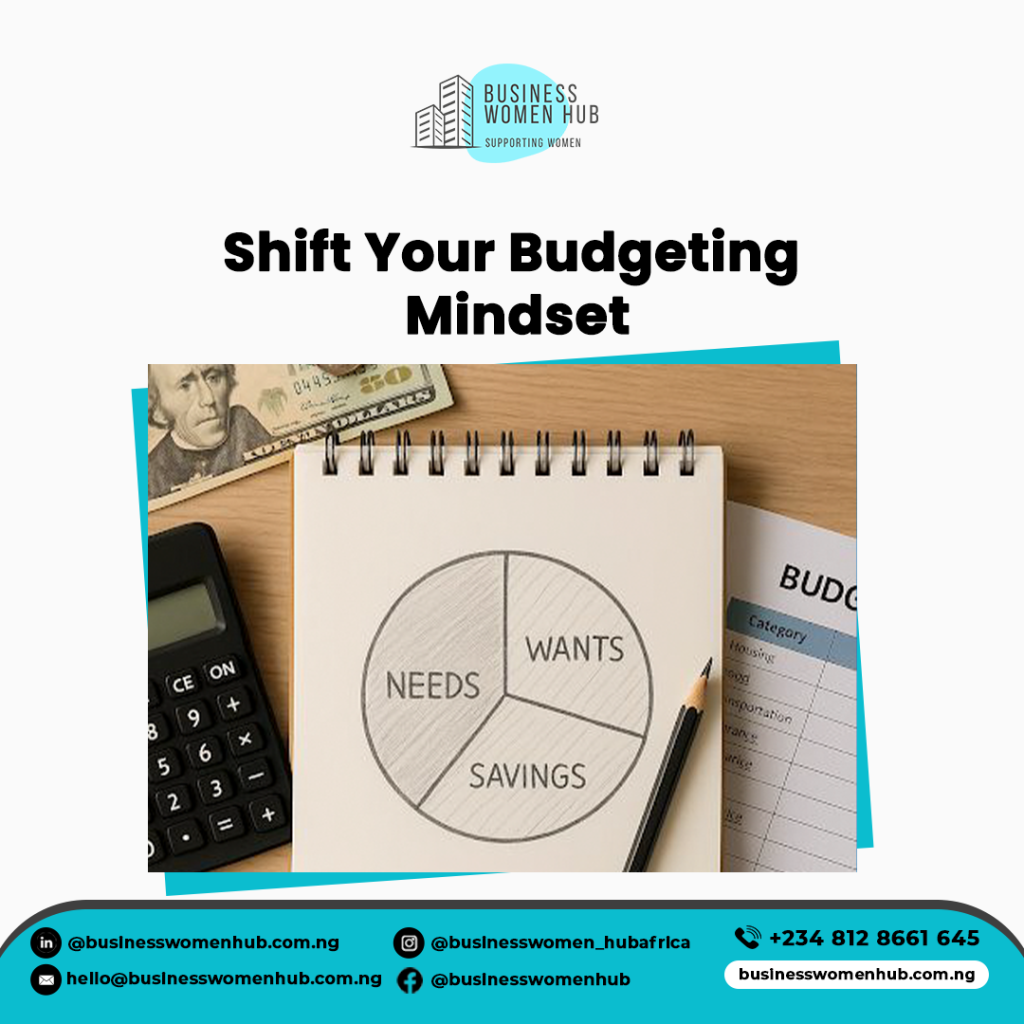
Shift Your Budgeting Mindset

Budgeting is not about restriction; it’s about direction.
Survival budgeting focuses on fear and short-term needs. Growth budgeting asks a more powerful question: What do I need to invest in to move my business forward this year? When you budget only to survive, your business stays reactive. When you budget for growth, your business becomes intentional.

To shift your mindset:

  • Stop budgeting only for bills and emergencies
  • Start budgeting with clear business goals
  • Define what growth looks like for you this year
  • Decide where your money should work harder

When you move from managing money to directing money, clarity follows.

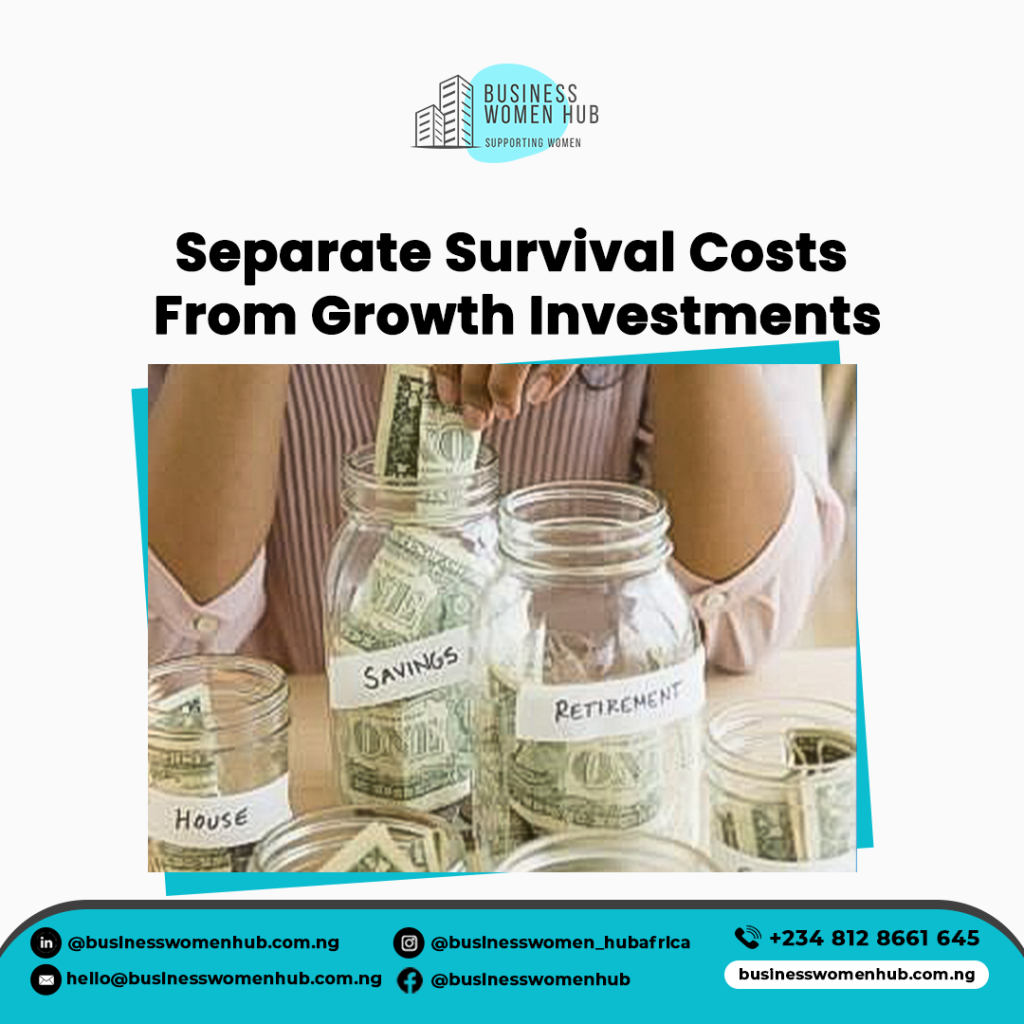
Separate Survival Costs From Growth Investments

Not every expense contributes to growth. Survival costs keep your business running, while growth investments help it scale. Mixing the two often leads to spending without progress.

Survival costs include rent, basic tools, internet, and utilities.
Growth investments include marketing, training, branding, systems, and support.

To create clarity:

  • List your monthly survival costs
  • Identify areas of overspending
  • Create a separate category for growth investments
  • Be honest about what’s draining your business versus building it

Growth happens when progress is intentionally funded.

Budget With Your Business Goals in Mind

Your budget should support where you’re going, not just where you are.
If your goals include getting more customers, increasing visibility, improving systems, or earning more consistently, your budget must reflect those priorities. Big goals without financial backing remain wishes.

To align your budget with your vision:

  • Write down your top three business goals
  • Ask, “What will it cost to achieve this?”
  • Allocate money to income-generating activities
  • Cut back on expenses that don’t support your goals

When money follows vision, results follow too.

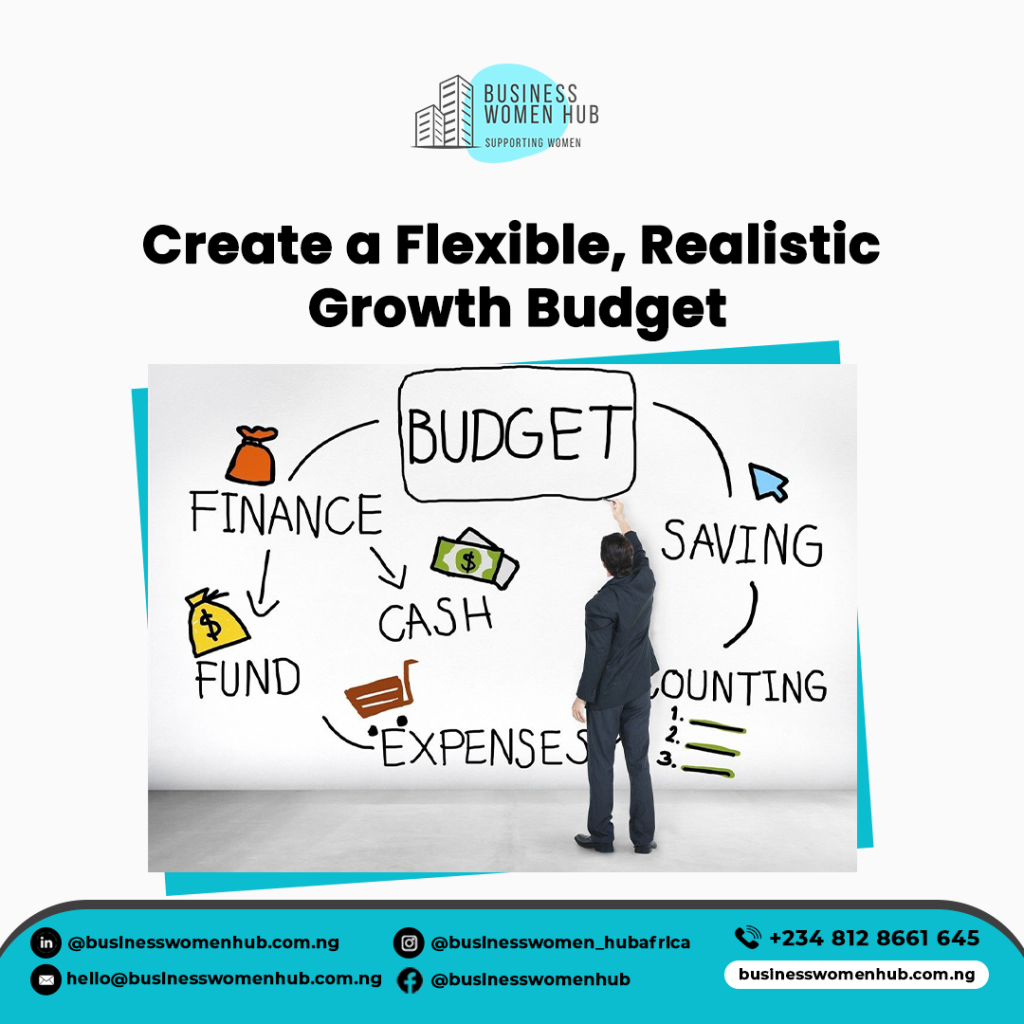
Create a Flexible, Realistic Growth Budget

Growth budgeting doesn’t require perfection; it requires consistency. You don’t need a large income to budget for growth. You need honesty, discipline, and flexibility. A good growth budget evolves as your business grows.

A healthy growth budget:

  • It is realistic and easy to maintain
  • Allows room for adjustment
  • Encourages intentional spending

Start by:

  • Budgeting with what you currently have
  • Setting aside a small monthly growth fund
  • Tracking spending regularly
  • Adjusting as your income changes

When you budget for growth, you stop reacting to money and start leading with it.

Final Thought

Budgeting for growth is a powerful act of leadership. It’s a decision to believe in where your business is going and to fund that belief with intention. Choose growth. Choose clarity. Choose to build beyond survival.

Posted on Leave a comment

From Busy to Profitable: How to Set Business Goals That Actually Make You Money This Year

As a new year begins, many women entrepreneurs sit down to set goals with excitement and high hopes. “Post more.” “Get more followers.” “Be more consistent.”
While these goals sound productive, they often lead to one thing: busyness without profit.

This year, it’s time to shift the conversation. Profitable growth doesn’t come from doing more; it comes from doing what matters. Here’s how to set business goals that are intentional, sustainable, and directly connected to revenue.

Shift From Busy Goals to Profitable Goals

Not all goals grow your business. Some only keep you occupied. Activity alone does not guarantee income. Profitable goals focus on outcomes, not just effort. Instead of asking, “How can I do more?”, profitable women ask, “What actually moves my business forward?”

Profitable goals help you:

  • Align your time with revenue
  • Stop doing what looks good but pays little
  • Focus on activities that drive real growth
  • Measure success beyond likes, views, and followers

To get started:

  • Identify the activities that brought in money last year
  • Separate revenue-generating tasks from support tasks
  • Ask, “Does this goal directly or indirectly lead to income?”
  • Prioritize clarity over volume
  • Choose fewer goals with clearer impact

A profitable year begins when you stop chasing busy and start choosing intentionally.

Set Goals That Match Your Capacity

Big goals are inspiring. Burnout is not. One common mistake many women make is setting goals based on pressure, comparison, or excitement, without considering their capacity. Profit doesn’t come from exhaustion; it comes from sustainability.

Your goals must respect:

  • Your time
  • Your energy
  • Your resources
  • Your current season of life

Before committing to your goals:

  • Review your current workload honestly
  • Decide how much time you can realistically give your business
  • Set goals that fit your life, not just your ambition
  • Build margin for rest and learning
  • Focus on consistency, not overwhelm

Growth that lasts is built on realistic plans. Sustainable goals protect both your profit and your peace.

Tie Every Goal to a Clear Revenue Path

A goal without a revenue path is just a wish. If you want more income this year, every major goal must answer one critical question: How does this make money, or support making money?

Profitable goals are connected to:

  • Offers
  • Pricing
  • Clients
  • Systems
  • Visibility that converts

To create revenue-driven goals:

  • Link each goal to a specific offer or service
  • Decide how the goal supports sales or client growth
  • Clarify your primary income streams
  • Set numbers, not vague intentions
  • Break annual goals into clear monthly actions

When your goals are connected to revenue, progress becomes measurable and motivating. Clarity turns effort into earnings.

Review, Refine, and Commit With Confidence

Goal setting is not a one-time activity; it’s an ongoing process. Profitable women don’t just set goals; they review them, refine them, and recommit with intention. Flexibility is part of the strategy, not a failure.

To stay aligned:

  • Review your goals weekly or monthly
  • Track what’s working and what’s not
  • Adjust your approach without guilt
  • Celebrate small wins along the way
  • Stay committed, even when progress feels slow

Profitable goals grow with you. When you consistently review and refine, success becomes intentional, not accidental.

Final Thought

This year, don’t just set goals that keep you busy. Set goals that pay you, protect your energy, and move your business forward with purpose.
Profit is not about doing more.
It’s about choosing better.