Posted on Leave a comment

What Worked, What Didn’t, and What to Let Go Of: A Powerful Reflection Guide for Women in Business

As the year draws to a close, or as you prepare for a new season in your business, it’s tempting to rush straight into goal-setting and planning. But real growth doesn’t begin with a to-do list; it starts with reflection. Taking time to review what worked, what didn’t, and what no longer serves you is one of the most powerful things you can do as a woman building a sustainable business.

This reflection isn’t about judgment or pressure. It’s about clarity, alignment, and intentional growth. Here’s a four-part guide to help you reflect deeply and move forward wisely.

Celebrate What Worked (Yes, Even the Small Wins)

Before you plan your next move, pause and look back. Reflection is not a luxury; it’s a growth tool. You can’t build forward without acknowledging what already worked.
Your wins don’t have to be loud to be valid. What worked might look like consistent posting, better customer engagement, repeat clients, improved systems, increased confidence, new skills, or simply not quitting when things got hard.
Take stock of your progress honestly and without comparison. Growth is often quiet, steady, and deeply personal.

Take time to:

  • Review your wins: sales, visibility, confidence, and skill-building
  • Identify strategies that brought results, even small ones
  • Note habits that supported your growth
  • Celebrate progress, not perfection
  • Document lessons you want to repeat in the new year

What you acknowledge, you can multiply. If something worked once, it can work again, with refinement. Growth begins with gratitude.
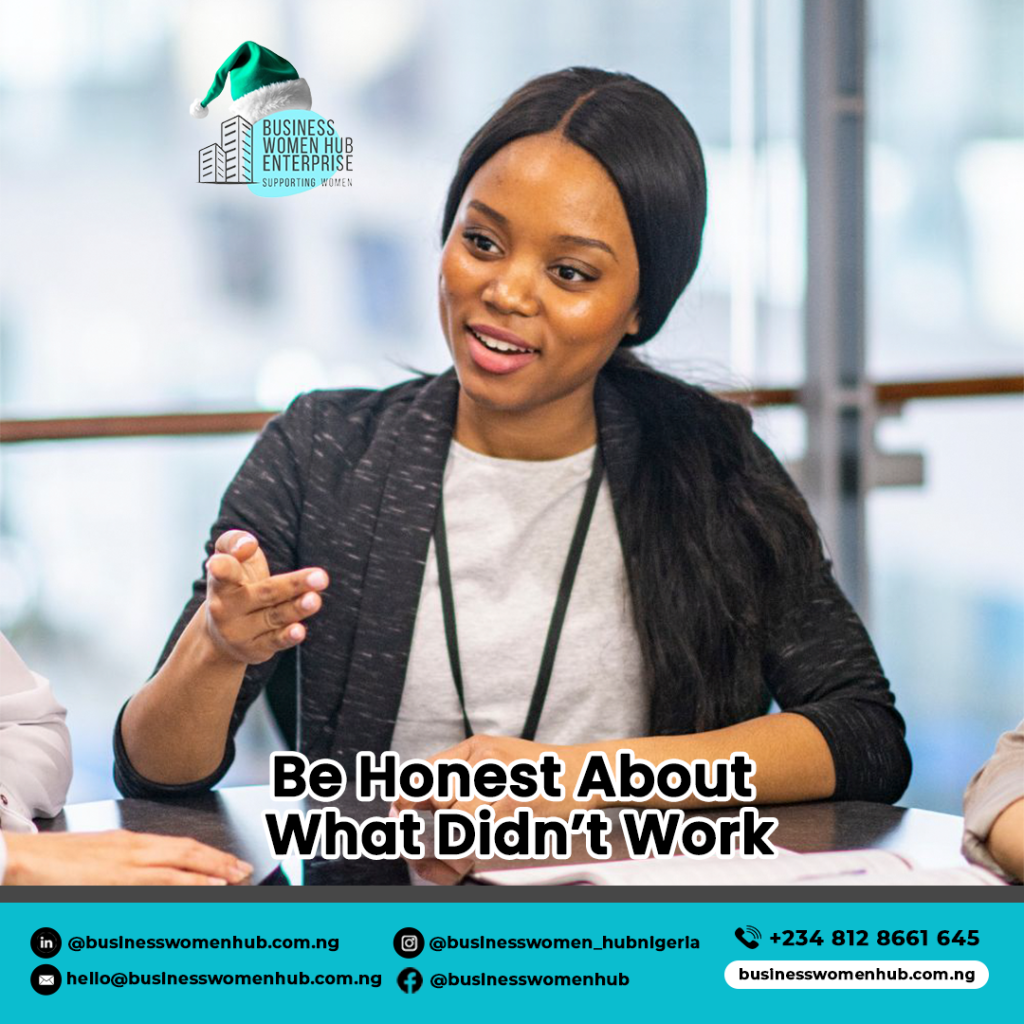
Be Honest About What Didn’t Work

Not everything that didn’t work was a failure. Some efforts were experiments. Some were lessons. Others simply weren’t aligned with your season or audience. Avoiding what didn’t work only keeps you stuck in cycles that don’t serve you. Mature businesses are built on honest evaluation, not denial.
Ask yourself: Was the issue strategy, consistency, timing, clarity, or alignment?

Reflect by:

  • Reviewing campaigns, offers, and efforts that fell flat
  • Identifying where consistency was missing
  • Assessing whether your pricing, messaging, or audience was misaligned
  • Separating emotions from data and focusing on facts
  • Writing down lessons, not excuses

Failure ignored repeats itself. Failure reviewed becomes wisdom. Growth doesn’t require shame; it requires clarity. Learn the lesson and move forward wiser.

Let Go of What No Longer Serves You

Not everything deserves a place in your next season. Some habits, beliefs, strategies, and expectations have expired. Holding on to what drains you blocks what’s trying to grow. Letting go is not quitting. It’s choosing alignment.
This is the season to release pressure, comparison, and outdated expectations.

Make space by:

  • Releasing strategies that caused stress but delivered no results
  • Stopping the habit of copying others without clarity
  • Letting go of perfectionism that delays action
  • Dropping clients, platforms, or routines that drain your energy
  • Releasing the belief that rest equals laziness

You grow faster when you travel lighter. Make space. The next season of your business needs room to breathe.

Refine, Reset, and Realign

Reflection becomes powerful only when it leads to action. This is where wisdom meets planning. Take what worked and improve it. Take what didn’t and refine it. Take what drained you and release it. This is how businesses evolve and mature.

Move forward by:

  • Doubling down on strategies that brought results
  • Simplifying your goals to ensure sustainability
  • Setting clear boundaries around your time, energy, and focus
  • Planning with intention, not pressure
  • Entering the new season with clarity, not chaos

The goal is not to do more. The goal is to do what matters, better. You are not starting from scratch. You are starting from experience. Reflection is a gift you give your future self. Use it well.

Posted on Leave a comment

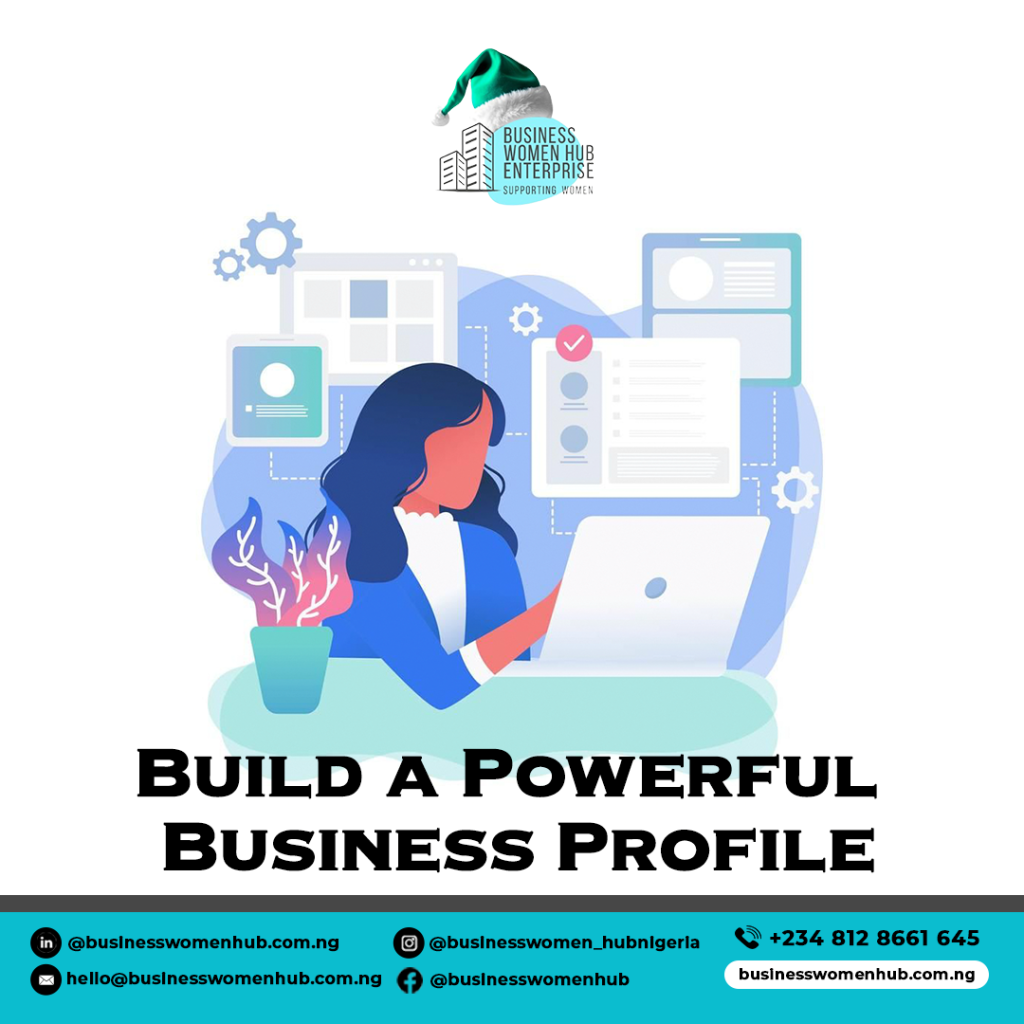
Build a Powerful Business Profile: 4 Guide to Level Up Your Brand Online

Your business profile is more than just a page; it’s your digital handshake, your storefront, and your credibility all in one. First impressions happen in seconds, and your profile can either attract your ideal customers or send them scrolling past.

Here’s how to build a profile that not only looks professional but converts visitors into loyal clients.

Your Profile Is Your First Impression, Make It Count

Before anyone buys from you, they check your profile. A well-set profile instantly communicates: “You can trust me. I know what I’m doing.”
Here’s how to make your profile shine:

  • Professional profile picture: Use a high-quality headshot or your logo.
  • Clear business name: Keep it consistent across platforms.
  • Simple, direct bio: Explain who you are, what you offer, and who you serve.
  • Easy-to-find contact info: Make it clickable for convenience.
  • Pin important posts: Introductions, bestsellers, and testimonials.

A clear profile eliminates confusion and builds trust instantly. People decide in seconds whether to stay or leave; make every second count.

Craft a Bio That Sells

Your bio isn’t just a description; it’s your marketing tool. It should speak directly to your ideal customer: “This page is for you.”
Here’s how to write a bio that converts:

  • Start with what you do: “Helping women…”, “We provide…”, “I create…”
  • Add the transformation: Show the result your customer will get.
  • Include searchable keywords: Make it easy for people to find you.
  • Include a call-to-action: “Shop via link”, “Send a message”, “Book a consultation.”

Your bio should answer three key questions instantly: Who are you? What do you offer? Why should they stay?

Highlight the Right Things, Not Everything

A great business profile is curated, not cluttered. Highlights act like mini folders that guide visitors through your brand story.
Focus on highlights that matter:

  • About Us: Share your story, values, and mission.
  • Products/Services: Clear categories make browsing easy.
  • Testimonials: Build trust with proof.
  • Delivery/FAQs: Reduce hesitation and answer questions fast.
  • Process/BTS: Show how you work behind the scenes.

Highlights help customers find what they need without endlessly scrolling your feed.

Make Your Page Easy to Buy From

A beautiful profile is good, but a convertible profile is better. If people visit your page and still don’t know how to order, you’re losing sales.
Make buying simple:

  • Clear CTA buttons: “Shop Now”, “WhatsApp”, “Book Now.”
  • Price lists or product guides: Put them in your highlights.
  • Short ordering process: 1–3 steps is ideal.
  • Display payment options clearly: Make it easy to pay.
  • Respond quickly: Speed is part of your brand.

When buying from you feels effortless, customers return again and again.

Your business profile is your first impression, your sales pitch, and your credibility all rolled into one. Follow this guide to transform your page into a powerful tool that attracts, convinces, and converts.

Posted on Leave a comment

BUILD IT RIGHT: The Ultimate Guide to Structuring & Registering Your Business

Before the profits, before the fancy branding, and long before the marketing campaigns… There is one thing that every successful business stands on: structure.

Most entrepreneurs don’t fail because they lack skill, passion, or ideas. They fail because the business lacks a clear identity, a solid legal foundation, and a framework for growth. Structure is not a luxury; it is the backbone of every sustainable brand.
Below is a breakdown on how to build a business that is not just running… but built to last.

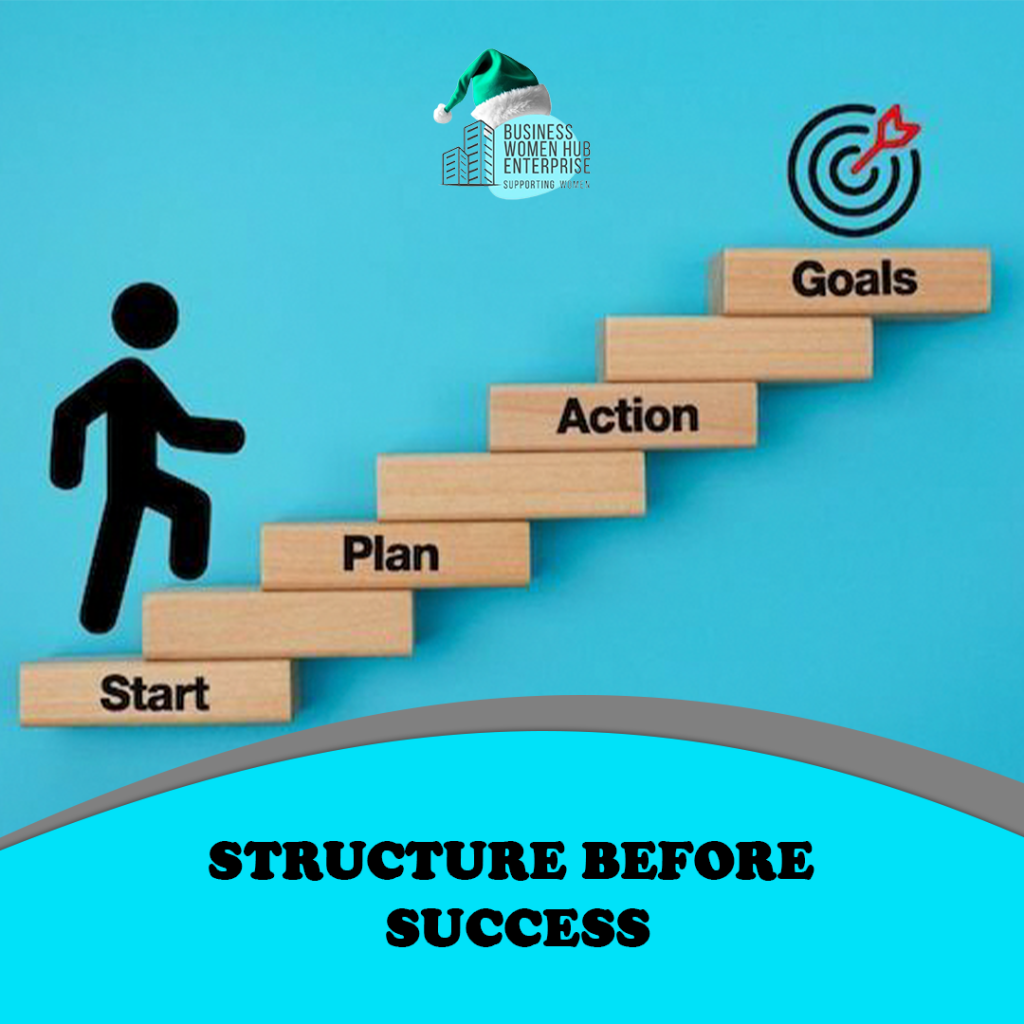
Structure Before Success

Before anything else, build structure. A business without registration is like a house without a foundation, one storm and it all collapses.
Registering your business is more than paperwork; it is the foundation that protects you, strengthens your brand, and creates opportunities you would never access otherwise.

Here’s what proper structure does for you:

  • Gives your business a legal identity
  • Protects your name from being claimed by someone else
  • Builds customer trust (registered brands are taken more seriously)
  • Opens doors to grants, loans, partnerships, and corporate contracts
  • Helps you separate your personal finances from your business finances

Reflection for the week: Is my business built to grow… or just built to survive?

Choosing the Right Business Type (It Matters!)

Not every business should be registered the same way. Your structure affects your tax, ownership, liability, and long-term possibilities.

Here are the main options every entrepreneur should understand:

  • Business Name (BN): Best for solo or small operators. Easy to register and manage, but offers limited protection. Great for makeup artists, food vendors, freelancers, and small retail brands.
  • Limited Liability Company (LTD): A separate legal entity that protects your personal assets. It carries stronger credibility and unlocks bigger opportunities. Perfect for tech startups, fashion brands, service companies, and growing businesses.
  • NGO / Incorporated Trustee: Ideal for non-profits, social impact initiatives, and community projects.

Key takeaway: Don’t register a business “because someone else used it.” Register for the future you’re building, not the present you’re in.

Why Business Registration Protects You

A registered business isn’t just a certificate; it’s a shield.
Here’s how it protects you:

  • Name protection: Once registered with CAC, no one else can use your name.
  • Legal protection: LTDs safeguard your personal assets if something goes wrong.
  • Financial clarity: Investors, banks, and partners trust structured businesses.
  • Ownership security: Your business becomes transferable and inheritable.

Registration is not an expense; it’s peace of mind. When your business is structured, you can grow without fear.

Documentation Every Business Should Have

Even with registration, your business is not fully protected without the right documents.
Every serious business needs:

  • CAC Certificate: Your official legal recognition
  • TIN (Tax Identification Number): Required for compliance and business banking
  • Business Bank Account: Essential for proper financial separation
  • Founders’ or Partnership Agreement: To avoid misunderstandings and future conflict
  • Operating Policies & Basic Contracts: Terms for payments, delivery, refunds, and services

A structured business does not operate on “verbal agreements.” Documentation protects your money, your time, and your peace of mind.

Posted on Leave a comment

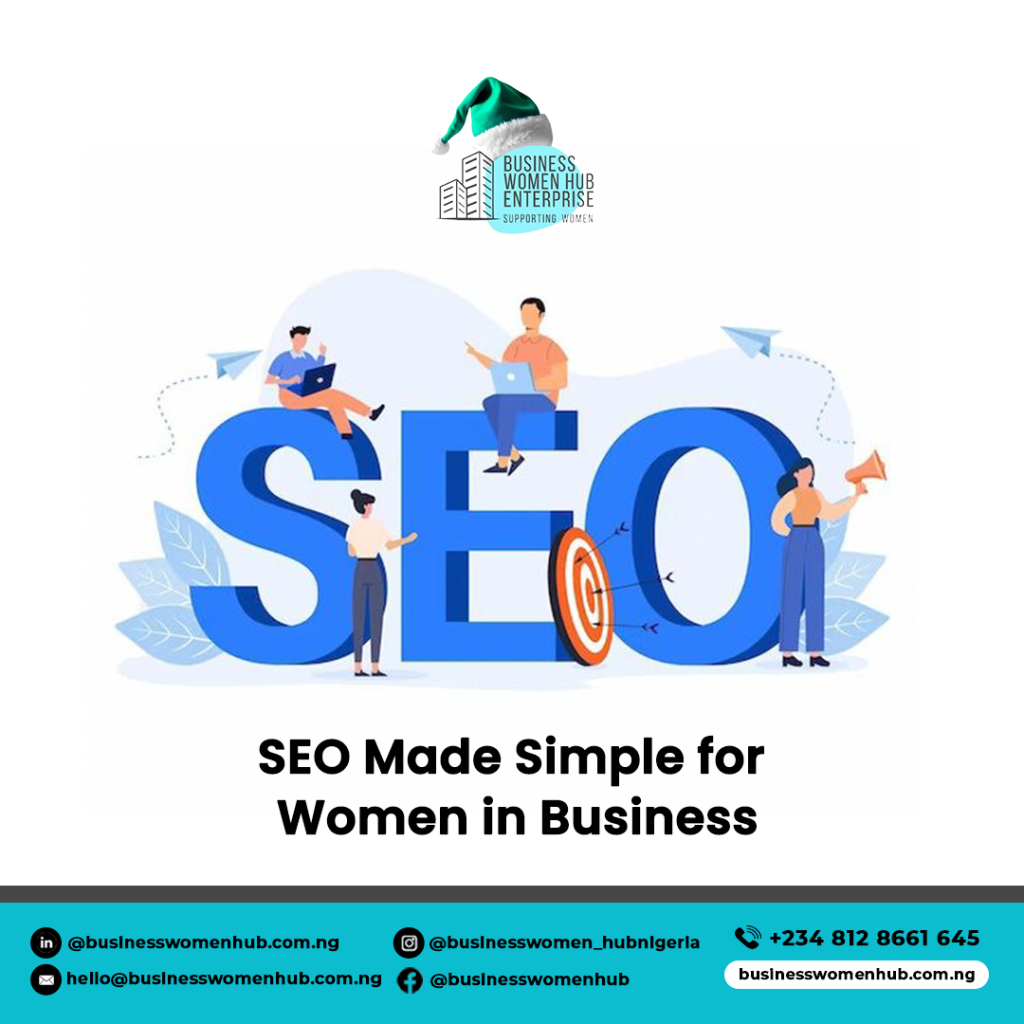
SEO Made Simple for Women in Business: Your Guide to Being Found, Chosen, and Visible

In today’s business world, visibility is not a luxury; it’s a lifeline. And the truth is simple: if your dream clients can’t find you, they can’t buy from you.

Search Engine Optimization (SEO) may sound technical, but it’s one of the easiest, most effective tools for women in business who want to grow without spending heavily on ads. This beginner-friendly guide breaks it down into four powerful steps you can start applying immediately.

If You Can’t Be Found, You Can’t Be Chosen

You don’t have to be a tech expert to understand SEO; you just need to know this: People are already searching for what you offer. But can they find you?
SEO (Search Engine Optimization) simply makes your business easier to discover online, especially on Google.

If your ideal customer typed:

  • “headwraps in Abuja”
  • “business coach for women”
  • “Healthy snacks Lagos” …would your business appear?

Here’s how to start increasing your visibility today:

  • Use clear keywords in your bio, website, and captions
  • Add your business location if you serve a specific area
  • Write captions that answer real questions people search for
  • Make sure your business name + what you do is visible everywhere
  • Create content that your customer would actually Google

Visibility is not luck; it’s strategy. Show up in the places where people are already searching.

Keywords Are Your Digital Currency

Keywords are the exact words and phrases people type into Google when they’re looking for solutions. When you use the right ones, search engines start sending people to you, for free.

That’s how SEO becomes a powerful growth engine:

Your content becomes searchable.
Your brand becomes discoverable.
Your business becomes visible.

Simple keyword habits that make a big difference:

  • Describe your product/service using common search terms
  • Add FAQs to your captions or website (“How to…?” “Where to…?”)
  • Use keywords naturally, not forcefully
  • Check Google autocomplete to see real-time searches
  • Create content around the questions customers ask daily

The right keywords attract the right customers. Speak the language your audience is searching for.

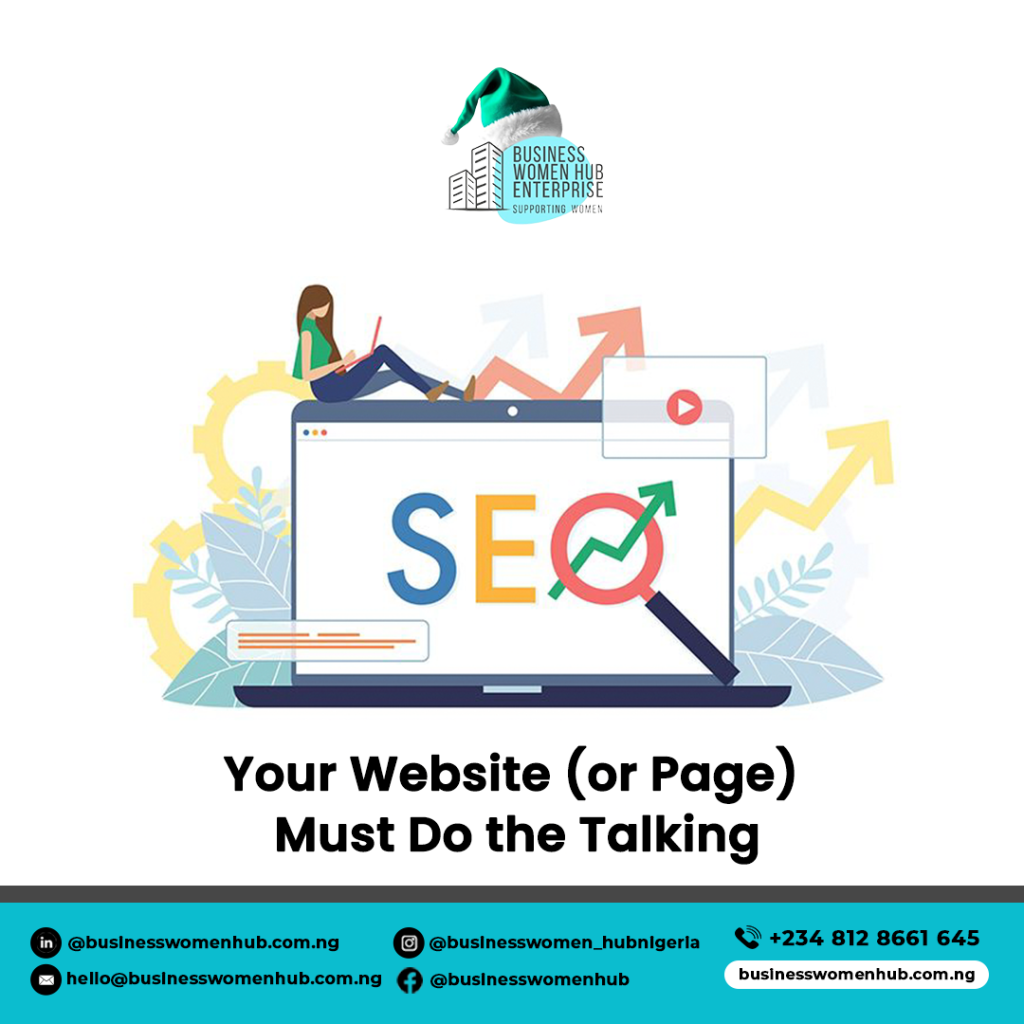
Your Website (or Page) Must Do the Talking

SEO isn’t only about posting; it’s also about how your online home is set up.
Your website or business page should be: Simple. Search-friendly. Clear.
If Google can’t understand your brand, it can’t recommend you.

Here’s what to optimize:

  • Your About section: who you are + what you offer
  • Product/service descriptions: include keywords + benefits
  • Page titles: be specific (e.g., “Home | Natural Hair Products in Lagos”)
  • Image names: rename files with relevant keywords
  • Links: short, clickable, and professional

When Google understands your brand clearly, visibility becomes automatic.

Create Content Google Loves

Good SEO is rooted in valuable content, content that educates, solves problems, and speaks directly to your audience. Google rewards brands that are helpful.
To rank higher, focus on content that:
Educates
Answers questions
Solves problems
Connects with your audience

SEO-friendly content ideas:

  • Tutorials (“How to style…” “How to choose…”)
  • Lists and tips (“5 ways to…”)
  • FAQs
  • Blog-style captions
  • Case studies and testimonials
  • Location-based content (“Where to find…”)

Give Google useful content, and Google will give you visibility.